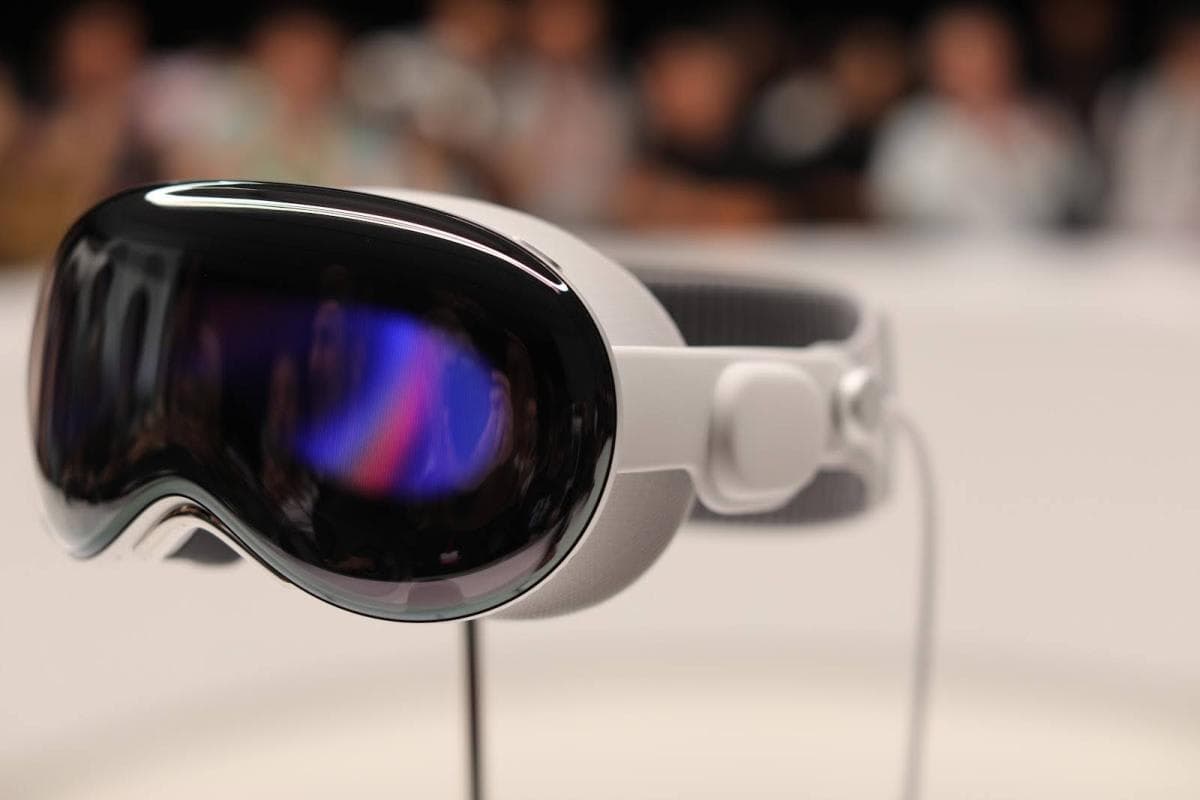
The landscape of the technology sector is currently defined by a restless migration of talent, as the gravitational pull of generative AI continues to reshape the priorities of Silicon Valley’s titans. The recent news that Paul Meade, a key executive instrumental in the development of the Apple Vision Pro, is departing Cupertino to join the hardware division at OpenAI, serves as a powerful signal for business leaders. It is not merely a personnel shift; it is a fundamental indicator of where the next frontier of human-computer interaction is being built.
For years, the industry operated under the assumption that "Spatial Computing" and "Artificial Intelligence" were distinct branches of the R&D tree. Apple focused on the immersive interface, while companies like OpenAI focused on the cognitive architecture behind the screen. Now, those two worlds are colliding. The migration of high-level talent from the world’s most successful consumer hardware ecosystem to the leading edge of foundational model development suggests that we are entering a new era where AI will no longer live solely in the cloud—it will be embodied in the hardware we wear and carry every day.
The Convergence of Hardware and Cognitive Intelligence
The strategic shift of engineering leadership toward OpenAI’s hardware initiative suggests that the "AI Agent" era is reaching a critical inflection point. Business leaders must recognize that the future of digital transformation is moving beyond text-based prompts and static software interfaces. We are rapidly approaching a paradigm where your hardware will not just be a portal for your CRM or enterprise software, but a proactive, intelligent partner capable of contextual awareness.
Historically, hardware has been a commodity, with software providing the primary competitive moat. However, when we look at the potential for OpenAI to leverage its foundational models in a hardware-first environment, the implications for enterprise value chains are profound. Consider the following shifts:
- Contextual Intelligence: Future devices will likely utilize multimodal sensors to understand the physical environment, allowing AI Agents to perform tasks that currently require manual input into a CRM or project management tool.
- Reduced Friction in Automation: The goal of digital transformation has always been to remove friction. Hardware-integrated intelligence can bridge the gap between a physical business interaction and the backend automation that processes that data.
- Edge Processing vs. Cloud Latency: By placing sophisticated AI directly on the device, enterprises can achieve lower latency in critical operational tasks, moving away from the "cloud-only" bottlenecks that currently plague real-time field operations.
The ROI implications here are substantial. Companies that successfully integrate AI-driven hardware into their operational workflows will likely see a significant reduction in administrative overhead. If an executive or a field technician can interact with an AI that understands their physical surroundings, the time spent "entering data" essentially evaporates, replaced by real-time updates to company records.
Strategic Implications for Business Leaders
For the C-suite, this talent migration is a bellwether for investment strategies. We are seeing a shift in focus from "generative AI as a chatbot" to "generative AI as a peripheral and integrated hardware component." Leaders must ask themselves how their existing digital infrastructure will interface with these new hardware paradigms.
If your company is currently mid-transformation, relying on legacy enterprise software that requires manual keyboard navigation, you are at risk of being left behind by the next wave of agentic interfaces. The move toward intelligent hardware suggests that:
- Interoperability is paramount: Your current CRM or ERP must be ready to feed data to and receive data from decentralized, AI-driven agents.
- Data privacy in the edge era: As devices become more "aware" of the business environment, companies must audit their data security protocols to handle information captured directly from the point of work.
- Upskilling the workforce: The transition to spatial or hardware-integrated AI will require teams that understand both the capabilities of Large Language Models and the limitations of physical, hardware-based UI/UX.
The adoption trends are clear: companies are moving away from siloed software solutions toward integrated ecosystems. The goal is to create a seamless flow of data where the hardware observes, the AI decides, and the software executes. This is the trifecta of modern digital transformation, and the companies hiring the visionaries behind the latest headset technologies are clearly betting that this transition will happen faster than the market currently anticipates.
As we look toward the next twenty-four months, businesses that prioritize the integration of AI-ready infrastructure will be the ones that capture the most efficiency. The takeaway for the modern enterprise is that you do not need to build your own hardware to benefit from this shift; you simply need to ensure your software stack is modular, API-first, and ready to communicate with the next generation of intelligent devices.
Preparing for this future requires a robust architecture that can handle the influx of data from these emerging agentic systems. At AOODAX, we specialize in helping organizations modernize their infrastructure through custom software development, ensuring that as new intelligent hardware hits the market, your business is perfectly positioned to leverage it for competitive advantage.