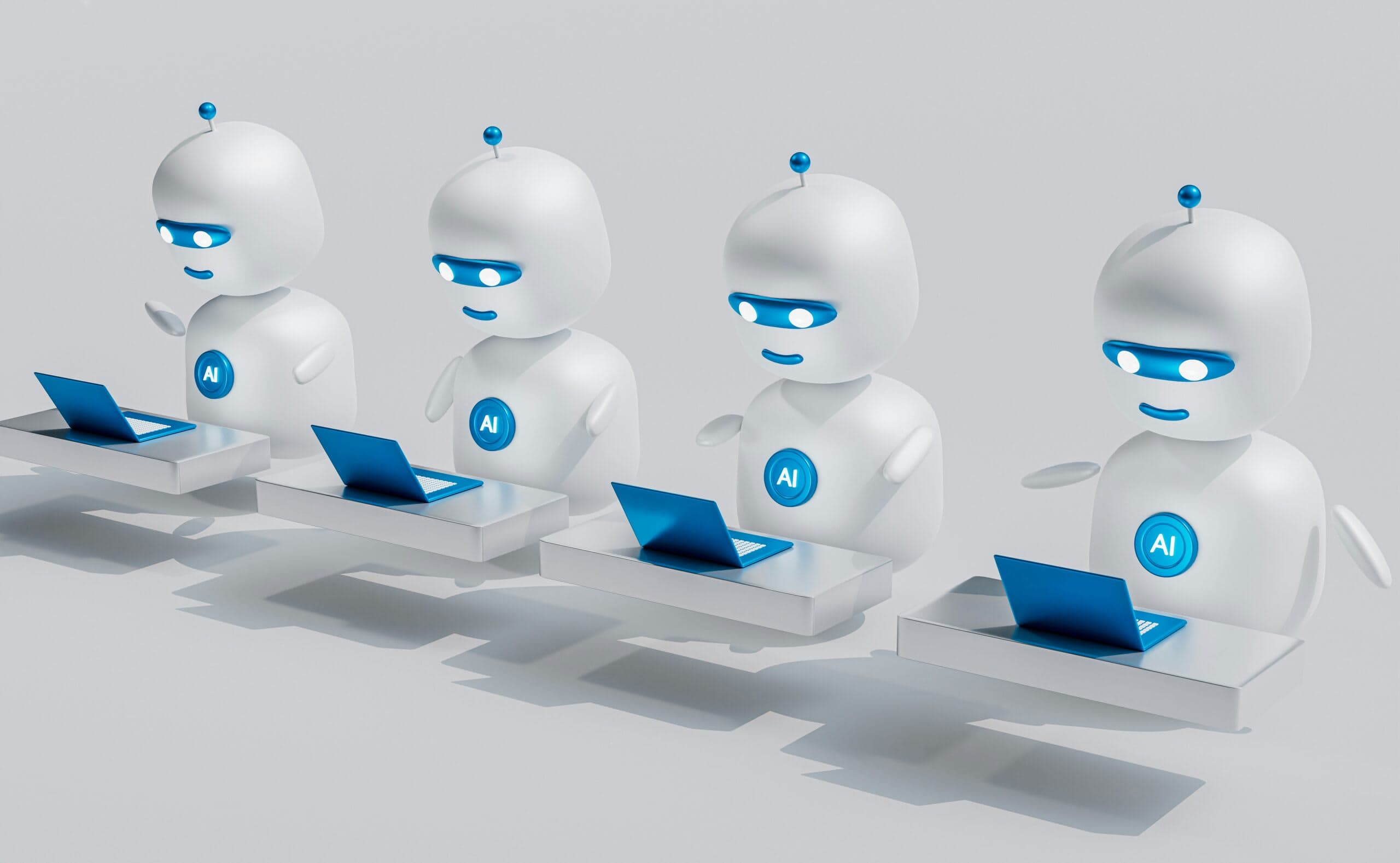
The era of the "all-knowing" monolithic AI model is rapidly giving way to a more sophisticated architecture: the Multi-Agent System (MAS). While early enterprise AI adoption focused on single, generalized chatbots, business leaders are now shifting their focus toward orchestrated ecosystems where specialized agents collaborate to solve complex, multi-step workflows.
From Isolated Chatbots to Collaborative Ecosystems
In a multi-agent framework, we move beyond a simple prompt-response loop. Instead, we define discrete agents—each with a unique persona, specific tools, and defined limitations—that communicate to achieve a common objective. For instance, in a sales operation, one agent might be dedicated to real-time CRM data retrieval, another to competitive intelligence synthesis, and a third to draft personalized outreach.
The power of this approach lies in the separation of concerns. By breaking down a business process into modular "skills," companies can avoid the hallucinations often associated with overtaxed, general-purpose Large Language Models. When an agent is tasked with a specific, narrow role, the system’s output becomes more predictable, audit-friendly, and accurate.
Strategic Advantages and ROI Implications
For the modern enterprise, the transition to multi-agent architectures is less about technology for technology's sake and more about achieving genuine Digital Transformation. The primary benefits include:
- Process Efficiency: Agents can operate in parallel, drastically reducing the latency of complex workflows that previously required human intervention to bridge disparate software silos.
- Scalability of Knowledge Work: By delegating routine research, classification, and drafting tasks to agentic teams, high-value employees are liberated to focus on high-level strategy and creative problem-solving.
- Enhanced Reliability: Because the system structure is modular, developers can isolate, debug, and upgrade individual agents without needing to retrain an entire model stack.
The ROI implications are significant. Companies that move from manual automation scripts—which often break when UI elements change—to agent-based systems gain a self-healing layer of infrastructure. Agents that can interact with APIs and browser-based tools effectively become the connective tissue of the modern digital enterprise, linking legacy databases to modern analytics dashboards.
Navigating the Adoption Curve
As we look toward the next 18 months, the challenge for CTOs and CIOs will not be a lack of capabilities, but the governance of these agents. As businesses integrate more automated decision-makers into their Customer Experience and internal operations, they must implement rigorous monitoring and "human-in-the-loop" protocols.
The trend is clear: the future of AI in the workplace is not a single, omnipotent "brain," but a coordinated swarm of digital workers. For business leaders, the immediate takeaway is to begin mapping your internal workflows not just by how they are currently performed, but by how they could be decomposed into logical sub-tasks. Start small by identifying high-volume, low-complexity processes where a two-agent system—one for task execution and one for verification—can provide immediate, measurable value.
In this new landscape, competitive advantage will be won by the organizations that best master the orchestration of these digital agents, ensuring that even as automation scales, the quality and integrity of business operations remain firmly under control.