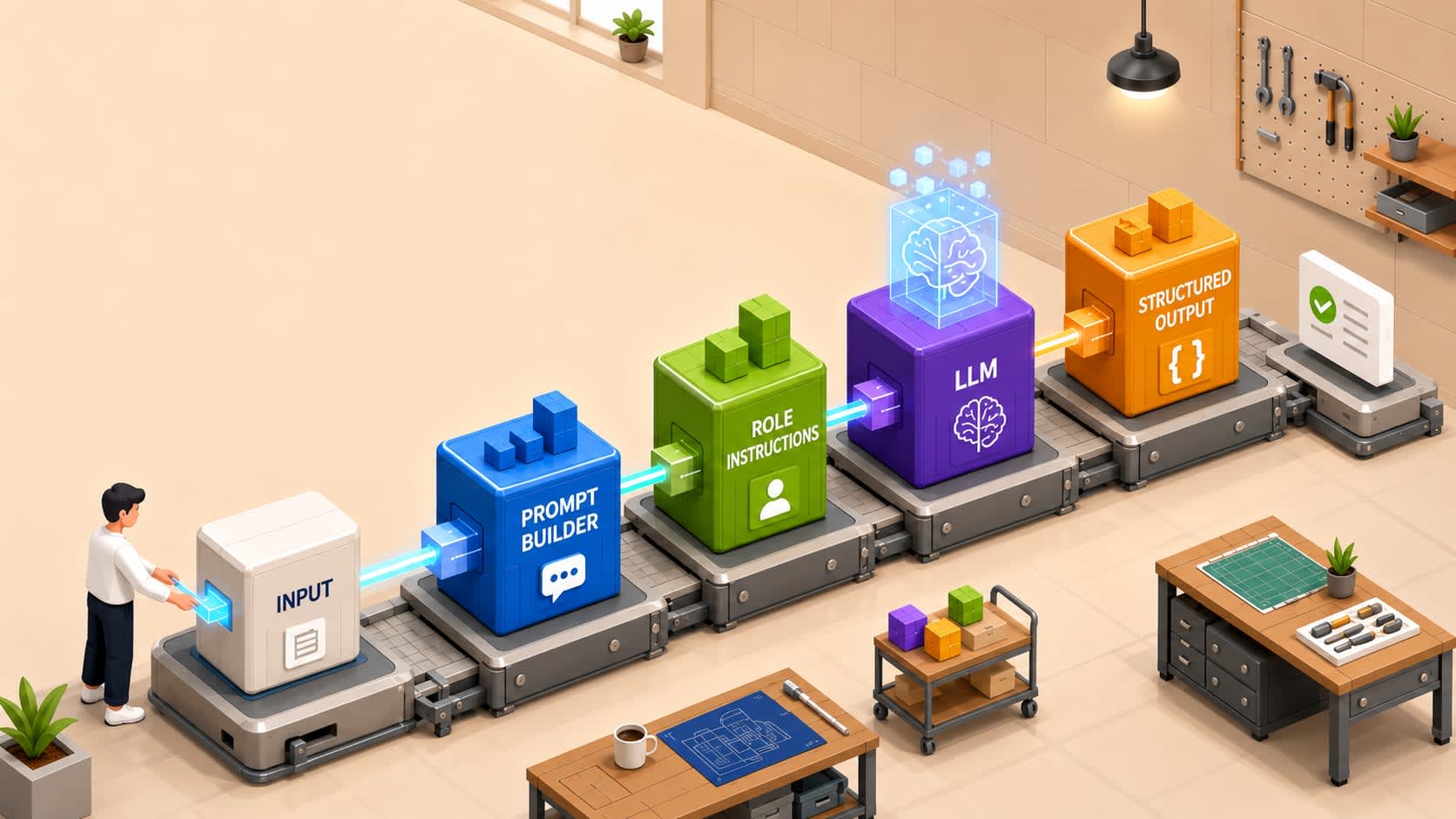
The current hype cycle surrounding Autonomous Agents has created a common misconception in the enterprise sector: that for an AI to be "intelligent," it must be an unconstrained, self-correcting entity capable of navigating complex tasks without intervention. While the allure of a "digital employee" is strong, many organizations are discovering that these frameworks introduce significant complexity, high latency, and unpredictable costs that threaten Digital Transformation initiatives.
For most business use cases, the solution is not an expensive, opaque agent framework—it is a deterministic, robust workflow.
The Case for Deterministic Workflows
In a production environment, reliability is the primary currency. Autonomous agents often struggle with "looping" or reasoning errors, which can result in inconsistent outputs that wreak havoc on a CRM or ERP system. Instead of tasking an LLM with "figuring out" the entire process, businesses should embrace a modular approach:
- Linear Task Decomposition: Break down business processes into discrete, manageable steps.
- Predictable Routing: Use code-based logic to decide which model or tool handles a specific piece of data.
- State Management: By using Plain Python or standard backend frameworks to control the flow, you retain total visibility into every stage of the process.
- Human-in-the-Loop (HITL) Gates: Instead of delegating end-to-end autonomy, place strategic manual checkpoints where the cost of error is high.
By treating the LLM as a sophisticated transformation engine rather than a decision-maker, companies can achieve higher uptime and significantly lower the technical debt associated with maintaining complex AI architectures.
ROI and Architectural Simplicity
From an investment perspective, the "agentic" approach often leads to runaway compute costs and debugging nightmares. When an agent framework decides to pursue an unnecessary chain of thought, it consumes tokens and time, eroding the Return on Investment (ROI) for the project.
Adopting a deterministic workflow architecture offers several strategic advantages:
- Observability: It is significantly easier to monitor performance and identify bottlenecks when the code is linear.
- Scalability: Standardized software engineering practices apply to deterministic pipelines, allowing your existing engineering teams to maintain the system without needing specialized "prompt engineering" experts.
- Predictability: Business stakeholders gain confidence when they know exactly how the system reaches a conclusion, which is essential for compliance and auditing.
Moving Toward Pragmatic Automation
The future of enterprise AI lies in stability and integration, not just raw intelligence. As we look ahead, the companies that succeed will be those that view AI as a functional component of a larger, well-oiled machine. Rather than chasing the complexity of self-governing agents, leaders should prioritize systems that are easy to maintain, audit, and scale. The goal is to maximize the utility of the technology while minimizing the operational friction it introduces.
If your organization is navigating the trade-off between autonomous complexity and operational reliability, remember that clear workflows often deliver better business value than open-ended agents. At AOODAX, we specialize in helping businesses implement high-performance AI automation that remains transparent and manageable, ensuring your software investments yield measurable results.