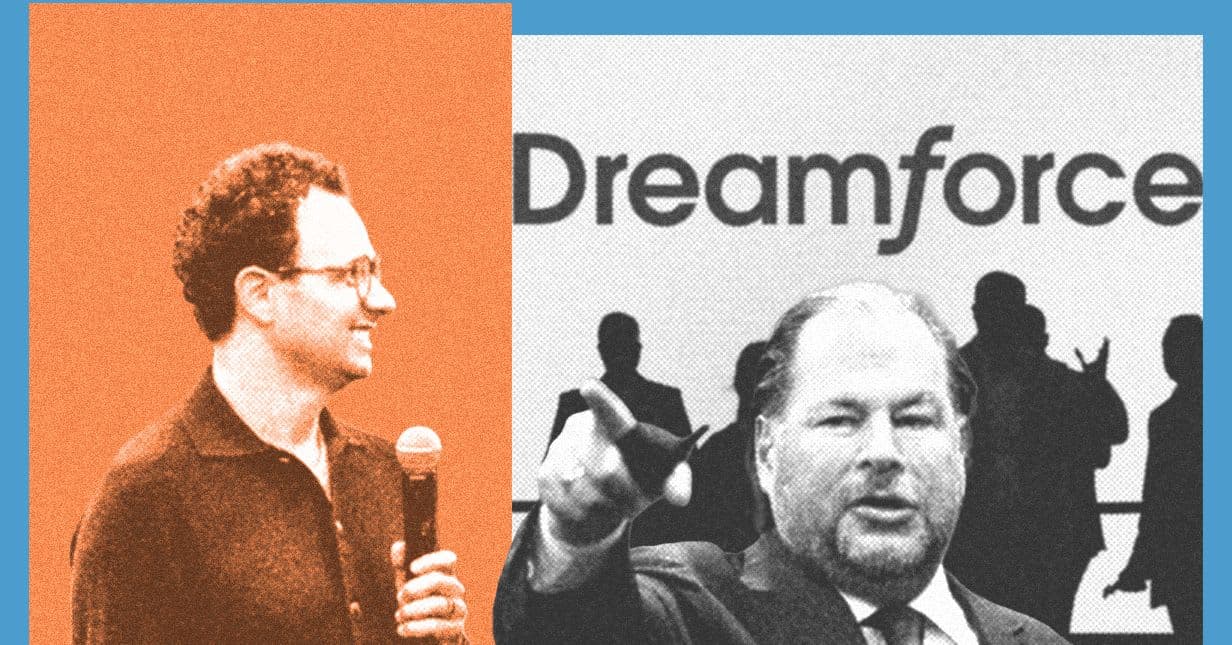
The annual pilgrimage to San Francisco for Dreamforce has long been the premier stage for unveiling the next decade of enterprise software. Historically, the focus remained squarely on Salesforce and the evolution of the cloud-based Customer Relationship Management (CRM) ecosystem. However, this year’s gathering felt different. Beneath the typical polish of enterprise announcements, a profound intellectual tension emerged: the industry’s heavyweights are no longer just debating features—they are debating the very velocity of progress itself.
As leaders from OpenAI, Anthropic, and Nvidia took the stage, the conversation shifted away from mere efficiency gains toward a high-stakes disagreement over the "AI Slowdown." This dialogue isn't just academic; for business leaders, it represents a critical inflection point in how we weigh the risks of rapid deployment against the pressures of digital transformation.
The Scaling Paradox: Velocity Versus Stability
For the past twenty-four months, the tech sector has operated under the assumption that bigger is always better. The "scaling hypothesis"—the idea that increasing computing power and data volume inevitably leads to more capable models—has been the north star for the entire industry. But at this year’s conference, cracks in that consensus began to show.
The debate centers on a fundamental question: Is it safer to accelerate toward Artificial General Intelligence (AGI), or should we intentionally throttle development to refine safety, reliability, and human oversight?
For companies currently integrating these systems into their operational stacks, this debate translates into a direct ROI dilemma:
- The Early Adopter Trap: Organizations rushing to implement cutting-edge models may find themselves dealing with "model drift" or obsolescence as the underlying technology shifts rapidly.
- The Governance Gap: The push for faster development cycles often runs headlong into the need for rigorous enterprise compliance, security, and data privacy protocols.
- Strategic Caution: The "slowdown" proponents argue that for enterprise applications, stability and predictability are worth more than raw performance metrics.
When Nvidia’s Jensen Huang advocates for faster compute, he is looking at the infrastructure layer—the hardware that powers the next wave of automation. Conversely, those urging caution are looking at the application layer—the risk that a high-velocity, low-control system could compromise a company’s CRM integrity or customer-facing operations.
Moving Beyond Generative Hype: The Rise of AI Agents
While the headlines focused on the ideological clash between the model builders, the real shift for business professionals is the transition from passive Generative AI to proactive AI Agents. If the debate on AI slowdown is about the what, the shift to agents is about the how.
The current CRM landscape is undergoing a radical change. We are moving away from simple chatbots that summarize text or draft emails toward autonomous agents that can execute multi-step workflows. These agents don't just "talk"; they interface with legacy databases, update customer profiles, and trigger supply chain actions based on real-time triggers.
However, the "slowdown" debate serves as a warning for those building these workflows. As agents gain more autonomy, the cost of an error increases exponentially. An agent that sends an incorrect marketing email is a minor nuisance; an agent that incorrectly triggers a cross-border transaction or deletes an entire customer dataset due to a hallucination is a catastrophic failure. Business leaders must balance the competitive advantage of automation against the operational reality of "human-in-the-loop" requirements.
For organizations looking to navigate this, the path forward requires a focus on:
- Modular Architecture: Building systems that allow you to swap out model providers or agents as the technology matures without re-engineering your entire stack.
- Deterministic Guardrails: Implementing strict logic-based overrides for AI actions, ensuring that even if a model is "fast," the output remains within predefined corporate boundaries.
- Incremental Automation: Prioritizing high-value, low-risk use cases—such as data enrichment or lead routing—before handing over sensitive customer interactions to autonomous agents.
Strategic Outlook: Stability is the New Competitive Edge
The "AI Slowdown" debate is not a sign of stagnation; it is a sign of maturity. When tech titans begin debating the pace of progress, it indicates that the technology has moved from the laboratory to the boardroom. The era of experimenting with novelty features for the sake of the hype cycle is ending; the era of building resilient, automated business infrastructure is beginning.
For the C-suite, this means shifting focus from "What can this AI do?" to "How do we make this AI reliable enough to replace manual processes?" The companies that win over the next five years will be those that prioritize integration, data cleanliness, and system robustness over the desire to chase the latest, unproven model updates.
Ultimately, the most successful digital transformations will be those that treat AI as a robust engine for business logic rather than a magic wand. Navigating the complexities of these evolving technologies—and ensuring your systems remain both scalable and secure—requires a partner who understands the nuance between rapid innovation and operational reliability. At AOODAX, we specialize in the implementation of sophisticated AI agents that are designed to integrate seamlessly into your existing CRM workflows, turning the promise of automation into measurable, secure business outcomes.