The prevailing narrative in Silicon Valley over the last twenty-four months has been one of total automation. From the boardroom to the manufacturing floor, the promise has been consistent: deploy a sufficiently sophisticated Large Language Model (LLM), integrate it into the workflow, and watch productivity metrics soar while human intervention requirements crater. However, as we move past the initial hype cycle, a quiet, industry-shifting trend is emerging—one that challenges the "AI-first, humans-last" mentality.
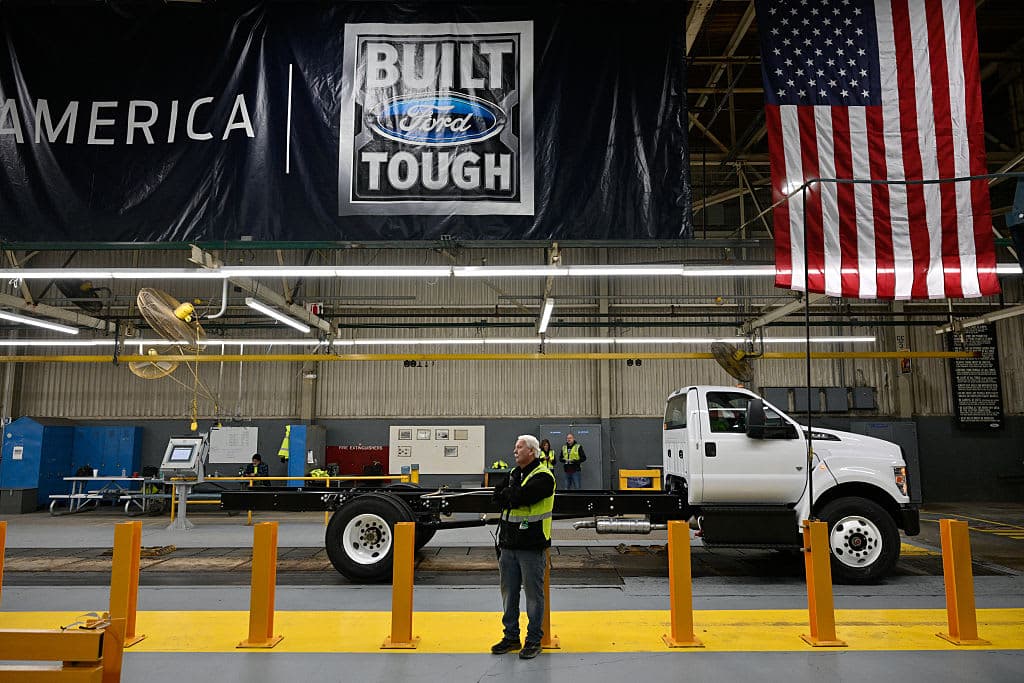
In high-stakes industries like automotive manufacturing and complex systems engineering, a realization is taking hold: AI is an exceptional force multiplier, but it is a poor substitute for institutional knowledge. Recent shifts in talent strategy among legacy manufacturing giants—recalling veteran engineers, the so-called "gray beards," to oversee AI-driven output—serve as a microcosm of a broader corporate reckoning. We are discovering that in the quest for digital transformation, we may have inadvertently hollowed out the very expertise required to govern the machines we’ve built.
The Limits of Generative Pattern Matching
The fundamental issue lies in the nature of Artificial Intelligence as it stands today. Modern AI systems excel at pattern recognition, data synthesis, and rapid iteration within defined parameters. They are, in essence, probabilistic engines. They can predict what a robust engineering specification should look like based on terabytes of historical data. What they lack is the "tactical intuition" that only comes from decades of physical-world problem solving.
When a company relies solely on Automation to drive product development or complex operations, they often find that while the AI produces a high volume of output, that output frequently lacks the structural integrity or nuanced understanding required for real-world deployment. In the automotive sector, this manifested as a realization that high-speed, AI-generated design iterations were occasionally missing the invisible, often non-logical constraints that seasoned engineers instinctively account for.
For business leaders, this exposes a dangerous paradox:
- The Efficiency Trap: AI reduces the time to generate a draft or a prototype, but it can increase the time required for review if the output requires constant correction.
- Knowledge Erosion: If junior staff are trained using AI-generated outputs without the guidance of veterans, the organization risks a long-term decay in engineering standards.
- Hidden Costs: The ROI of AI is often calculated on production speed. It rarely accounts for the "debug phase" where human experts must audit and manually fix AI hallucinations or structural flaws.
Rethinking Digital Transformation as a Partnership
The successful enterprise of the future is not one that replaces humans with silicon, but one that effectively bridges the gap between legacy experience and modern software. This transition requires a shift in how we approach Digital Transformation. It is no longer about automating tasks to eliminate human cost; it is about leveraging AI as a sophisticated exoskeleton for the expert.
Adopting this hybrid model requires a strategic realignment of technical resources:
- Human-in-the-Loop (HITL) Architectures: AI should be positioned as a co-pilot, not an autonomous agent, especially in safety-critical or high-compliance workflows.
- Institutional Knowledge Capture: Companies must find ways to digitize the "tribal knowledge" of senior staff—using AI Agents to document and categorize expert decision-making processes before those experts transition out of the workforce.
- Curated Training Sets: Instead of training models on generic, public-domain data, organizations must prioritize proprietary, high-quality data curated by their most experienced team members to ensure the AI speaks the language of their specific technical stack.
When companies fail to integrate their veteran expertise into the AI development lifecycle, they encounter a "quality floor." No matter how powerful the LLM, the output will only be as good as the guardrails established by those who understand the fundamental physics—both physical and financial—of the business.
The Strategic Shift: Augmentation over Replacement
The return of veteran engineers to the core of R&D and operations is not a retreat from innovation; it is a maturation of the strategy. It signifies that companies are finally moving from the "experimental" phase of AI adoption to the "integration" phase.
For the C-suite, this should serve as a wake-up call. If your CRM system, your manufacturing pipeline, or your customer-facing Chatbots are currently operating in a vacuum—devoid of human oversight or expert context—you are likely incurring a mounting "technical debt" that will eventually necessitate a costly audit. The goal should be to move toward a state of collaborative intelligence, where the speed of AI is tempered by the wisdom of experience.
The most resilient organizations will be those that view AI as a platform for expertise amplification. By fostering a culture where AI handles the heavy lifting of data processing while human specialists retain the final, authoritative say, businesses can ensure that innovation remains both groundbreaking and reliable.
As businesses navigate this complex transition, the challenge lies in effectively integrating these powerful tools without losing the depth of domain expertise that defines market leadership. AOODAX helps businesses achieve this balance by implementing custom AI agents that are tailored to your specific organizational workflows, ensuring that automation acts as a force multiplier for your best talent rather than a replacement for it.