The landscape of enterprise artificial intelligence is shifting. For the past eighteen months, the conversation has been dominated by the generative capabilities of Large Language Models (LLMs)—the ability to draft emails, summarize documents, and generate code. However, we are now entering the era of the Agentic Workflow. Business leaders are moving beyond passive chatbots and toward autonomous systems capable of executing multi-step research, interacting with live data, and performing complex tasks without constant human intervention.
This transition from static "knowledge engines" to dynamic "tool-using agents" is the single most important development for operational efficiency in 2024. By leveraging local infrastructure, businesses can now achieve the agility of a high-end research assistant while maintaining total control over their data privacy and architectural sovereignty.
The Architectural Shift: Local Sovereignty Meets Global Intelligence
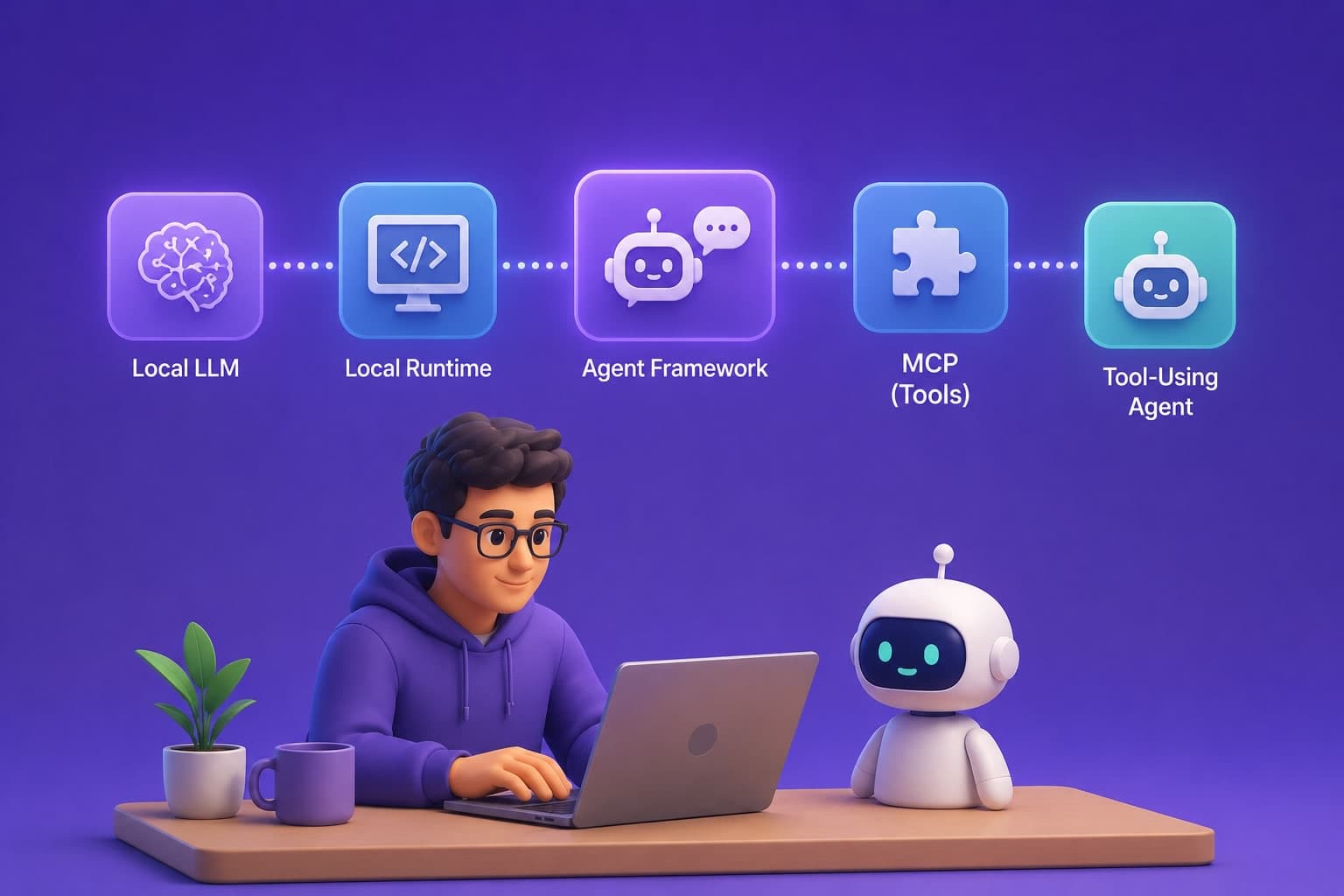
For many years, the primary barrier to adopting advanced agents was the cloud-dependency paradox. Enterprises required the power of sophisticated reasoning, but they were often restricted by the latency, cost, and security implications of sending proprietary data to third-party APIs. Today, that friction is disappearing thanks to the convergence of three pillars: lightweight local models like Gemma 2, efficient model-serving runtimes like Ollama, and standardized integration protocols such as the Model Context Protocol (MCP).
By running an LLM locally, organizations can process sensitive information—such as internal CRM data or financial reports—within their own firewall. When you pair this local compute with a framework like the OpenAI Agents SDK and a specialized search tool like Tavily, you effectively turn a static model into a proactive researcher.
This architecture fundamentally changes how we think about automation. Rather than waiting for a user to query a database, the agent can:
- Identify the scope of a business problem.
- Formulate a search strategy to gather real-time market data.
- Synthesize external findings with internal company records.
- Execute a final report or trigger an action in a downstream CRM system.
The ROI of this approach is significant. By automating the "drudgery" of digital research, teams can refocus their time on high-value strategy. Furthermore, because the infrastructure is modular, companies can swap out models as technology evolves, ensuring they are never locked into a single vendor’s roadmap.
Beyond Research: The Business Impact of Tool-Using Agents
The adoption of tool-using agents isn't just a technical upgrade; it is a catalyst for Digital Transformation. Historically, integrating AI into a workflow required massive bespoke software development projects that took months to deploy. With the current wave of agentic frameworks, the time-to-value has plummeted.
Consider a typical sales or operations team. Integrating an AI agent that can autonomously pull data from a CRM platform to compare current leads against live market intelligence via a search tool like Tavily creates a massive competitive advantage. These agents do not just "know" things; they "do" things. They act as the connective tissue between disparate data silos, turning fragmented information into actionable business intelligence.
For the modern enterprise, this creates three distinct competitive advantages:
- Operational Velocity: Agents operate at machine speed, researching and collating data 24/7, which compresses decision-making cycles.
- Contextual Accuracy: By connecting local LLMs to verified toolsets, agents significantly reduce the risk of generic or outdated hallucinations common in standalone models.
- Scalability: Once a specific agentic workflow is perfected, it can be deployed across departments, ensuring that the best practices of your top researchers are codified and repeatable across the entire organization.
The adoption trends are clear: companies that lean into agentic workflows today are positioning themselves to manage the complexity of the next decade. While early adopters focused on "prompt engineering," the leaders of tomorrow are focusing on "system orchestration"—building robust, tool-capable frameworks that act as force multipliers for their human workforce.
The challenge, of course, is not the technology itself, but the strategy required to integrate it effectively. Most organizations struggle to bridge the gap between a high-performing prototype and a production-ready system that adheres to enterprise security standards. Moving from a localized research agent to an organization-wide automated workflow requires a deliberate design process that accounts for API management, model latency, and human-in-the-loop oversight.
As you look toward the next quarter, the focus should be on identifying those high-volume, low-complexity tasks where your team currently spends the most time. If you can define the toolset, you can build the agent. The infrastructure is now ready; the question is whether your operational processes are flexible enough to accommodate these new digital teammates.
At AOODAX, we specialize in helping businesses navigate this transition by designing and implementing bespoke AI agents that integrate seamlessly with your existing tech stack. Whether you need to build custom automation workflows or modernize your internal CRM processes, our team ensures your enterprise infrastructure is ready for the agentic future.