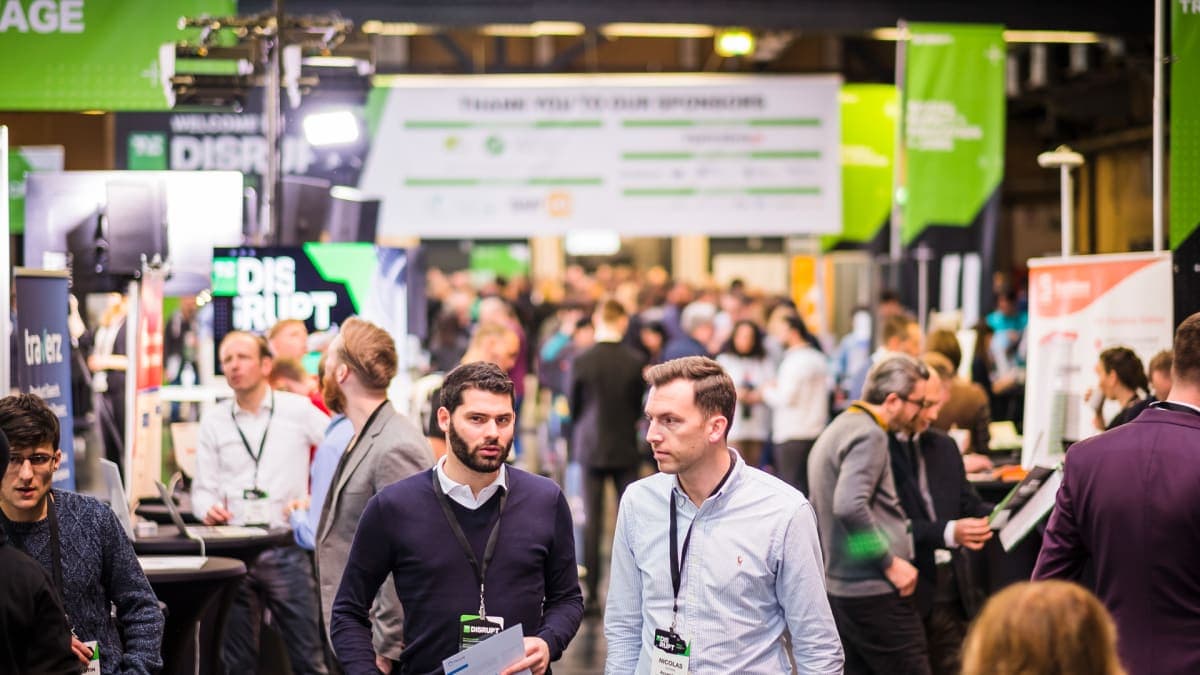
The rhythm of the technology industry is dictated by the intersection of breakthrough research and market application. As we look toward the landscape of 2026, the question is no longer whether an organization will adopt transformative digital tools, but how effectively they can integrate them to maintain a competitive advantage. Major industry gatherings, such as the upcoming TechCrunch Disrupt 2026, have evolved beyond mere networking venues; they now serve as essential pulse-checks for the global ecosystem of Artificial Intelligence and Digital Transformation.
For leadership teams, these events represent a significant opportunity to stress-test their internal strategies against the backdrop of rapid, agentic innovation. With the industry currently shifting toward collaborative partnerships—exemplified by recent strategic ticketing incentives that encourage co-founder and team-based attendance—there is a clear message being sent: innovation is no longer a solo pursuit. It requires a synchronized approach across the executive suite.
The ROI of Collaborative Exploration
When business leaders attend major tech summits, the immediate return on investment is often measured in leads and contacts. However, the true value for a maturing enterprise lies in "co-located learning." Bringing a co-founder, a CTO, or a key project lead to an event provides an immediate secondary lens through which to process complex information.
In the context of modern business, where AI Agents are moving from experimental sandboxes to core operational workflows, having two sets of eyes on the latest platform capabilities is vital. Consider the following strategic advantages of attending conferences as a pair:
- Diverse Synthesis: While one leader focuses on the high-level shifts in Generative AI policy and market regulation, the other can dive deep into the technical specifications of emerging CRM integrations or infrastructure-as-code updates.
- Rapid Vetting: During a session on the state of autonomous systems, two perspectives help clarify how those tools might actually integrate into current legacy architectures, filtering out marketing hyperbole from tangible functional value.
- Aligned Implementation: Decisions made at the event are far more likely to be executed back at the home office if both stakeholders have shared the same context, observed the same product demos, and participated in the same conversations.
The decision to incentivize team-based attendance—by offering reduced pricing for second passes—acknowledges that modern digital transformation is a team sport. Companies that treat these industry gatherings as a collaborative scouting mission are significantly better positioned to avoid the "silo effect," where one leader is convinced of a tech stack’s value while the rest of the C-suite remains skeptical.
Navigating the Shift to Agentic Workflows
As we move toward the next calendar cycle, the industry is transitioning from "chatbots as tools" to "agents as collaborators." We are seeing a shift where Large Language Models (LLMs) are being woven into the fabric of enterprise software, moving beyond simple content generation into the realm of decision support and task execution.
This evolution has profound implications for business leadership. The goal of a digital transformation strategy in 2026 is not merely to "have an AI," but to build a coherent, automated infrastructure where disparate software—from your Salesforce CRM to your custom internal data lakes—can "talk" to one another through intelligent orchestration layers.
This is where the distinction between a passive attendee and an active innovator becomes apparent. At events like TechCrunch Disrupt, the focus has shifted from the novelty of the technology to the reliability of the output. Business leaders are no longer asking "Is this AI cool?" but rather, "Is this AI agent reliable enough to handle mission-critical customer interactions or internal compliance workflows?"
The adoption trends reflect this maturity:
- Workflow Automation: Enterprises are moving away from manual data entry toward end-to-end automated pipelines that trigger actions across multiple platforms.
- Vertical AI: There is a growing preference for specialized models tuned to specific industries, rather than general-purpose tools that require excessive prompting to yield high-quality results.
- Ethical AI Governance: As companies scale their use of automation, the burden of data privacy and algorithmic bias becomes a primary responsibility for the board, making attendance at forums where these topics are discussed increasingly essential.
Future-Proofing Through Strategic Networking
The path to 2026 is paved with high-velocity changes in both hardware compute and software intelligence. For a business leader, the temptation is often to hide behind a screen, relying on industry reports or automated summaries to keep pace. However, the nuance of the market—the "unspoken" sentiment among founders and venture capitalists—is rarely captured in an article. It is captured in the hallways, the breakout sessions, and the collaborative discussions that happen when two leaders sit together in a room, evaluating a new toolset in real-time.
As you plan your professional development calendar for the coming year, prioritize environments that foster this dual-view perspective. Whether it is an intimate roundtable or a global summit, the ability to synthesize insights with a partner will accelerate your strategic decision-making process. By shifting from individual attendance to a shared exploration of the tech horizon, you ensure that your organization remains at the forefront of the agentic revolution.
For leaders looking to move beyond the theory of AI, implementing custom solutions that bridge the gap between complex data and actionable intelligence is the logical next step. At AOODAX, we specialize in deploying sophisticated AI Agents that streamline your specific business processes, ensuring that the innovations you discover at industry events are translated into functional, automated growth for your company.