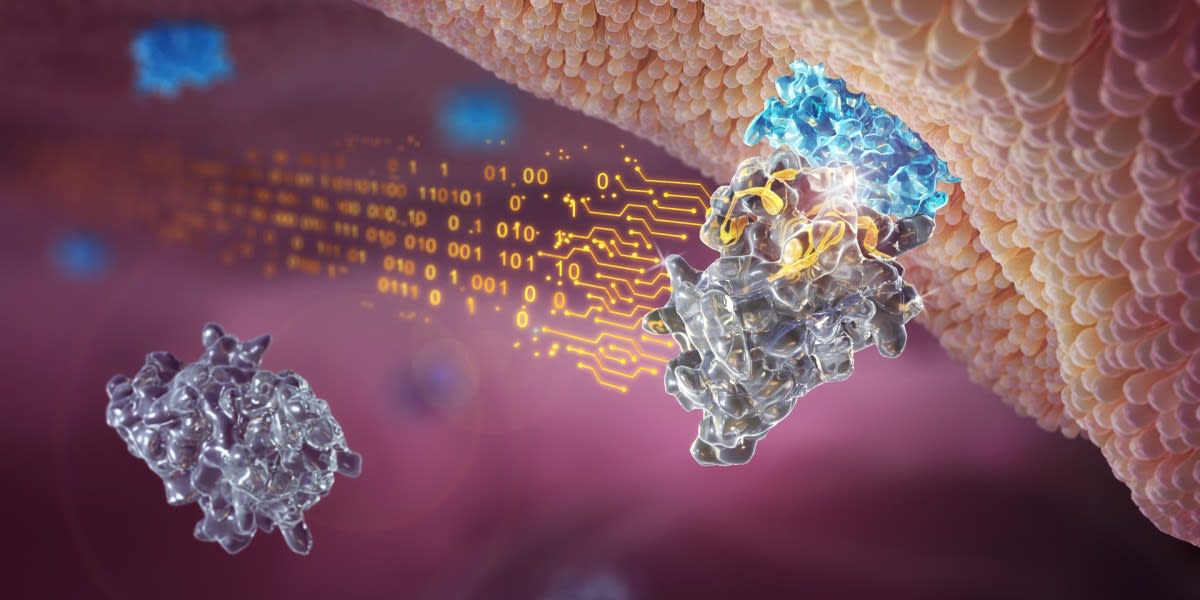
The pharmaceutical industry has long operated under a "brute-force" paradigm. For decades, the discovery of a single viable drug candidate resembled a high-stakes lottery, requiring billions of dollars in R&D and over a decade of laboratory trial-and-error. The attrition rate is staggering: for every 10,000 compounds screened, perhaps one eventually reaches a pharmacy shelf. However, we are witnessing a fundamental shift in this trajectory, driven by the convergence of generative models, protein folding prediction, and high-speed simulation.
This is not merely a marginal improvement in efficiency; it is a structural transformation. By moving from a process of "discovery through exhaustive testing" to "design through computational prediction," the life sciences sector is effectively digitizing its core value chain. For business leaders and stakeholders, this represents a massive pivot toward de-risking one of the most volatile investment classes in the global economy.
The Computational Revolution in Protein Engineering
At the heart of this transition is Generative Biology, a field powered by deep learning architectures capable of predicting the three-dimensional structures of complex proteins—the building blocks of modern medicine. Traditional drug discovery focused on small-molecule chemistry, which is often limited in its specificity. Modern biologics, conversely, are engineered proteins that act with surgical precision. Until recently, the complexity of these proteins made them incredibly difficult to design from scratch.
Modern AI platforms have changed the calculus. By training on vast repositories of protein sequence data, models can now "hallucinate" or design novel proteins that have never existed in nature but are engineered to perform specific therapeutic functions. This transition offers several critical advantages for R&D-heavy organizations:
- Virtual High-Throughput Screening: Instead of synthesizing thousands of candidates in a wet lab, researchers can run millions of simulations in a cloud environment, narrowing the field to only the most promising candidates before a single pipette is touched.
- Targeted Efficacy: AI-driven design allows for the optimization of a molecule's binding affinity, safety profile, and stability simultaneously, reducing the likelihood of late-stage clinical failures.
- Reduced Development Cycles: By streamlining the iterative process of trial and error, companies are cutting years off the early-stage development timeline, significantly improving the net present value (NPV) of their project pipelines.
For the C-suite, this represents a shift from capital-intensive laboratory operations to intellectual-property-intensive digital operations. The ROI implications are profound: lowering the "cost per successful drug" is the most direct lever for increasing shareholder value in the biotech and pharmaceutical sectors.
Operationalizing Intelligence: Beyond the Lab
The integration of AI into drug discovery is not an isolated scientific advancement; it is a catalyst for broader Digital Transformation. As these tools become more sophisticated, they are being integrated into the enterprise tech stack, creating a continuous flow of data from the research bench to the clinical trial pipeline and beyond.
This digital evolution relies heavily on the marriage of advanced modeling with traditional enterprise systems. For instance, the data generated by AI protein-design models must be synchronized with robust Customer Relationship Management (CRM) platforms and clinical trial management systems. This ensures that the intelligence gained in the lab informs regulatory strategy and commercialization plans in real-time.
Furthermore, we are seeing the emergence of AI Agents—specialized autonomous software entities—that monitor the progress of various drug candidates. These agents can manage complex workflows, such as flagging potential regulatory bottlenecks, summarizing vast amounts of scientific literature, or automating the reporting of experiment outcomes to stakeholders. The impact on organizational agility is immense:
- Automation of Data Pipelines: Reducing the manual effort required to ingest, clean, and analyze multi-omics data, allowing scientists to focus on hypothesis generation rather than data management.
- Cross-Functional Collaboration: Breaking down the silos between bioinformatics teams, regulatory experts, and market access professionals through centralized, AI-driven data repositories.
- Predictive Portfolio Management: Leveraging historical and real-time project data to predict which candidates have the highest probability of success, allowing firms to pivot resources dynamically rather than being locked into failing strategies.
As these technologies mature, adoption trends show a clear move toward a hybrid model. Firms are increasingly prioritizing "AI-native" infrastructures where computational biology is the first step of the product lifecycle, not an afterthought.
Future-Proofing the Pipeline
Looking forward, the challenge for business leaders is not just in the procurement of the latest AI tools, but in the cultural and technical integration of these systems into their existing workflows. The competitive advantage will go to those who can successfully build an "AI-first" feedback loop, where every failed experiment—or successful one—is fed back into the model to improve future design performance.
This is the next generation of competitive intelligence. We are moving toward a future where the pharmaceutical industry operates with the speed and data-driven precision of big tech. Organizations that treat AI as a core strategic asset, rather than a peripheral research tool, will inevitably dominate the next decade of therapeutic development. The bottleneck is no longer scientific possibility; it is the speed at which enterprises can adapt their internal operational architecture to leverage these powerful new computational capabilities.
To successfully integrate these advanced workflows, businesses must focus on creating seamless bridges between high-level AI analysis and their core internal processes. AOODAX helps organizations achieve this by developing custom automation solutions that connect complex data insights to day-to-day operations, ensuring that the technology you adopt translates into measurable, long-term efficiency.