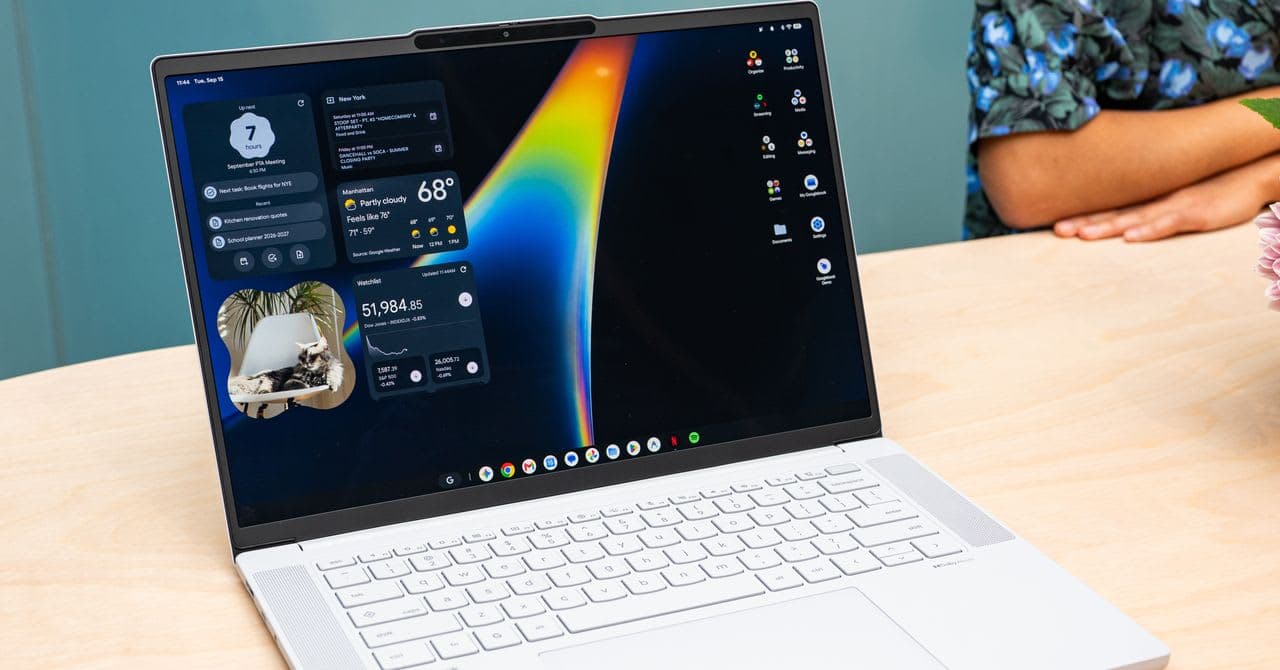
The long-standing "walled garden" strategy of Apple has served as the gold standard for user experience. For over a decade, the ability to seamlessly transition from an iPhone to a MacBook—handling handoffs, shared clipboards, and instantaneous file syncing—has been a major competitive moat. For years, the Android and ChromeOS ecosystem felt fragmented in comparison, a collection of disparate hardware that lacked the unified synergy of the Cupertino approach. However, the paradigm is shifting. As Google doubles down on hardware integration, we are seeing the emergence of a "Googlebook" philosophy that could fundamentally alter how enterprises approach mobile and desktop workflows.
The Convergence of Mobile and Desktop Ecosystems
For the modern professional, the boundary between a mobile device and a laptop has effectively dissolved. We no longer treat our smartphones as secondary communication tools; they are the primary intake engines for business data. Yet, the friction involved in moving a document, a communication thread, or a snippet of data from a mobile interface to a desktop environment remains a productivity killer.
Google is now actively closing this gap. By tightening the integration between Android devices and laptops running ChromeOS, the tech giant is moving toward a unified operating experience. This isn't merely about file sharing; it is about state preservation across devices. When a user is mid-task on an Android phone, the intent is for the ChromeOS environment to recognize that context, offering a frictionless "pick up where you left off" experience.
From a business perspective, this shift is critical. Companies that rely on heterogeneous device fleets have historically faced higher overhead in managing security and productivity silos. If an organization can lean into a cohesive Google-centric hardware ecosystem, they reduce the "context switching" tax that plagues knowledge workers. When the device ecosystem acts as a single, distributed computer, the time to value for business processes—such as reviewing a CRM entry on the go and finalizing it on a desktop—decreases significantly.
Beyond Connectivity: The Role of AI and Orchestration
The transition toward a unified ecosystem is being accelerated by the integration of Generative AI and advanced automation. While seamless connectivity is the baseline, the next phase of this transformation involves intelligent orchestration.
Modern business workflows require more than just moving files; they require the automated movement of information into the right systems. Consider the following implications for the enterprise:
- Contextual Intelligence: Future ChromeOS devices will likely leverage on-device AI to predict which applications a user needs based on their current mobile activity, effectively pre-loading the desktop state.
- Unified Security Posture: A tightly coupled ecosystem allows for more robust Identity and Access Management (IAM). When the phone acts as an authenticator for the laptop, organizations can implement more rigorous multi-factor authentication without sacrificing user speed.
- Actionable Data Bridges: With the rise of AI agents, the goal is for these devices to work in tandem to execute tasks. A user might dictate an instruction into their phone, have the logic processed by an agent, and see the output reflected in a CRM dashboard on their desktop, all without manual input.
For business leaders, this represents a shift in digital transformation strategy. We are moving away from thinking about "mobile-first" or "desktop-first" and toward "unified-first" development. If your internal tools—your custom CRM, your ERP, or your project management suites—are designed to work across this fluid device ecosystem, you achieve a higher degree of operational agility.
Strategic ROI and the Future of the Workforce
Investing in a unified hardware ecosystem isn't just about employee convenience; it’s about maximizing Return on Investment (ROI) through increased velocity. When we analyze adoption trends in enterprise tech, we see that the most successful firms are those that remove friction from the "first mile" of data entry. If a field salesperson can update a lead while walking out of a client meeting, and that data is instantly accessible via a synchronized desktop environment for a manager to approve, the business cycle tightens.
The "Googlebook" movement—or the broader push toward cross-platform parity—suggests that Google is positioning itself as the primary partner for the enterprise software stack. For organizations already embedded in Google Workspace, the move toward hardware integration is a logical evolution. It allows IT departments to enforce policies that span across mobile and desktop environments with far less complexity than managing a mixed ecosystem of third-party security tools.
However, leaders must be cautious. Transitioning to a unified ecosystem requires a hard look at existing legacy systems. Digital transformation is rarely just about hardware; it is about ensuring that the software layer can actually handle the fluidity that modern devices provide. If your legacy applications cannot scale across platforms or lack the APIs to support cross-device state persistence, you are simply adding a faster layer of transport to a slow, archaic process.
The future of productivity lies in the background. It is found in systems that do not require the user to think about the "how" of data movement, but simply enjoy the result. As businesses continue to integrate advanced AI into their daily operations, the hardware will increasingly fade into the background, serving as a transparent interface for the intelligent software agents doing the heavy lifting.
Ensuring your business is prepared for this level of integration—where mobile and desktop are unified by intelligent automation—is a core competency for the modern enterprise. At AOODAX, we specialize in developing custom AI agents that bridge the gap between your mobile data inputs and your core business systems, ensuring your team is always working within a seamless, automated loop.