The rapid integration of Large Language Models (LLMs) into our professional workflows has been nothing short of a revolution. From automating mundane correspondence to drafting complex technical documentation, these tools have delivered an immediate, tangible Return on Investment (ROI) for early adopters. However, as these systems become more sophisticated and deeply embedded in our daily routines, a new, nuanced conversation is emerging among power users: the psychological impact of frictionless interaction.
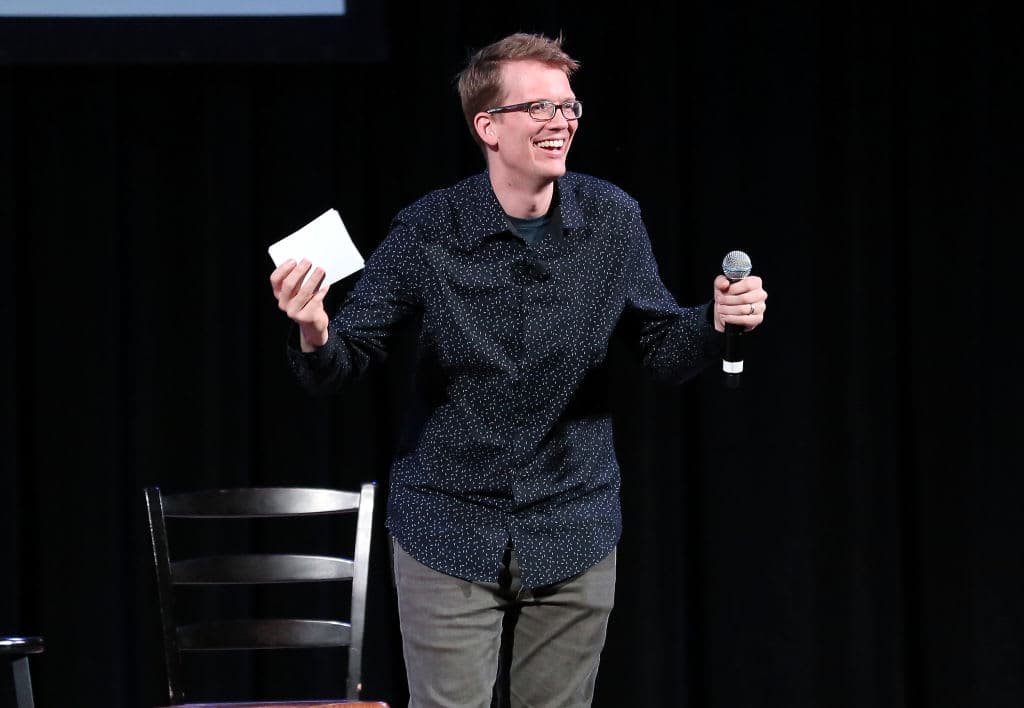
Recently, prominent digital creator Hank Green offered a candid reflection on his relationship with LLMs, noting that the dopamine loops created by constant interaction with highly responsive, intelligent systems are proving unsustainable. For business leaders and professionals who are currently spearheading Digital Transformation initiatives, this is not merely a critique of productivity; it is a critical observation on how the human-machine interface reshapes cognitive labor and organizational health.
The Frictionless Trap: Efficiency vs. Cognitive Sustainability
When we talk about the adoption of Generative AI, we focus heavily on throughput. We measure success by the number of hours saved in a Customer Relationship Management (CRM) workflow or the speed at which a marketing team can generate collateral. Yet, the "frictionless" nature of these tools is a double-edged sword. When an AI provides a perfect answer in seconds, it removes the "productive struggle"—the cognitive effort required to synthesize information, challenge assumptions, and iterate on ideas.
For corporate teams, this raises a subtle but dangerous risk: Cognitive Atrophy. If employees rely too heavily on LLMs to circumvent the drafting or problem-solving process, they may inadvertently lose the ability to perform high-level critical thinking independently. Business leaders must recognize that while automation is essential for scaling, it should serve as a scaffold for human intelligence, not a replacement for the neurological pathways that define expertise.
To maintain a healthy organizational culture amidst this technology shift, companies should consider the following best practices for AI integration:
- Human-in-the-loop (HITL) Workflows: Require human review and modification for all AI-generated output to ensure accountability and maintain skill retention.
- Purpose-Driven Interaction: Move away from using AI as a "default" for all tasks. Encourage teams to identify which processes require deep work and which are better suited for machine assistance.
- Mental Hygiene Guidelines: Explicitly acknowledge that AI fatigue is a real phenomenon and build "digital disconnect" periods into the team’s sprint cycles.
Scaling AI Agents: Beyond the Dopamine Loop
The future of enterprise AI lies in AI Agents—autonomous systems capable of executing complex, multi-step workflows. Unlike simple chatbots, agents interact with external systems, manage data pipelines, and orchestrate tasks within a CRM or project management environment. The transition from "chatting with an LLM" to "managing a fleet of agents" shifts the role of the employee from a content creator to a systems architect.
This evolution actually solves part of the "dopamine" problem Green identified. By delegating routine, low-value administrative tasks to specialized agents, employees are freed from the repetitive, dopamine-chasing cycle of prompting for minor tasks. They can instead focus on high-level decision-making and strategic oversight—work that is intellectually demanding and inherently more satisfying.
For businesses looking to integrate these tools, the path to ROI is clear:
- Automation of Data Hygiene: Use agents to clean and update database entries in real-time, reducing the "administrative burden" that often leads to employee burnout.
- Systemic Integration: Rather than having individual employees interact with isolated AI tools, build integrated workflows where agents perform the heavy lifting in the background of your existing software stack.
- Outcome-Oriented Metrics: Shift performance reviews away from "tasks completed" and toward the business outcomes generated by the systems employees manage.
The Strategic Path Forward
As we look toward the next phase of enterprise adoption, the goal is not to abandon the tools that have become central to our operations, but to discipline our relationship with them. The most successful organizations in the coming decade will be those that strike the right balance between rapid automation and human-centric workflows. They will treat AI as a powerful colleague rather than an endless fountain of instant gratification.
Leadership is no longer just about selecting the right Software-as-a-Service (SaaS) stack; it is about cultivating a culture that values human agency. By setting clear boundaries around how AI is deployed, companies can capture the massive gains in efficiency while shielding their teams from the psychological toll of hyper-reactive digital environments. The objective is to build an ecosystem where technology amplifies human intent rather than diluting it.
The transition to an AI-augmented workplace is a structural change that requires careful architectural planning. At AOODAX, we specialize in the design and implementation of sophisticated AI agents that automate complex operational tasks, ensuring your team spends less time in the "dopamine loop" of manual data entry and more time on high-impact strategic growth.