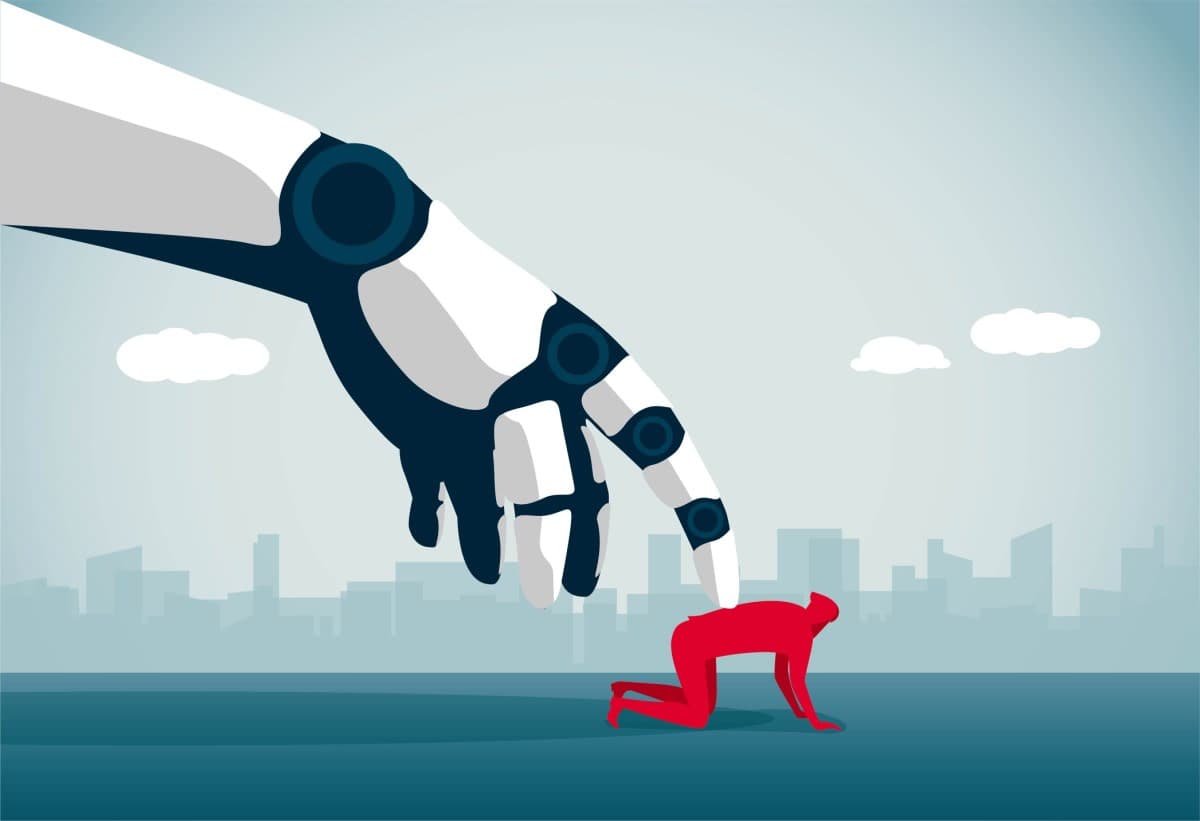
The landscape of generative artificial intelligence has shifted from a period of experimental wonder to a high-stakes geopolitical and corporate arms race. For business leaders, the current environment—dominated by the aggressive development cycles of OpenAI and Anthropic—is both exhilarating and structurally unsettling. We are no longer discussing whether AI will transform industry workflows; we are now witnessing a struggle over the foundational architecture that will power the next decade of digital transformation.
As these frontier model labs push the boundaries of reasoning and multi-modal capabilities, the industry finds itself at a crossroads. The pace of innovation is so rapid that the gap between research breakthroughs and enterprise-ready deployment has narrowed to almost zero. This creates a unique challenge for executives: how do you integrate systems that may undergo a foundational paradigm shift every six months?
The Strategic Tug-of-War: Open Weights vs. Closed Silos
The current friction in the AI community isn't just about parameter counts or benchmark scores. It is fundamentally about the philosophy of access. We have seen a distinct split in the industry’s trajectory. On one side, companies like OpenAI and Anthropic are doubling down on proprietary, highly guarded "black box" models. They argue that safety and alignment are paramount, requiring centralized control.
On the other side, leaders like Mark Zuckerberg have championed an "open weights" approach through Meta and Llama. The business argument here is compelling: for digital transformation to reach its full potential, developers need the flexibility to fine-tune models on proprietary data without being beholden to a single vendor’s API pricing or moderation filters.
This rivalry has significant ROI implications for the enterprise. If you commit your entire stack to a closed ecosystem, you risk "model lock-in," where your company’s automation workflows become tethered to a provider’s evolving terms of service and performance whims. Conversely, open-weights strategies require higher internal technical debt and more sophisticated engineering talent to maintain.
Key considerations for business leaders evaluating this landscape include:
- Infrastructure Interoperability: Can your current AI agents switch between models if one vendor fails or pivots?
- Data Sovereignty: Does your chosen model provider respect your data privacy, or are they training their future iterations on your intellectual property?
- Deployment Versatility: Does your automation stack rely on cloud-bound APIs, or can you deploy smaller, efficient models on-premise for sensitive tasks?
Beyond LLMs: The Rise of Embodied Intelligence
While the software wars grab headlines, the next frontier is physical. The emergence of Black Forest Labs and their push into the visual and robotics space signals that we are moving from the era of "chatbots" to the era of "embodied intelligence." For years, we treated AI as a digital assistant sitting behind a screen. Now, the research focus is shifting toward models that can perceive the physical world, understand causality, and execute tasks in real-time environments.
This has profound consequences for industries that have historically lagged in digital transformation, such as logistics, manufacturing, and supply chain management. When AI models can translate natural language instructions into physical action—or at least into highly accurate digital control sequences—the scope of automation expands from email drafting and CRM entry to the direct manipulation of physical assets.
For the modern enterprise, this means the definition of "tech stack" is expanding. We are no longer just looking at software integrations; we are looking at how intelligent agents can interact with legacy physical infrastructure. The companies that win in the next five years will be those that view AI not as a siloed IT project, but as a universal fabric that connects their software, their customer data, and their operational workflows.
Navigating the Velocity of Change
The rapid evolution of these models necessitates a new mindset regarding technical debt. Historically, businesses waited for a technology to mature before investing. Today, waiting is the most expensive decision a leader can make. The cost of inaction isn’t just missed efficiency; it’s the inability to train your organizational muscle to interact with these new tools.
To remain competitive, firms should focus on the following pillars:
- Modularity: Build your AI architecture in layers. Keep your data layer independent of the model layer so you can swap out LLMs as performance and cost-efficiency dictate.
- Human-in-the-loop Automation: Focus on "agentic" workflows where AI handles the heavy lifting, but human oversight remains the anchor for quality control and strategic alignment.
- Data Hygiene: The quality of your AI is entirely dependent on the quality of your internal data. Invest in cleaning your CRM and operational databases now; if you don't, your "intelligent" agents will simply hallucinate at scale.
We are currently in a cycle of "irrational exuberance" balanced by intense technological capability. While the labs race for dominance, businesses must focus on the practical application of these tools. The goal isn't to own the best model—it's to build the best, most resilient system for your specific customers and industry.
At AOODAX, we bridge the gap between these rapid research advancements and your specific business goals, helping you architect custom AI agents that turn complex data into actionable, automated workflows. By integrating these solutions directly into your existing ecosystem, we ensure that your digital transformation is built for longevity, not just the latest trend.