In the fast-evolving landscape of enterprise artificial intelligence, the difference between a high-performing model and a stagnant project often comes down to the efficiency of the training process. As businesses race to deploy sophisticated generative AI and predictive models, the technical bottleneck frequently lies in how systems learn from uncertainty. Enter the Reparameterization Trick, a foundational mathematical technique that is quietly revolutionizing how we optimize complex, stochastic models.
For business leaders overseeing digital transformation, understanding this concept is vital. It represents the shift from "brute-force" machine learning to smarter, more stable gradient estimation. When your AI systems can learn more reliably, you reduce compute costs, accelerate time-to-market for proprietary models, and achieve higher ROI on your data science infrastructure.
Taming the Noise: The Math Behind Stability
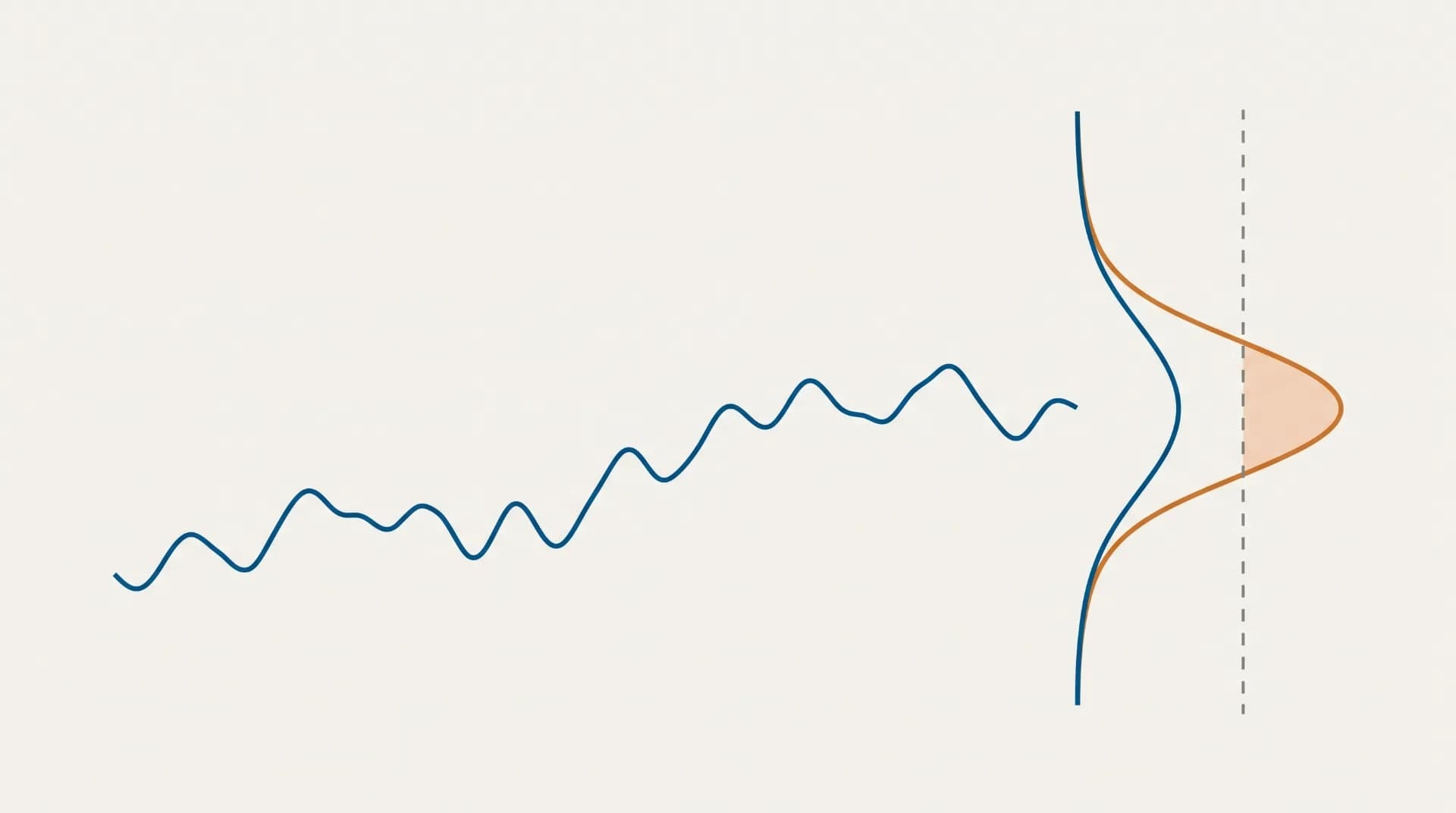
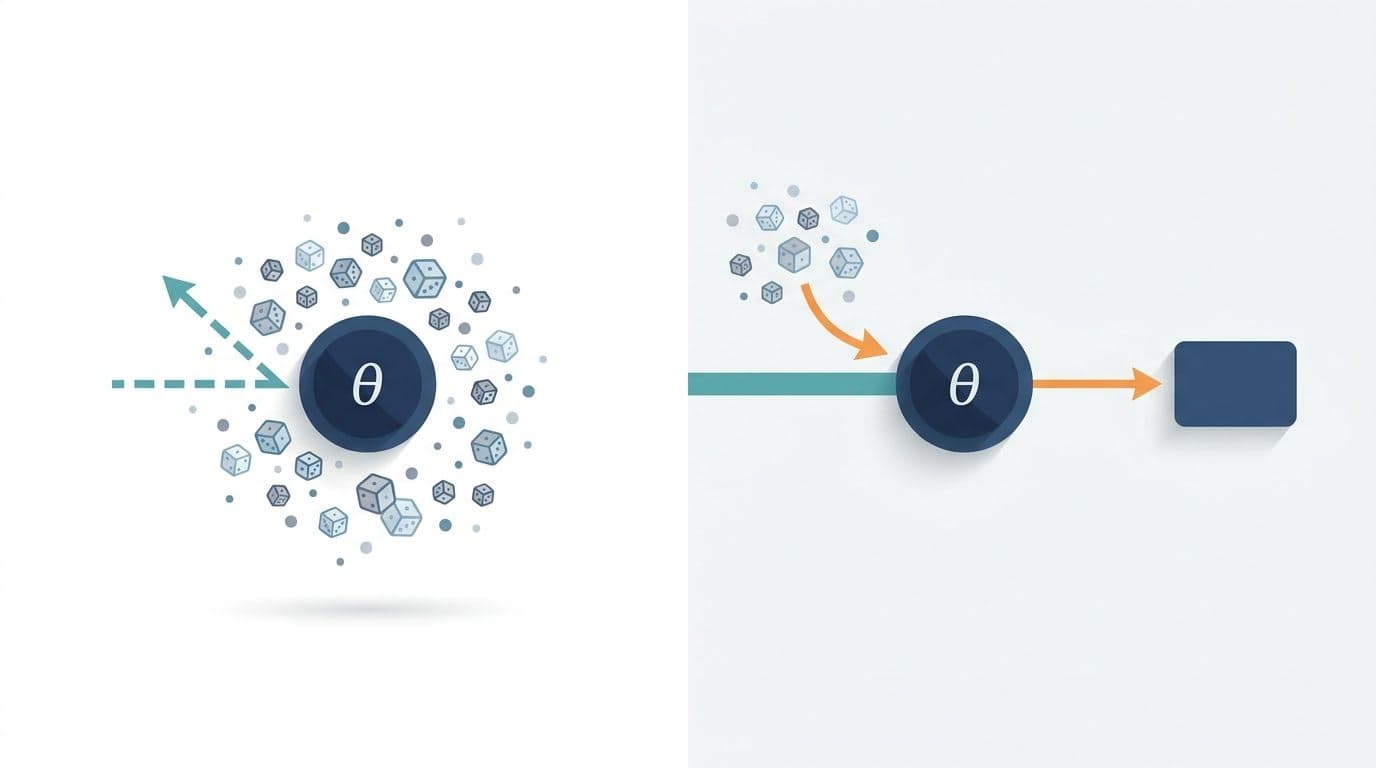
At the heart of many advanced AI architectures—including Variational Autoencoders (VAEs) and modern Probabilistic Graphical Models—is the need to sample from a distribution. Traditionally, this introduced significant noise into the gradient descent process. When an algorithm tries to learn by backpropagating through a stochastic node, the randomness often obscures the signal, leading to erratic convergence and high-variance estimates.
The reparameterization trick solves this by decoupling the randomness from the model’s parameters. Instead of sampling directly from a distribution that is tied to the trainable weights, we shift the randomness to an independent, external variable. By expressing the stochastic node as a deterministic function of the inputs, the weights, and an auxiliary noise variable, we essentially move the "chaos" outside the computation graph.
This transformation provides two critical advantages:
- Differentiability: Because the randomness is isolated, we can flow gradients through the system smoothly, allowing standard backpropagation to work effectively.
- Variance Reduction: The noise no longer interferes with the weight updates, leading to significantly faster and more stable model training.
For a CTO, this translates into a tangible operational benefit: shorter training cycles for custom AI models. When models converge faster, your engineering teams spend less time tuning hyper-parameters and more time deploying features that add business value.
Beyond Research: The ROI of Stable Training
In the context of the modern enterprise, the stakes of stochastic optimization are high. Consider an AI-driven CRM that predicts customer churn by accounting for the inherent uncertainty in user behavior. If the underlying model uses poor gradient estimation, the churn predictions will be volatile, leading to inaccurate marketing spend and wasted resources. By implementing reparameterization, data science teams create more robust models that better generalize to real-world, unpredictable data patterns.
The adoption trends in the industry are clear: companies are moving away from monolithic, "one-size-fits-all" foundational models toward specialized, fine-tuned, and modular architectures. This trend toward agentic workflows—where AI agents are tasked with multi-step reasoning and decision-making—relies heavily on the ability to model uncertainty effectively. As these agents interact with dynamic business environments, their ability to "learn" from environmental noise without destabilizing their logic is paramount.
When we look at Digital Transformation, the transition to more sophisticated, probabilistic models allows for:
- Automated Decision Support: Systems that provide confidence intervals alongside predictions, allowing human operators to better evaluate risk.
- Precision Personalization: Reducing the "noisy" behavior of recommendation engines, resulting in higher user engagement and conversion rates.
- Resource Optimization: Efficient training leads to reduced cloud computing bills—a critical metric for sustainability-conscious enterprises.
Bridging the Gap Between Theory and Deployment
While the reparameterization trick is rooted in advanced statistical theory, its implications are deeply practical. It represents the maturation of machine learning from a research-heavy discipline into a robust engineering practice. For companies struggling with the "production gap"—where models perform well in the lab but fail under real-world pressure—adopting these advanced optimization techniques is the next logical step in the maturity model.
The forward-looking executive must view these mathematical refinements not just as academic exercises, but as the engine room of enterprise productivity. As we move deeper into an era of intelligent automation, the ability to minimize variance while maximizing intelligence will become a distinct competitive advantage. The firms that prioritize algorithmic efficiency today will be the ones capable of scaling complex, autonomous systems tomorrow without the hidden costs of unstable, unpredictable AI behavior.
To stay ahead, business leaders should audit their current AI roadmap to ensure their technical teams are leveraging the most efficient gradient estimation methods possible. While the algorithms may be complex, the objective remains simple: building systems that are not just smart, but reliably intelligent at scale.
At AOODAX, we help organizations bridge the divide between theoretical AI potential and reliable, scalable implementation. Our team specializes in the development of robust AI agents tailored to your unique business processes, ensuring that your automated workflows are built on a foundation of precision-engineered, high-performance models.