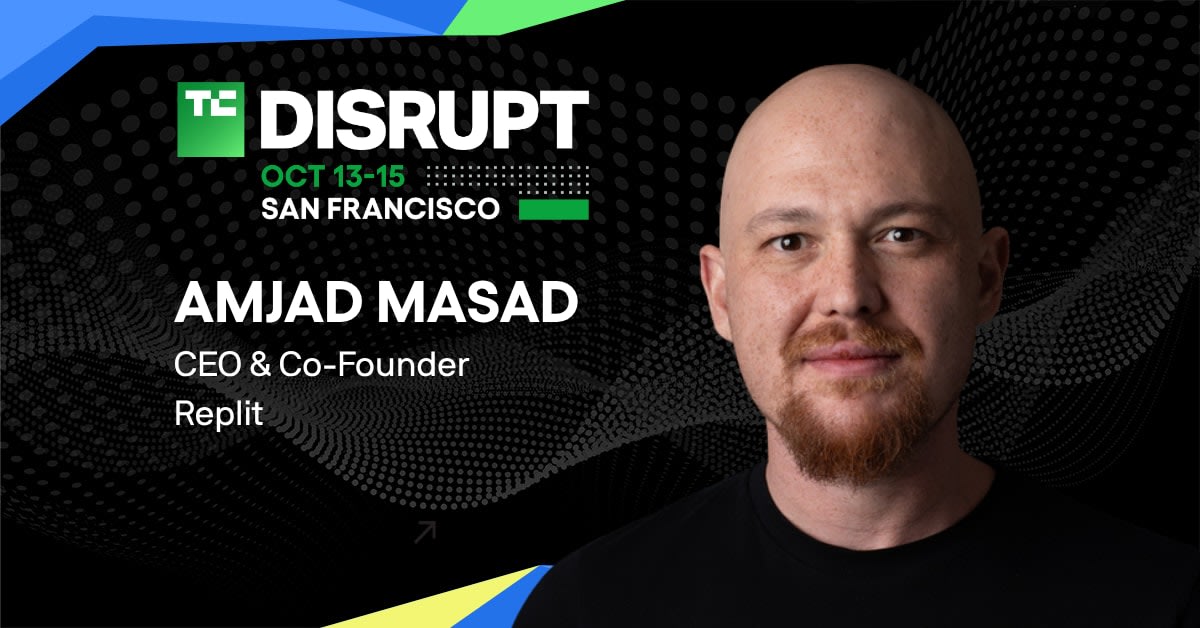
The landscape of software development is undergoing a tectonic shift, moving away from the siloed, localized environments of the last three decades toward a fluid, cloud-native, and AI-augmented paradigm. As we look toward major industry gatherings like TechCrunch Disrupt 2026, the narrative has clearly moved beyond simple coding assistance to the broader question of how platforms like Replit are fundamentally redefining the software development lifecycle (SDLC) for the enterprise.
At the heart of this transformation is a transition from "writing code" to "orchestrating intent." Leaders like Replit CEO Amjad Masad have long championed the idea that the barrier to entry for building complex digital products should be virtually nonexistent. For business leaders, this represents more than just a change in toolsets—it represents an existential shift in how organizations approach digital transformation, speed-to-market, and the scalability of their internal engineering teams.
The Democratization of Engineering and the Role of AI Agents
The most significant trend currently reshaping the enterprise is the integration of AI agents into the development workflow. We are no longer merely looking at autocomplete features; we are witnessing the emergence of autonomous systems capable of scaffolding entire microservices, debugging legacy codebases, and bridging the gap between business logic and technical implementation.
When development becomes instantaneous—as platforms like Replit enable through cloud-based, collaborative environments—the focus for management shifts from resource management to outcome management. This is the ultimate realization of "low-code" ambitions, where the limitations of legacy CRM systems or monolithic software suites are bypassed by the ability to rapidly deploy bespoke tools that serve specific business needs.
Consider the following implications for the modern enterprise:
- Accelerated Prototyping: Business units can now iterate on internal tools in hours rather than months, allowing for rapid A/B testing of operational workflows.
- Reduced Friction in Talent Acquisition: By moving development to the browser and embedding AI assistance, companies can expand their talent pool, onboarding developers who are highly skilled in logic and architecture but less familiar with complex, environment-specific configurations.
- Operational Agility: With cloud-native environments, the "it works on my machine" problem—a major drain on productivity—is effectively neutralized, ensuring that deployments are consistent across the organization.
For the CIO, this means the ROI of engineering efforts is becoming easier to measure. When the overhead of environment setup and infrastructure maintenance drops, the capacity to deliver value-added features increases proportionally. Automation is no longer just for high-volume tasks; it is now the primary mechanism through which human creativity is translated into software.
Bridging the Gap Between Technical and Non-Technical Stakeholders
Historically, a massive divide existed between business strategy and the technical teams responsible for executing it. This gap is the primary reason why so many digital transformation initiatives fail: the "translation" of business requirements into code is a lossy, time-consuming process.
We are entering an era where AI acts as the universal translator. As development environments become more intuitive and integrated, we see a rise in "citizen developers" supported by professional engineers who now spend more time on system architecture and less on boilerplate syntax. This convergence is critical for maintaining a competitive edge in a globalized economy. When a business leader at a SaaS firm can describe a workflow improvement to an agent-integrated platform and see a functional prototype within minutes, the entire pace of business intelligence changes.
Key adoption trends indicate that companies are shifting their internal investments in several ways:
- API-First Integration: Companies are prioritizing platforms that offer seamless connectivity between their automation stacks and their existing enterprise data sources.
- Unified Development Experiences: The industry is moving toward "Integrated Development Environments" that are as collaborative as a document editor, breaking down the wall between documentation, communication, and execution.
- Security-by-Design: As AI becomes more proficient at identifying vulnerabilities in real-time, the audit trail of software development becomes more transparent and robust.
However, leaders must be cautious. The ability to build rapidly does not replace the need for governance. A robust strategy requires a balance between the agility provided by modern development platforms and the security protocols necessary to protect sensitive intellectual property and customer data.
The future of software is not just about the lines of code being written; it is about the speed at which an organization can turn a business hypothesis into a functional, revenue-generating tool. Those who master the art of integrating human-led strategy with AI-driven execution will find themselves at a significant advantage. As we observe the evolution of these platforms, the focus for the next few years will remain on how effectively teams can leverage these sophisticated environments to do more with less, ultimately transforming the software developer from a builder of tools into an architect of digital strategy.
As organizations look to implement these advanced AI-driven workflows, the challenge often lies in the custom integration of these tools into existing legacy infrastructures. At AOODAX, we specialize in bridging these gaps through custom software development that allows businesses to scale their operations without being hindered by technical debt or siloed systems.


