The modern data architecture stack is undergoing a profound shift. For years, the enterprise playbook mandated centralizing everything into a singular, monolithic data warehouse. But as data gravity increases and the cost of egress grows, the "move everything to one place" strategy is hitting a wall of latency and budget bloat. We are entering the era of federated data processing, where the intelligence moves to where the data lives, rather than the other way around.
Recent developments in lightweight, high-performance analytical engines—specifically DuckDB—have catalyzed this change. When we combine this engine with tools like Quack, we are no longer just looking at a clever script; we are looking at a fundamental change in how businesses can orchestrate complex, concurrent queries across disparate, remote environments. For the tech leader, this represents an opportunity to unlock insights without the traditional friction of ETL (Extract, Transform, Load) pipelines.
The Shift Toward Distributed Analytical Workloads
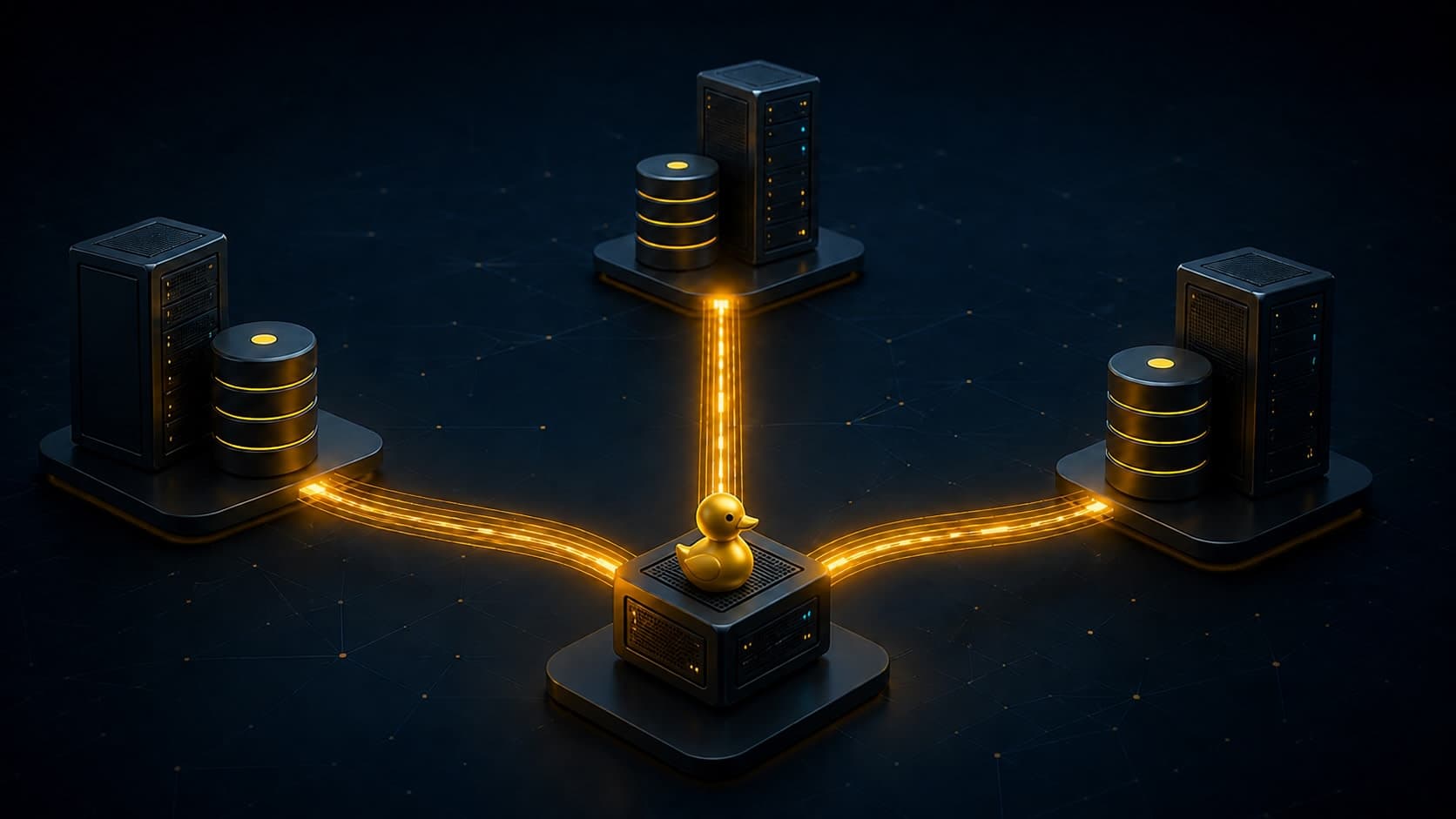
Historically, executing SQL across three distinct servers meant writing custom integration logic, dealing with brittle API layers, or enduring the massive overhead of a centralized warehouse cluster. Today, the ability to execute concurrent SQL across remote nodes—a concept demonstrated by the experimental usage of Quack—marks a shift toward decentralized data orchestration.
Instead of waiting for data to be ingested into a central repository, businesses can treat their infrastructure as a distributed mesh. This has massive implications for the ROI of data teams. By minimizing data movement, organizations can:
- Reduce Cloud Egress Costs: Avoiding the constant transfer of large datasets between regions or cloud providers translates into immediate bottom-line savings.
- Enhance Operational Agility: Analytical queries can be performed in situ, allowing data scientists to validate hypotheses in minutes rather than hours.
- Improve Security and Governance: Sensitive data can remain within its regional or departmental boundary, with only the query results being aggregated, reducing the blast radius of potential data leaks.
This architecture is not just about speed; it is about autonomy. When business units can query their own distributed data stacks concurrently without bottlenecking the central IT or data engineering departments, the entire organization moves faster. This is a prerequisite for the next generation of digital transformation, where data availability is the primary driver of competitive advantage.
Connecting Distributed Data to the Agentic Workflow
If we look toward the horizon, the ability to run concurrent, distributed SQL is a foundational requirement for the rise of AI Agents. Currently, most LLM-based agents struggle when they need to reason over data that is physically separated across different databases or cloud buckets. If an agent is tasked with summarizing performance metrics across three global regions, it shouldn’t be forced to wait for a monolithic batch job.
By leveraging decentralized analytical engines, we can enable agents to perform "just-in-time" data synthesis. Imagine a CRM-integrated agent that needs to pull churn data from a Postgres instance in Europe, marketing attribution from a Snowflake warehouse, and customer sentiment from a local DuckDB instance. If the infrastructure supports concurrent, distributed SQL execution, the agent can synthesize these disparate signals in a single, fluid process.
This is where the intersection of automation and analytical infrastructure becomes vital. As we move away from static reports and toward proactive, AI-driven decision-making, the underlying infrastructure must support high-concurrency, low-latency cross-server execution. The ability to "talk" to multiple nodes simultaneously is not merely a technical luxury; it is the infrastructure required to scale autonomous decision-making systems.
Strategic Adoption and the Future of Data Architecture
For business leaders, the takeaway is clear: the era of the "everything-everywhere" monolithic warehouse is evolving. While centralized data stores will always have a place for long-term archival and historical consistency, the future of active, real-time business intelligence lies in distributed execution.
Adopting these lightweight, concurrent approaches allows companies to:
- Pilot Faster: Use remote execution to test business logic against production-grade data without the need for massive staging environments.
- Scale Without Complexity: Rather than scaling up a single, expensive engine, add nodes that operate as a federated whole.
- Democratize Insights: Empower distributed teams to query their own domains, provided they have the right architectural guardrails in place.
As you look to optimize your tech stack, focus on modularity. The goal is to move from a rigid data hierarchy to a flexible, distributed ecosystem where information flows seamlessly from source to decision. By reducing the distance between the data and the logic, you aren't just saving on compute costs—you are increasing the velocity at which your organization can react to market shifts and operational anomalies.
The challenge for many enterprises is not just the selection of these tools, but the seamless integration of distributed data processing into existing workflows. At AOODAX, we specialize in bridging these complex infrastructure gaps by developing custom software solutions that enable businesses to automate and query their data more intelligently, ensuring that your AI agents and automation platforms always have the real-time insights they need to drive results.