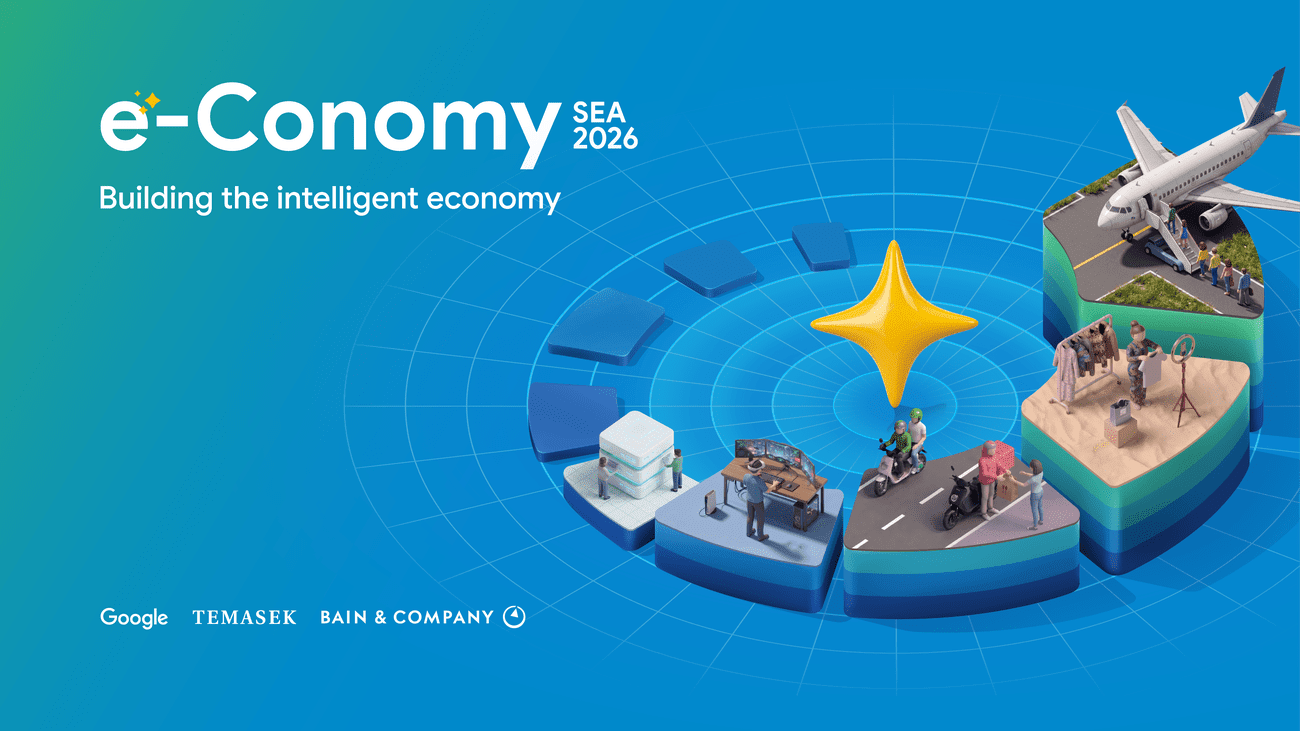
The tectonic plates of the global digital economy are shifting, and Southeast Asia has emerged as the new epicenter of this momentum. Recent projections suggest that the region is on a trajectory to reach a $368 billion digital economy by 2026, with an even more staggering $1 trillion milestone anticipated by 2035. While initial growth was fueled by e-commerce and ride-hailing services, the current acceleration is being driven by a more sophisticated engine: the widespread integration of Artificial Intelligence (AI) across industrial and service sectors.
For business leaders operating in or expanding into the ASEAN market, this is not merely a growth statistic; it is a signal that the era of speculative digital adoption is over. We have entered a phase of operational maturity where AI is moving from the back-office experiment to the front-line driver of competitive advantage.
The Infrastructure of Intelligence: Beyond Basic Digitization
The leap toward a trillion-dollar valuation relies on the transition from simple digitalization—moving processes online—to true Cognitive Automation. In the past, firms invested in Customer Relationship Management (CRM) systems primarily as databases to track interactions. Today, those same firms are injecting intelligence into these systems to predict customer churn, automate lead scoring, and personalize outreach at a scale that was previously impossible.
This shift is particularly evident in the deployment of AI Agents. Unlike traditional software that requires constant human input to execute a task, modern agents function as autonomous nodes within a business workflow. They can ingest data, make contextual decisions, and trigger downstream actions without latency. For a retail business, this means moving from a reactive inventory model to a predictive one, where demand spikes are anticipated and supply chains are rerouted in real-time.
For organizations looking to capture value in this high-growth market, the impact of these technologies on Return on Investment (ROI) is becoming clear through three primary vectors:
- Operational Efficiency: Reducing the cost-per-transaction by automating high-frequency, low-complexity tasks, thereby freeing human talent for strategic initiatives.
- Customer Personalization: Utilizing generative models to tailor marketing content and product recommendations based on real-time behavior rather than static demographics.
- Market Agility: Deploying automated intelligence to monitor regional competitor pricing and sentiment analysis, allowing for rapid pivots in market positioning.
Scaling Through Automation and Data Interoperability
As Southeast Asia’s digital ecosystem matures, the challenge for companies is no longer access to data, but the integration of disparate data silos. The most successful organizations are those that treat their digital infrastructure as a living asset. They are moving away from monolithic legacy software and embracing modular, AI-integrated architectures.
This transformation requires a fundamental change in how leaders view their technology stack. Automation is no longer a peripheral "add-on" to be considered after a project is completed; it is the foundation upon which new product offerings are built. In markets like Indonesia, Vietnam, and Thailand, where consumer mobile-first habits are firmly entrenched, companies are utilizing advanced Chatbots not just for basic support, but as primary interfaces for complex financial services and insurance claims.
The ROI implications are profound. When an organization reduces the manual overhead of data entry and customer resolution, the resulting agility creates a compounding effect. Companies that successfully implement these automated workflows are seeing shorter product development cycles and significantly higher conversion rates, as the friction between intent and transaction is systematically removed.
Future-Proofing the Business Model
To thrive in the coming decade, business leaders must acknowledge that the $1 trillion opportunity in Southeast Asia will be captured by the entities that best harness the intersection of AI and local market intelligence. The "AI-first" approach is no longer a buzzword; it is a prerequisite for survival. Leaders should prioritize three key actions to ensure their organizations are positioned to benefit from this regional expansion:
- Invest in Data Hygiene: AI is only as good as the data it processes. Cleaning and centralizing legacy data is the most urgent step for any firm planning to leverage advanced analytics.
- Prioritize Scalable Automation: Start by automating the bottlenecks in your customer journey—whether that is lead qualification, onboarding, or technical support—to generate immediate cost-savings that can be reinvested into innovation.
- Cultivate an AI-Literate Workforce: Upskilling is the primary bottleneck to adoption. Ensure your team understands the capabilities and limitations of AI agents to maintain a "human-in-the-loop" standard that protects brand reputation.
The path to 2035 will be paved by those who can convert the massive influx of digital data into actionable intelligence. The market is moving at a pace that favors those who automate today rather than waiting for tomorrow’s perfection. Organizations that integrate intelligent, automated systems now will find themselves occupying the high-margin space, while those who wait will be forced to compete on cost alone.
Navigating this transition requires more than just buying software; it requires a strategic architecture that aligns your goals with the capabilities of modern, intelligent tools. At AOODAX, we assist businesses in building this foundation through custom AI agents and intelligent automation that turn complex operational challenges into competitive advantages.