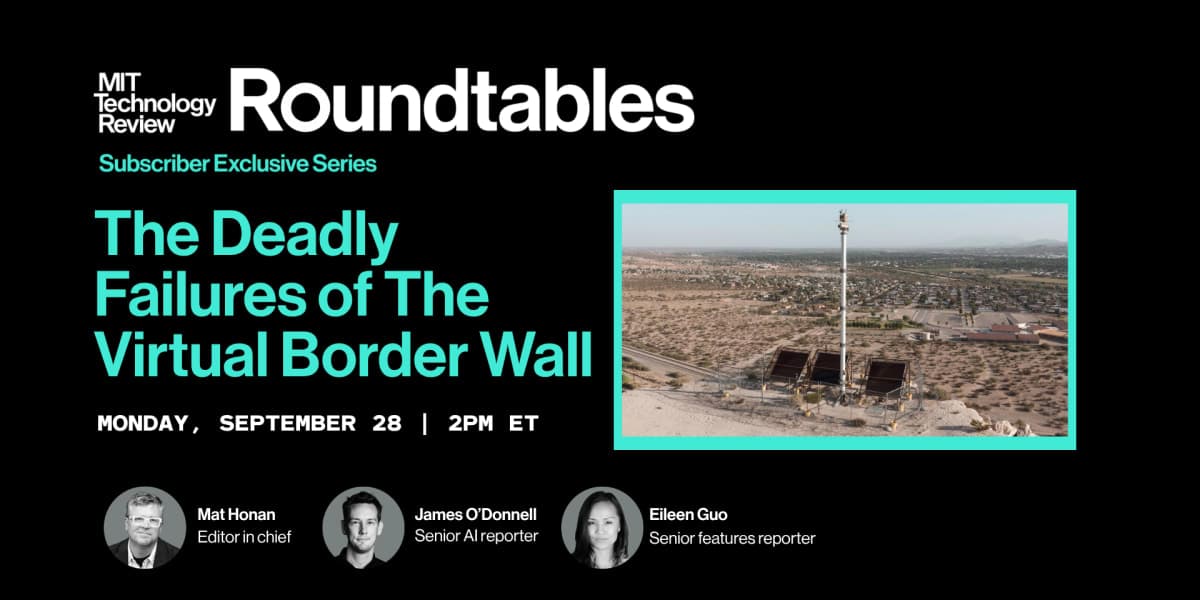
The promise of the "technological silver bullet" is perhaps the most dangerous siren song in the enterprise technology sector. For decades, governments and corporations alike have invested billions into expansive surveillance networks—frequently termed "virtual walls"—under the pretense that high-fidelity sensors, predictive analytics, and automated monitoring could replace the messy, human-centric reality of operational management. Yet, recent analysis of these long-term deployments reveals a sobering truth: a technology stack is only as effective as the systemic intelligence integrated into its architecture.
When we examine the multibillion-dollar investment into automated border surveillance, we see a textbook case of technological determinism—the flawed belief that deploying advanced hardware will automatically produce a desired social or operational outcome. In reality, these networks often suffer from "data obesity." They generate an overwhelming volume of telemetry—thermal imaging, seismic sensors, and drone-captured imagery—but lack the sophisticated AI agents required to synthesize this input into actionable decision-making.
For business leaders, this is a cautionary tale of digital transformation gone wrong. If a border surveillance network can cost billions and still fail to account for the actual human and operational outcomes it was intended to optimize, what does that say about the enterprise software suites currently being deployed in the private sector?
The Fallacy of Passive Automation
The failure of many large-scale surveillance projects stems from a fundamental misunderstanding of the difference between monitoring and intelligence. In the enterprise world, we see this manifest in companies that flood their Customer Relationship Management (CRM) systems with raw data but fail to implement the analytical layer necessary to interpret that data.
In the case of virtual walls, the systems often detect movement but lack the contextual awareness to distinguish between benign activity and critical events. This leads to "alert fatigue," a state where human operators become desensitized to the sheer volume of notifications. In a corporate environment, this is analogous to an automation pipeline that triggers endless notifications to sales or support teams, ultimately causing them to ignore the very signals that should prompt high-value intervention.
To avoid this trap, leadership teams must shift their focus from data collection to data utility. True digital transformation requires:
- Contextual Correlation: Systems must be able to ingest diverse data points—not just raw sensor feeds—to determine the intent behind a digital interaction.
- Edge Intelligence: Rather than sending all data to a centralized cloud for processing, businesses should leverage Edge AI to filter and prioritize signals locally.
- Human-in-the-Loop Integration: Automation should be designed to support human decision-making, not replace the nuanced judgment required in complex scenarios.
Beyond the Virtual Wall: Rethinking ROI and Ethics
The ROI of any technological investment—whether it is a multimillion-dollar surveillance project or a company-wide AI rollout—is measured by the efficiency gained and the waste eliminated. When projects focus solely on the deployment of tools rather than the refinement of outcomes, the cost of maintenance and the risk of ethical failures skyrocket.
In the enterprise space, the adoption of Generative AI and machine learning models is currently mirroring this trend. Many firms are rushing to integrate AI into their workflows without first auditing their data infrastructure. This leads to models that are technically impressive but functionally brittle. The "virtual wall" serves as a stark reminder: if you build a system based on faulty assumptions about how humans interact with that system, the technology will eventually become a liability rather than an asset.
Companies that successfully navigate this new era of digital complexity are those that treat their tech stack as a living organism. They prioritize agile integration, ensuring that their AI-driven tools are constantly recalibrated based on real-world performance metrics. This is not merely an IT upgrade; it is an organizational philosophy that demands transparency, accuracy, and a clear link between a software function and a business outcome.
Future-Proofing Through Intentional Design
Looking ahead, the next phase of tech maturity will be defined by "Quiet Tech"—solutions that do not just add more noise to an already saturated digital environment, but instead provide clarity. For business leaders, the takeaway is clear: the complexity of your tech stack is not a metric of success. If your surveillance tools, CRM platforms, or analytical dashboards are not demonstrably reducing the complexity of your operations, they are working against you.
The path forward requires a transition toward autonomous orchestration, where intelligent software agents handle the rote interpretation of data, freeing human teams to focus on strategy and high-stakes resolution. By prioritizing the quality of insights over the quantity of data, leaders can avoid the systemic failures that have plagued massive public sector projects, ensuring that their investments in digital transformation yield measurable, sustainable value.
Building a robust digital infrastructure requires a focus on clarity and precision rather than sheer scale. At AOODAX, we help business leaders bridge this gap by designing and implementing sophisticated AI agents that convert complex, noisy data streams into clear, actionable business logic, ensuring your automation efforts deliver real-world ROI.