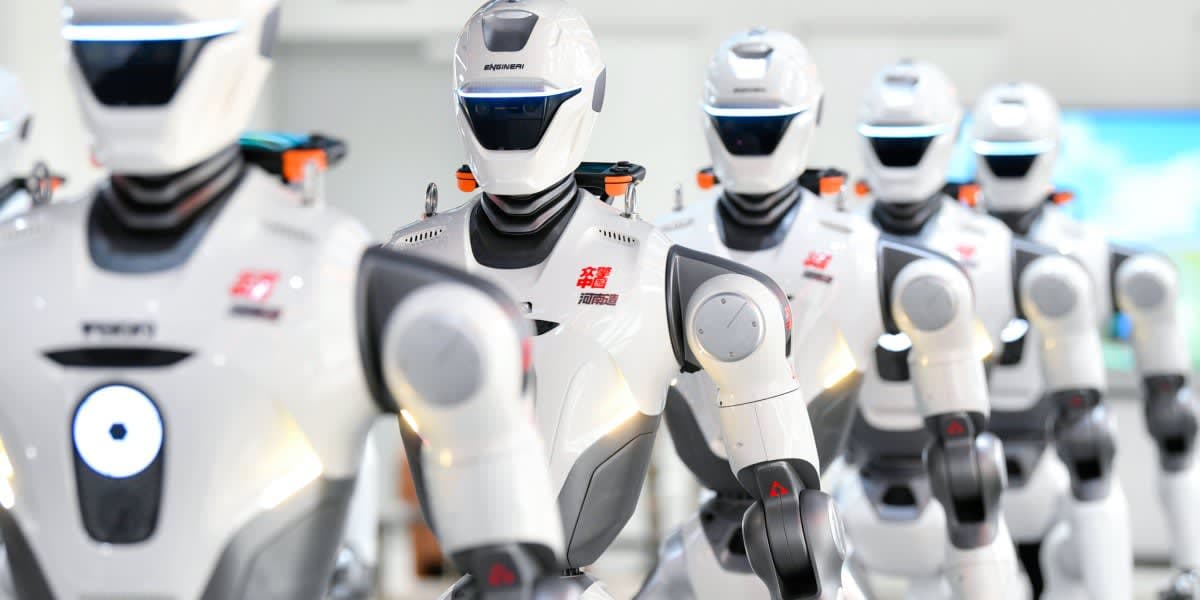
The landscape of industrial automation is undergoing a seismic shift. For years, the narrative surrounding humanoid robotics has been dominated by spectacle—viral videos of robots performing backflips or awkwardly navigating warehouse floors. However, as these machines transition from laboratory curiosities to tangible assets in supply chains and manufacturing, the regulatory environment is beginning to tighten. The recent emergence of protectionist sentiment toward robotics technology signals that we are moving out of the era of unbridled experimentation and into a period of strategic, geopolitical control.
For business leaders, this transition is not just about the hardware; it is about the security of the underlying artificial intelligence (AI) models that drive autonomous behaviors. As governments weigh the risks of proprietary automation technology crossing borders, companies must prepare for a future where the deployment of robotics and AI agents is inextricably linked to national policy and trade compliance.
The Convergence of Geopolitics and Automation
The push to localize robotics production and restrict the export of sensitive AI-driven movement controls is a direct response to the rapid maturation of the sector. For a long time, the barrier to entry for humanoid robotics was primarily physical: the challenge of building motors that could handle human-scale torque without weighing a ton. Today, that barrier is entirely cognitive. Advanced large foundation models (LFMs) allow robots to generalize tasks, moving beyond the pre-programmed, repetitive motions of traditional industrial robotic arms.
This capability—the ability for a robot to "see" and "reason" about its environment in real-time—has turned robotics into a dual-use technology. When a robot can autonomously navigate a complex factory floor, it can effectively be repurposed for tasks deemed sensitive by regulators. For organizations looking to integrate these technologies into their digital transformation strategy, the implications are profound:
- Supply Chain Resilience: Relying on international hardware may introduce compliance risks if future trade restrictions mandate a shift to domestic or "friendly-shore" robotics providers.
- IP Protection: The software controlling these robots—specifically the training data and edge-computing weights—is becoming the most valuable piece of intellectual property in the stack.
- Operational Continuity: Businesses that build their core workflows around cutting-edge automation must account for potential service interruptions if hardware or software support is localized by government decree.
This isn't merely a hardware challenge. It mirrors the shift we have seen in Cloud Computing and Data Governance, where data sovereignty has become a boardroom priority. As companies move to automate their physical labor, they are essentially creating an extension of their digital footprint. Consequently, the same governance frameworks used for software—such as ensuring data lineage and preventing unauthorized model training—must now extend to the factory floor.
Beyond the Hardware: Integrating AI Agents and Software Ecosystems
While the industry fixates on the physical form factor of the humanoid, the real ROI for enterprise lies in the AI agent ecosystem that manages the robot’s decision-making. A robot is only as efficient as the software orchestration layer that dictates its workflow.
When businesses evaluate their automation roadmap, they often focus on the "cringe-worthy" physical limitations—such as manual dexterity or battery life. While those are technical hurdles, the strategic bottleneck is integration. How does the robot communicate with your Customer Relationship Management (CRM) system? How does an AI agent on the factory floor report inventory data directly into a Resource Planning (ERP) interface without human intervention?
The most successful companies today are not the ones buying the most expensive hardware; they are the ones building the most robust integration layers. By leveraging Application Programming Interfaces (APIs) and custom software orchestration, leaders can treat their robotic fleet as a scalable, software-defined workforce. This approach offers several advantages:
- Vendor Agnostic Infrastructure: By building an abstraction layer between the robot and your business logic, you avoid being locked into a single manufacturer.
- Enhanced Auditability: Integrating robot actions with internal logging systems ensures that every move made by an autonomous unit is traceable, meeting the compliance demands of the modern regulatory environment.
- Scalability: Modern AI agents can coordinate hundreds of robotic units, moving from a centralized command structure to a distributed, swarm-intelligence model that reacts to customer demand shifts in real-time.
For businesses, the ROI implications are clear: the cost of a robot is a one-time capital expenditure, but the value lies in the software that enables that robot to provide utility over its lifecycle. As protectionism potentially limits the pool of available hardware, those who have invested in flexible, software-first orchestration will be the most insulated from disruption.
The Path Forward: Strategic Autonomy
The future of industrial automation will not be defined by the most anthropomorphic machine, but by the most intelligent software environment. As the regulatory climate for AI and robotics becomes more complex, the competitive advantage will go to organizations that treat their automation stack as a critical piece of their digital infrastructure.
Business leaders should prioritize interoperability. The goal is to build an environment where AI agents can fluidly exchange information between digital systems—like your CRM—and physical systems—like your warehouse bots—without creating proprietary bottlenecks. By focusing on flexible software architectures, companies can navigate the volatility of international trade policies while maintaining the speed and efficiency that modern markets demand.
As you navigate the complexities of integrating autonomous systems into your existing infrastructure, ensuring that your software orchestration is agile and future-proof becomes paramount. At AOODAX, we specialize in developing custom software and intelligent AI agents that allow your systems to communicate seamlessly, bridging the gap between your physical operations and your digital transformation goals.