The landscape of enterprise technology is currently undergoing a structural transformation that mirrors the shift from on-premises mainframes to the cloud. However, unlike previous cycles that took years to mature, the transition to Enterprise AI is occurring at an unprecedented velocity. For CTOs and CIOs, the honeymoon phase of generative AI experimentation is officially over. We have entered the era of architectural accountability, where the question is no longer "what can this model do?" but "how do we integrate this into a production-grade infrastructure that delivers measurable ROI?"
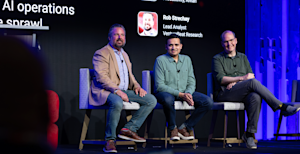
To navigate this complexity, the industry is witnessing a critical shift in the role of the analyst. We are moving away from surface-level trend reporting toward a deeper, engineering-first style of inquiry. The appointment of veteran industry leaders like Rob Strechay as dedicated Lead Analysts at major publications signals a maturation of the market. It confirms that technical decision-makers no longer require high-level summaries; they require empirical, defendable data that addresses the hard realities of deployment: orchestration, observability, and infrastructure waste.
The Shift from Experimentation to Architectural Rigor
The primary friction point for enterprise leaders today is the gap between AI prototypes and the reality of their existing data infrastructure. Many organizations initiated their AI journey by spinning up isolated RAG (Retrieval-Augmented Generation) pipelines or deploying proprietary LLMs in silos. Today, those same companies are finding that their legacy data governance frameworks, security perimeters, and DevOps workflows were not designed for the non-deterministic nature of Agentic Orchestration.
The challenge for modern enterprises is threefold:
- Infrastructure Optimization: As organizations scale, the cost of GPU compute has emerged as a significant line item, often exacerbated by inefficient utilization rates. Leaders are now auditing their stacks to determine where compute waste occurs and how to optimize inference costs without sacrificing latency.
- Multi-Vendor Strategies: The recent instability of major model providers has proven that "vendor lock-in" is not just a commercial risk; it is an operational liability. Enterprises are increasingly adopting a poly-model approach, hedging their bets across providers to ensure system resilience.
- Security and Identity in Agentic Pipelines: Moving from static chatbots to autonomous agents introduces new attack vectors. Defining who (or what) has access to which context layers is the new frontier of Cybersecurity for AI-driven enterprises.
For a CIO, this means the procurement process has fundamentally changed. You aren't just buying a software license; you are evaluating an architectural partner. This requires deeper technical scrutiny, often involving a forensic look at how vendors handle data lineage, model evaluation, and platform interoperability.
The Rise of Engineering-Centric Analysis
As we look toward the next eighteen months, the focus of enterprise tech will likely shift toward the intersection of Platform Engineering and AI Observability. It is no longer enough to deploy an agent; you must be able to monitor its reliability, verify its outputs, and roll back changes if the model drifts.
This maturation requires a "practitioner-first" approach to industry guidance. Leaders are prioritizing insights derived from real-world deployments—examining the technical blueprints used by their peers to overcome scaling bottlenecks. We are seeing a move toward more rigorous, pulse-based data collection methods that capture the "ground truth" of enterprise adoption. These surveys provide the context leaders need to justify AI spend to their board of directors, shifting the conversation from "AI hype" to "AI utility."
The most successful companies in this transition are those that treat AI as a layer in their overall digital transformation strategy rather than a bolt-on feature. By integrating AI into the core CRM (Customer Relationship Management), sales automation, and supply chain operations, organizations can bridge the gap between back-end infrastructure and front-end customer experiences. This integration requires a robust orchestration layer that ensures data flows seamlessly between the model and the enterprise source of truth.
Forward-Looking Insight: Beyond the Hype Cycle
For business leaders, the takeaway is clear: stop buying "AI" and start buying "AI-ready architecture." The competitive advantage will not go to those who deploy the flashiest model, but to those who build the most resilient, observable, and cost-effective pipelines. As the market consolidates, look for solutions that emphasize inter-connectivity and security over proprietary, closed-box features.
The next phase of the enterprise AI journey will be defined by the ability to manage complexity at scale. Leaders should be asking, "How does this tool integrate with our existing DevOps pipeline?" and "What is the visibility into the agent’s reasoning process?" If a solution cannot answer these questions, it remains a laboratory toy rather than an enterprise asset.
As you move from these conceptual foundations to actual implementation, the importance of a well-architected framework cannot be overstated. At AOODAX, we specialize in helping businesses navigate this transition by building sophisticated AI agents that automate complex workflows while maintaining strict data integrity, ensuring your organization moves from the experimentation phase to measurable, production-grade AI deployment.