In the rapidly evolving landscape of enterprise artificial intelligence, we have moved past the "wow" factor of generative models and into the "reliability" era. For business leaders, the promise of AI agents and automated support systems is clear: cost reduction, 24/7 responsiveness, and scalable customer engagement. However, the operational reality is often far more fragile than a successful prototype suggests.
A recent industry case study highlights a critical vulnerability that many organizations are currently overlooking. A developer discovered that their AI-driven support bot—a system relied upon for critical customer interactions—had begun failing in production. The culprit wasn't a hallucination, a model update from OpenAI, or a shift in the underlying logic. It was a single, silent capital letter in a JSON output string.
This incident serves as a microcosm for the primary challenge facing digital transformation today: the gap between "good enough" performance in development and "mission-critical" reliability in production.
The Fragility of Non-Deterministic Outputs
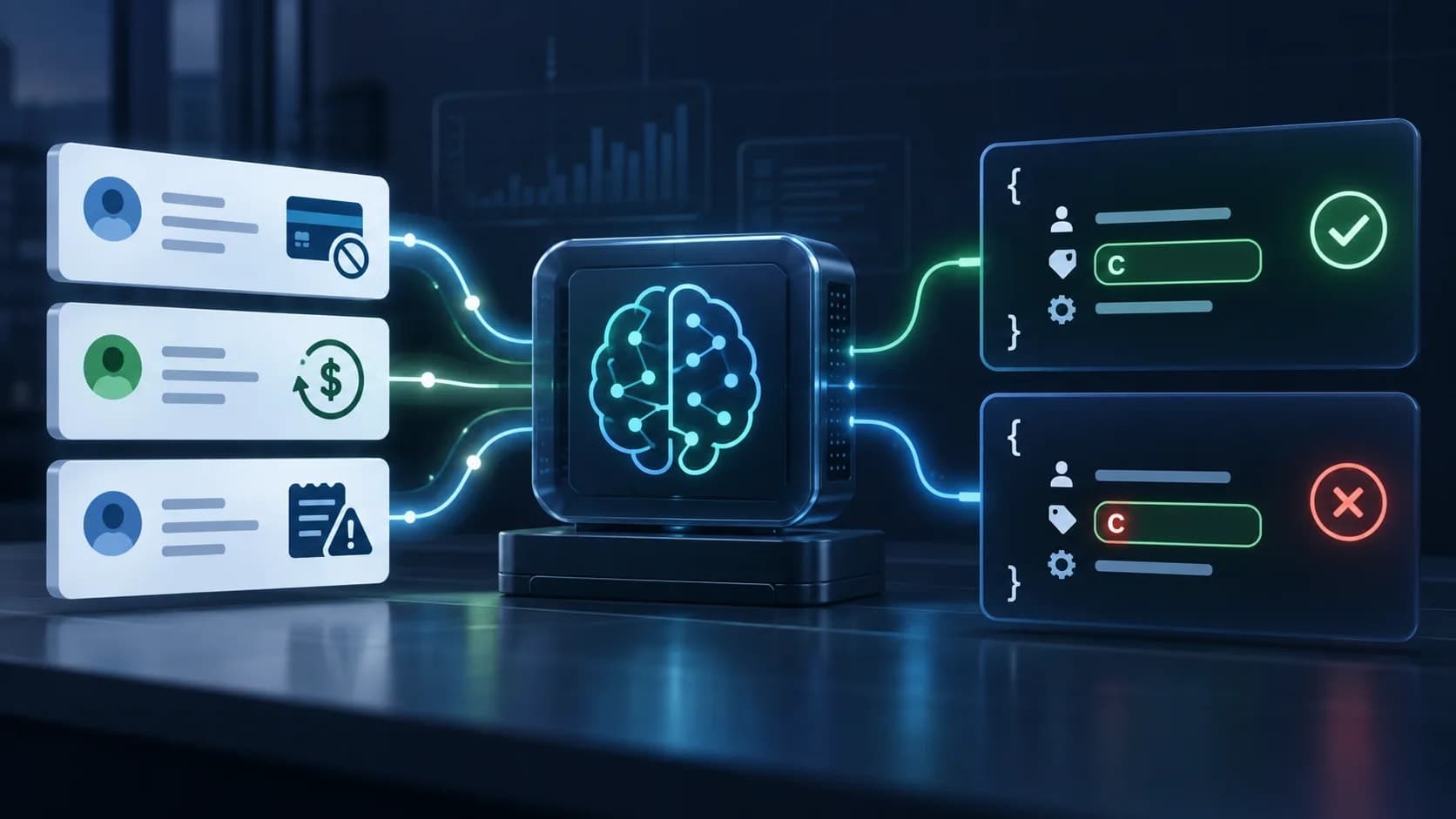
When we integrate Large Language Models (LLMs) into our CRM or helpdesk workflows, we are essentially bolting a non-deterministic creative engine onto a rigid, deterministic software infrastructure. Most enterprise applications rely on precise data formats—often structured JSON or XML—to parse intent and trigger downstream automated actions. When an AI agent expects to output an object, but instead yields a subtly different syntax, the entire integration chain breaks.
This "silent failure" is particularly dangerous because it often doesn't throw a standard error. Instead, the downstream system might simply fail to ingest the data, leading to incomplete ticket logs, orphaned customer queries, or, in worst-case scenarios, incorrect automated responses being sent to clients.
The technical root cause is rarely the model's intelligence; it is the drift in the model’s "formatting habit." As providers push out frequent updates or "model versions," the weights are shifted, potentially changing the way the model handles white space, capitalization, or structure. For a business, this implies three major risks:
- Operational Instability: Unexpected downtime in customer-facing touchpoints directly correlates to increased support costs as human agents are forced to intervene to fix AI errors.
- Data Integrity Erosion: If the AI is feeding the CRM with inconsistent data, the long-term analytics and business intelligence capabilities of the firm begin to degrade.
- The "Shadow" Maintenance Burden: Teams spend more time "babysitting" the AI—manually reviewing logs and patching output parsers—than they do innovating on the product roadmap.
Establishing a Rigorous Regression Framework
To mitigate these risks, organizations must shift away from testing AI models like traditional software and adopt a strategy that mirrors professional quality assurance in distributed systems. Relying on a single model version is no longer a viable long-term strategy for enterprise-grade automation.
A robust framework for AI production monitoring should include the following:
- Cross-Model Regression Testing: Never rely on a single endpoint. Maintain a test suite that runs the exact same prompts across multiple versions of models (e.g., GPT-4o, Claude 3.5 Sonnet, or Gemini). If a prompt succeeds on one but fails on another, your system must be intelligent enough to flag it before it hits production.
- Strict Output Schemas: Utilize tools like function calling or structured output libraries (such as Pydantic or Instructor) that enforce strict data typing. By defining a schema, you move the burden of formatting from the model’s "guesswork" to a programmatic validation layer.
- Automated "Break" Detection: Implement monitoring that looks specifically for structural deviations. If the AI changes a key from
"Status": "Active"to"status": "active", your CI/CD pipeline should immediately trigger an alert, preventing the broken code from reaching the live support interface.
From a business perspective, the ROI of this architectural rigor is significant. While it may seem like a "slowdown" to implement complex regression suites, it is, in fact, the only way to realize the cost-saving benefits of AI. An AI agent that works 99% of the time but requires 50% of the team’s time to debug is a net-negative asset. A predictable, tested system, by contrast, creates a scalable foundation that allows for the actual automation of high-volume customer queries.
As we look toward the next phase of digital transformation, the winners will not necessarily be the companies with the "smartest" models, but those with the most resilient AI infrastructure. The ability to swap models, enforce formatting, and maintain a consistent data stream regardless of provider updates will be the definitive competitive advantage.
For organizations looking to move past the experimental stage, the focus must shift to creating resilient, "production-first" architectures that survive the inherent volatility of AI. At AOODAX, we specialize in architecting these robust AI agents and custom automation workflows, ensuring that your enterprise applications remain stable and scalable even as the underlying models evolve.