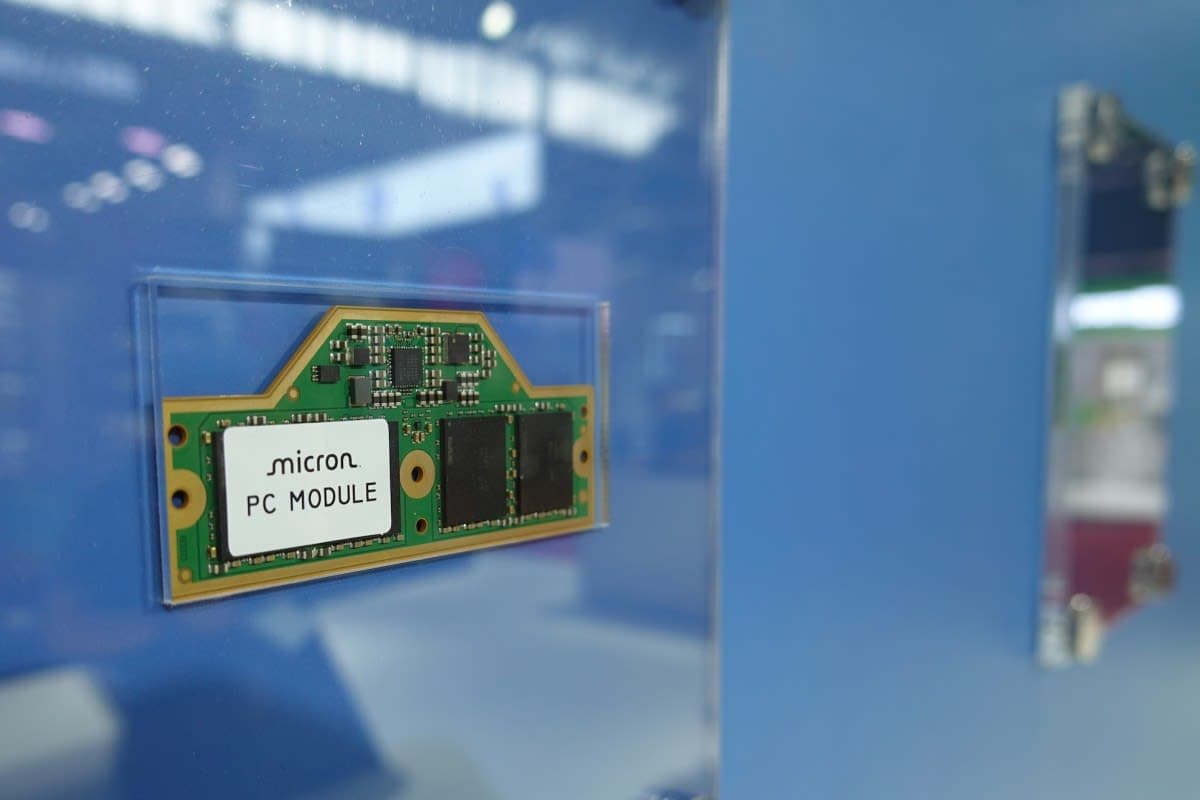
For the past eighteen months, the global discourse surrounding artificial intelligence has been dominated by the “pick-and-shovel” narrative. Investors and enterprise leaders alike have laser-focused on the compute layer—specifically, the high-end Graphics Processing Units (GPUs) produced by industry stalwarts like Nvidia. While the sheer horsepower required to train Large Language Models (LLMs) is undeniable, a subtle but critical shift is occurring in the infrastructure stack. The bottleneck is no longer just about raw processing speed; it is about memory bandwidth and the ability to feed massive datasets to AI engines without latency.
This realization has brought Micron Technology into the spotlight, transforming it from a cyclical commodity chipmaker into a primary pillar of the generative AI revolution. For business leaders tasked with navigating the digital transformation landscape, understanding why the market is re-evaluating memory hardware is essential. It represents a pivot from simply buying “smarter” software to ensuring the underlying physical architecture can actually support the high-velocity demands of autonomous systems.
The Memory Bottleneck: Why Compute Isn't Enough
In the traditional IT era, memory was often treated as a secondary procurement decision—a fixed asset that scaled linearly with server count. However, the architecture required for modern AI Agents and autonomous automation has turned that model on its head. To run a sophisticated LLM, the model parameters must reside in the memory during inference. If the memory cannot move data as fast as the processor can compute, the system sits idle—a phenomenon engineers call "memory wall."
Micron’s resurgence is tied directly to the development of High Bandwidth Memory (HBM). Unlike standard DRAM, HBM stacks memory chips vertically, allowing for significantly higher data throughput while consuming less energy. This is not merely a technical specification increase; it is a business enabler.
- Accelerated Inference: By reducing latency, companies can deploy real-time AI agents that respond with human-like fluidity rather than seconds of delay.
- Operational Efficiency: Higher efficiency in data movement allows data centers to process more queries per watt, a critical factor for businesses looking to manage the skyrocketing costs of AI infrastructure.
- Scalability: As enterprises move from experimental AI to production-grade automation, they require hardware that can scale horizontally without hitting the performance plateaus associated with legacy memory architectures.
For a Chief Information Officer or a CTO, the "Micron phenomenon" is a signal that hardware procurement needs to be more granular. Investing in software suites and AI-driven CRM (Customer Relationship Management) platforms is futile if the underlying infrastructure cannot handle the concurrent data streams required for real-time personalization or predictive analytics.
Aligning Hardware Maturity with Strategic ROI
The Wall Street interest in Micron suggests a market belief that we are moving toward a “hard-tech” phase of the AI cycle. In the early days, companies could simply slap a chatbot on their existing website and claim progress. Today, the ROI pressure is mounting. Executives are no longer looking for demos; they are looking for production systems that provide demonstrable impact on bottom-line results.
This requires a holistic view of the technology stack, where hardware performance, software efficiency, and business logic intersect. As AI models become more multimodal—incorporating voice, image, and tabular data simultaneously—the demand for high-capacity, high-speed memory will continue to outpace the industry’s current supply. For enterprises, this means the cost of infrastructure will remain a significant line item for the foreseeable future.
However, the payoff is substantial. Companies that successfully integrate high-performance memory capabilities into their cloud or on-premise environments are better positioned to utilize:
- Real-time Decision Engines: Enabling CRM systems to analyze customer behavior and adjust marketing spend or service outreach in milliseconds.
- Autonomous Workflows: Allowing automated agents to manage complex supply chain logistics without the latency-induced failures that often plague older systems.
- Edge Computing: Moving intelligence closer to the data source, which is impossible without the specialized, compact memory architectures Micron is currently championing.
The strategic takeaway for leadership is clear: stop treating hardware as a generic utility. As the AI stack matures, the performance delta between companies will be defined by who can move data the fastest. If your digital transformation strategy relies on processing terabytes of data to refine predictive models, your hardware roadmap must be just as innovative as your software selection.
The Path Toward Future-Proofed Infrastructure
As we look toward 2025 and beyond, the decoupling of general-purpose computing from AI-specialized architecture will likely accelerate. Business leaders should anticipate a market where specialized memory and storage solutions become a competitive advantage, rather than an IT commodity. The transition from “AI hype” to “AI utility” will be built on the back of companies that prioritize high-performance data pipelines, ensuring that the software models of tomorrow don't starve for the information they need to function.
Success in this era requires more than just high-end hardware; it demands the architectural expertise to implement these tools effectively. Whether you are scaling bespoke AI agents to handle customer inquiries or streamlining internal automation to drive ROI, the foundational logic remains the same: performance begins with accessibility and speed. At AOODAX, we specialize in helping organizations bridge the gap between complex infrastructure capabilities and high-impact business outcomes, particularly through our custom software development services that ensure your digital initiatives are built to scale alongside the next generation of hardware advancements.