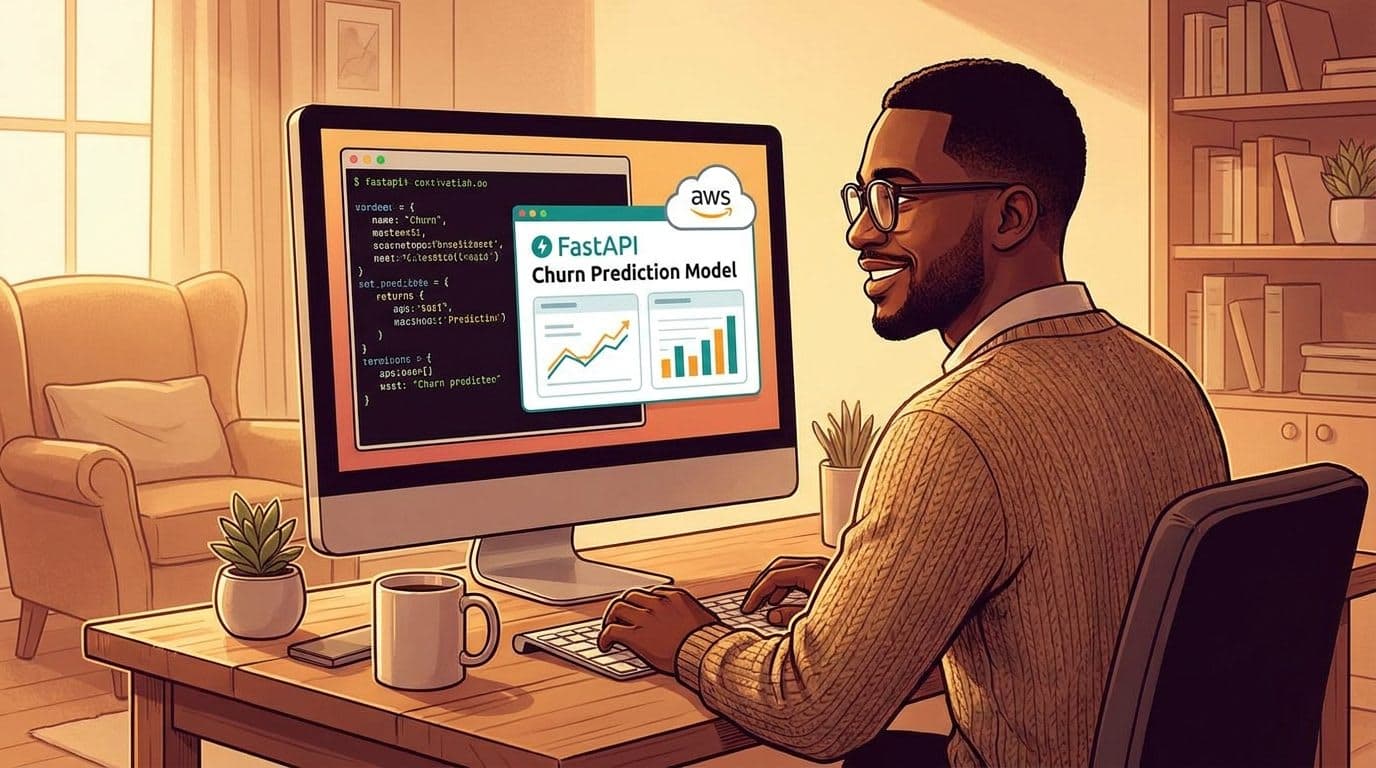
In the high-stakes world of enterprise data science, there is a recurring tragedy: the "Jupyter Notebook graveyard." This is the space where brilliant models, capable of identifying high-value customer churn or predicting supply chain disruptions, go to die. They are technically sound, validated by rigorous testing, and housed in beautifully crafted algorithms—yet they remain invisible to the business.
The gap between a model that runs on a data scientist’s laptop and a model that serves an enterprise application is not merely a technical hurdle; it is a fundamental chasm in digital transformation. For business leaders, the value of AI is not found in the accuracy of a model’s training phase, but in the reliability of its inference phase. As we shift toward an era of AI Agents and autonomous workflows, the ability to successfully deploy, scale, and maintain a model is the ultimate differentiator between an experimental project and a revenue-generating asset.
The Operational Reality: From Prototype to Pipeline
The transition from a static model to a live endpoint requires shifting focus from "data science" to "data engineering and MLOps." When building a FastAPI interface to expose a model, developers often realize that the model itself was the easy part. The friction arises when the model must interact with the messy, unpredictable nature of production data.
Consider the common failure points that arise the moment a model is opened to the rest of the organization:
- Environmental Drift: A model trained on a curated static dataset often encounters "data drift" in production. If the incoming request format varies slightly from the training set, or if the distribution of input data changes, the model’s predictions may silently degrade.
- Latency Constraints: In a real-time CRM environment, a prediction that takes three seconds to calculate is useless. Optimizing the endpoint to ensure millisecond-level response times requires moving beyond basic scripts into production-grade infrastructure.
- Authentication and Rate Limiting: Exposing an AI service to other departments means managing access. Without robust API security and rate limiting, a single inefficient call from another internal tool could throttle or crash your inference engine.
- Version Control and Rollbacks: In a production environment, you cannot simply overwrite an endpoint. You need a deployment strategy—such as blue-green deployment or canary releases—that allows you to revert to a previous, stable version if the new model encounters unforeseen logic errors.
For leadership, these challenges represent ROI risks. An expensive data science team that delivers models which never reach the production line represents a significant waste of human capital. Building the pipeline is not "extra work"—it is the work.
Moving Toward Agentic Systems
As we look toward the future of Digital Transformation, the requirement for accessible models is becoming even more urgent. We are moving away from manual, dashboard-heavy AI toward agentic workflows. In this model, an AI agent acts as a proxy for the human user, querying the model directly through an API to trigger downstream automation.
If your model isn't "live," it cannot be consumed by these agents. If an automated customer support bot cannot reach your churn prediction service to pull real-time sentiment scores, it loses its ability to personalize the conversation. The integration of models into the wider enterprise ecosystem—where they function as modular components of a larger Automation strategy—is the primary driver of competitive advantage today.
When models are successfully exposed via well-documented, stable APIs, they become building blocks. Marketing teams can feed these predictions directly into their email campaigns; sales managers can see proactive alerts inside their dashboards; and customer success teams can trigger automated outreach. This is where AI moves from being a "cost center" to a "growth driver."
The Strategic Mandate for Business Leaders
To avoid the stagnation of the Jupyter graveyard, business leaders must prioritize the delivery lifecycle as heavily as they prioritize model performance. The adoption trend is clear: successful enterprises are treating their models as products. This means hiring for full-stack data proficiency and investing in MLOps platforms that provide visibility, monitoring, and automated deployment paths.
When evaluating your AI roadmap, ask your team: "Is this model ready for an engineer to call it tomorrow?" If the answer involves a manual script or a static notebook, you are not ready for production. Shift your focus to building robust, containerized endpoints that are built to withstand the rigors of high-traffic, real-time demand. The value of your data science investment only accrues when the model exits the lab and enters the workflow of your business.
At AOODAX, we bridge this operational gap by helping organizations architect scalable infrastructure for their predictive engines. Our expertise in custom software development ensures that your internal data models are not just precise, but are securely integrated into the applications and CRM systems that your team relies on every day.