The silicon-based revolution has reached an inflection point. For over a decade, the narrative of digital transformation has been dominated by the scaling of Large Language Models (LLMs) and the insatiable hunger for GPU compute power. We have poured trillions of dollars into mimicking cognition through digital weight adjustments and transformer architectures. Yet, as we hit the physical limits of energy efficiency and memory bandwidth, a new, biological frontier is emerging: Organoid Intelligence (OI).
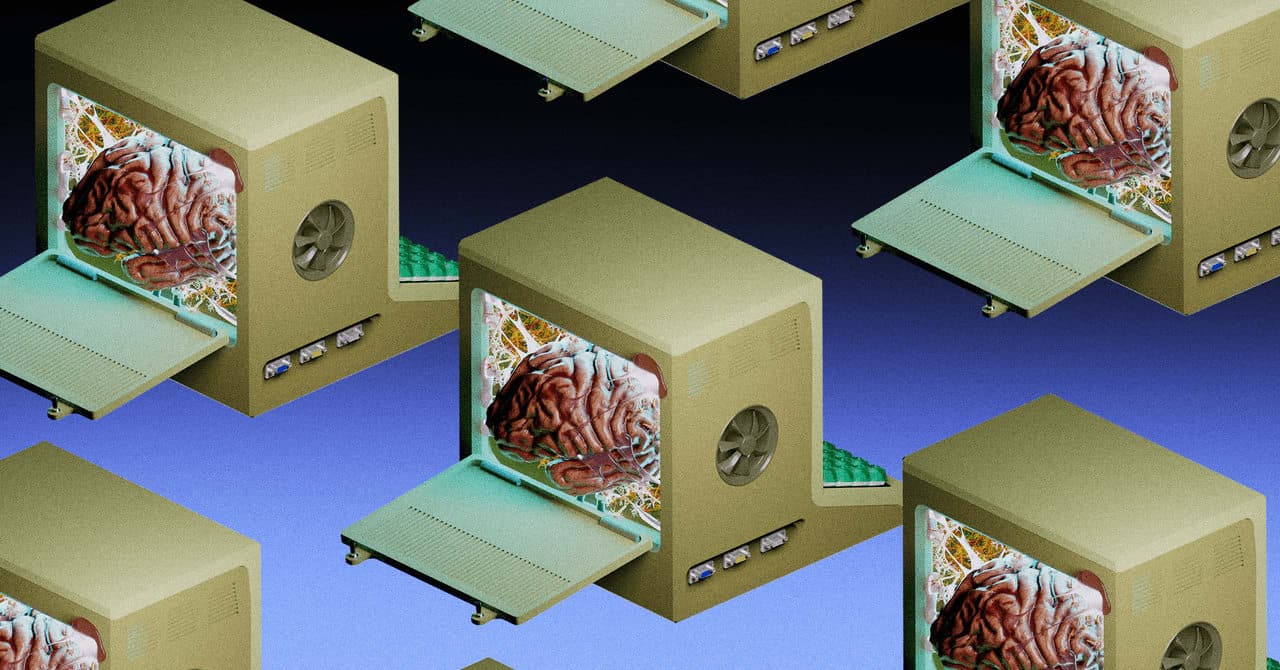
The premise is as startling as it is sophisticated: rather than building deeper neural networks to simulate the human brain, researchers are increasingly turning to the brain itself. By culturing three-dimensional clusters of human neurons—lab-grown mini-brains—scientists are beginning to explore biological computing substrates that possess a level of energy efficiency and learning plasticity that silicon, in its current iteration, simply cannot match.
The Convergence of Biological and Digital Compute
While current AI agents rely on electricity-hungry data centers, a human brain operates on approximately 20 watts of power—roughly the energy required to illuminate a dim lightbulb. The biological hardware of an organoid doesn’t require the massive, iterative training runs that characterize modern generative AI. These organoids, derived from stem cells, possess an innate ability to reorganize their synaptic connections in real-time, effectively learning from environmental inputs without the catastrophic forgetting that plagues digital models.
For business leaders, this represents a fundamental shift in the definition of "computing infrastructure." We are moving toward a future where the distinction between hardware and wetware begins to blur. The implications for industries reliant on high-frequency pattern recognition, complex logistics, and adaptive decision-making are profound. If we can interface these organoids with traditional silicon systems, we may see the emergence of Hybrid Bio-Digital Computing, where the organoid handles the complex, heuristic-heavy "thinking," while silicon acts as the high-speed interface for data input and output.
The current landscape of OI research includes several critical developments that executives should track:
- Synaptic Plasticity: Unlike fixed-weight neural networks, organoids can form new connections dynamically, suggesting a path toward models that learn continuously rather than through discrete, resource-heavy retraining sessions.
- Low-Power Efficiency: The energy profile of biological systems is several orders of magnitude lower than current GPU clusters, offering a potential solution to the sustainability crisis currently looming over large-scale AI deployment.
- Biocomputing Interfaces: New techniques in high-density multi-electrode arrays are allowing researchers to stimulate and record from organoids, effectively creating a "digital bridge" that allows these biological units to perform specific tasks, from navigating virtual environments to executing complex logic operations.
The ROI of Biological Intelligence
For the modern enterprise, this technology is currently in the experimental research phase, yet the strategic implications for long-term digital transformation are undeniable. Companies that have invested heavily in AI Agents and automated workflow systems are already seeing the limits of rigid, silicon-based logic. An AI agent is excellent at execution but struggles with the "edge-case ambiguity" that human intuition handles effortlessly. Organoids, potentially, offer a path to bridge that gap.
The return on investment for adopting these emerging paradigms will not be immediate, but it will be transformative for sectors like pharmaceutical R&D, advanced material science, and adaptive logistics. Organizations that begin to monitor the development of bio-computing platforms today will be better positioned to integrate them when they transition from the Petri dish to the server rack.
In the immediate term, businesses must prepare for this transition by focusing on the underlying architecture of their digital ecosystem. The shift toward more efficient, adaptable systems requires a robust foundation. If your current CRM and data automation pipelines are not flexible enough to accommodate future high-level, adaptive intelligence, your competitive advantage will erode as the gap between static code and dynamic, bio-inspired logic widens.
Strategic Preparation in an Evolving Landscape
We are not suggesting that silicon will disappear. Rather, we are witnessing the inevitable maturation of the "intelligent machine." In the coming decade, companies will likely move away from the "bigger is better" approach to AI models and toward highly specialized, efficient, and increasingly organic systems. For a business leader, this means shifting focus from merely aggregating more data to refining the quality and adaptability of the intelligence driving your digital transformation.
The transition to this new era of computing will be gradual, but the necessity for agility is immediate. Organizations that rely on legacy software suites will struggle to keep pace with the hyper-efficient, adaptive decision-making capabilities that the next generation of AI will provide. The goal is to build a technological infrastructure that is not just functional today, but fundamentally modular and ready to integrate the cognitive advancements of tomorrow.
By optimizing your existing Automation frameworks now, you create the necessary digital scaffolding to adopt more complex, hybrid-intelligence workflows in the future. At AOODAX, we specialize in helping businesses design these high-performance automation ecosystems, ensuring your current software architecture is as scalable and future-ready as the technological advancements currently emerging from the lab.