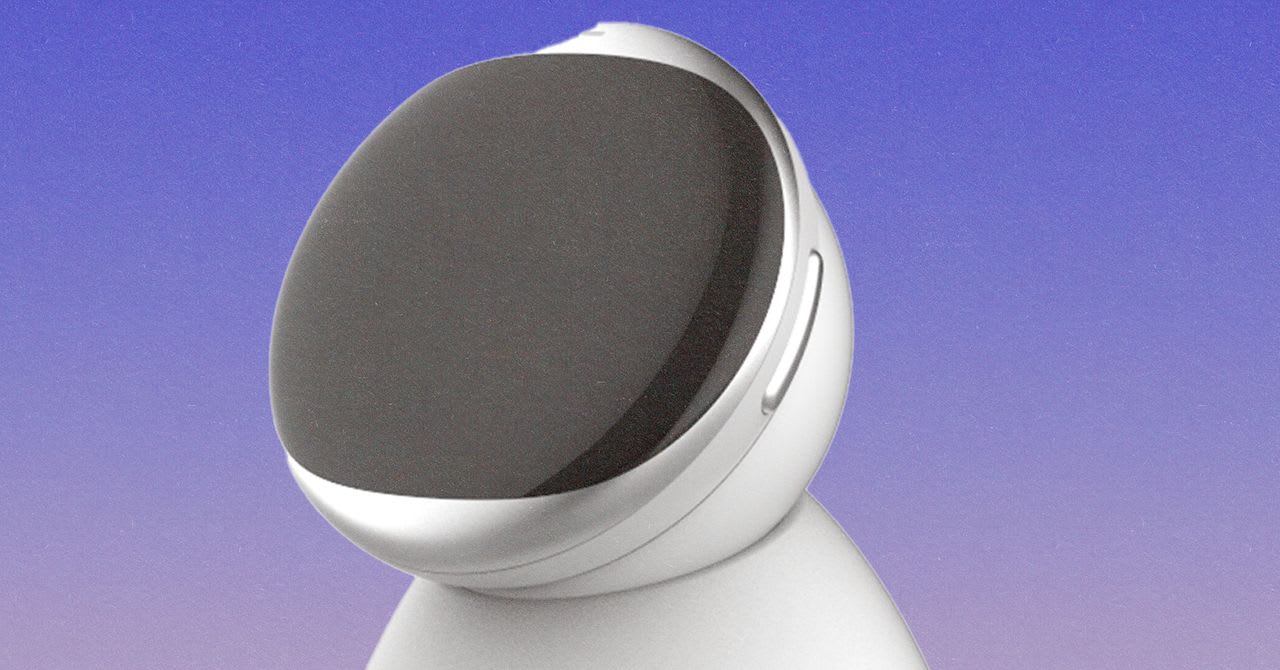
The history of consumer robotics is littered with the carcasses of ambitious, lovable, and ultimately misunderstood hardware. Perhaps none captures the bittersweet nostalgia of the "smart home" boom better than Jibo, the social robot that promised to be the hearth of the modern connected family, only to find itself relegated to the scrapheap of history when its parent company shuttered. Yet, the philosophy behind Jibo—the desire to capture, curate, and humanize the data of our daily lives—has not disappeared. It has merely evolved.
The latest iteration of this impulse comes in the form of iKairos, a new venture spearheaded by some of the original architects behind Jibo. But instead of a physical robot sitting on your kitchen counter, iKairos presents a different value proposition: an “AI journal.” This wearable or desk-mounted device is designed to ingest the ambient audio and visual data of your life, processing it through generative models to transform mundane family milestones into highly stylized, synthesized media. While the marketing leans heavily into sentimental preservation, the underlying technology represents a significant shift in how we think about personal data, privacy, and the automation of experience.
The Shift from Documentation to Generative Synthesis
For the modern professional, the term “digital transformation” usually refers to the optimization of workflows, the implementation of CRM systems, or the migration to cloud-native architectures. However, iKairos signals a broader cultural pivot: the transformation of human lived experience into AI-generated synthetic media. By continuously monitoring the environment and selecting moments to "journal," the device effectively functions as a personal content-creation factory.
For business leaders observing this trend, the implications go far beyond the consumer electronics market. We are seeing the rise of a "synthetic media layer" that sits between raw reality and digital storage. iKairos performs several key functions that are increasingly relevant to enterprise-level digital strategies:
- Continuous Capture: Like an enterprise logging system, the device maintains a persistent state of its environment, filtering noise to identify "meaningful" signals.
- Semantic Synthesis: It does not simply record; it interprets. Using generative AI, it translates raw sensory input into curated images and videos, essentially performing an automated editing function.
- Contextual Memory: By tethering the synthesis to a specific temporal and spatial context, the device creates an indexed "knowledge base" of one’s life, mirroring the way advanced AI agents are designed to store and retrieve contextual information in professional environments.
This is not merely a gadget; it is a demonstration of how generative AI can be applied to unstructured data to provide an "output" that feels curated rather than raw. When you scale this logic, the potential for businesses to automate the synthesis of meeting logs, client interactions, or project updates becomes apparent.
The Enterprise Parallel: Automation and the ROI of Memory
While iKairos targets the domestic sphere, the underlying architecture—ambient collection combined with generative synthesis—is the blueprint for the next phase of enterprise productivity. Organizations have spent the last decade building massive data lakes, yet they struggle to translate that data into digestible, actionable insights. If a consumer-grade device can turn a birthday party into an aesthetic highlight reel, why are our corporate systems still struggling to turn a week of Slack threads and Zoom calls into a concise, generative summary of project health?
The transition from "manual input" to "passive collection" is the next frontier of business efficiency. Just as iKairos reduces the "friction of curation" for a family, enterprises are looking for ways to reduce the "friction of documentation." We are moving toward a future where:
- Automation is ambient: Processes trigger based on real-time sensory data rather than manual form-filling.
- Personalization is automated: AI agents can synthesize bespoke reports or client updates based on the historical data held within a company’s CRM.
- Digital Transformation is human-centric: Systems are designed to augment the user's memory and productivity rather than simply serving as static repositories of information.
The risk, of course, lies in the "slop" factor. When AI synthesizes media, it can sometimes lose the nuance of reality, replacing genuine emotion with the aesthetic approximations of a large model. Business leaders must balance the allure of high-speed automation with the necessity of accuracy. The goal of deploying AI in the workplace should be to enhance the quality of our professional outputs, not to generate a tidal wave of synthetic "noise" that makes it harder to find the signal.
A Forward-Looking Perspective for Business
The evolution from Jibo to iKairos is a clear signal that the appetite for AI-assisted living—and working—is growing. As these technologies migrate into the workplace, the winning organizations will be those that learn to treat their data as a living asset. The key is to avoid the trap of "automation for automation's sake" and focus on how these tools can meaningfully reduce the cognitive load on staff.
Moving forward, businesses will need to invest in robust custom software that can integrate these ambient capture and synthesis capabilities into existing workflows. Success will not come from adopting the latest shiny wearable, but from architecting systems that can intelligently distill, summarize, and act upon the vast amounts of unstructured data that companies generate every single day. The technology is no longer about the hardware sitting on your desk; it is about the intelligence flowing through your systems.
At AOODAX, we understand that true digital transformation requires more than just installing software; it requires a deep integration of intelligent systems that align with your specific business goals. We specialize in developing custom AI agents that turn your chaotic, siloed data into coherent, actionable insights, helping your team focus on the high-value decisions that only humans can make.