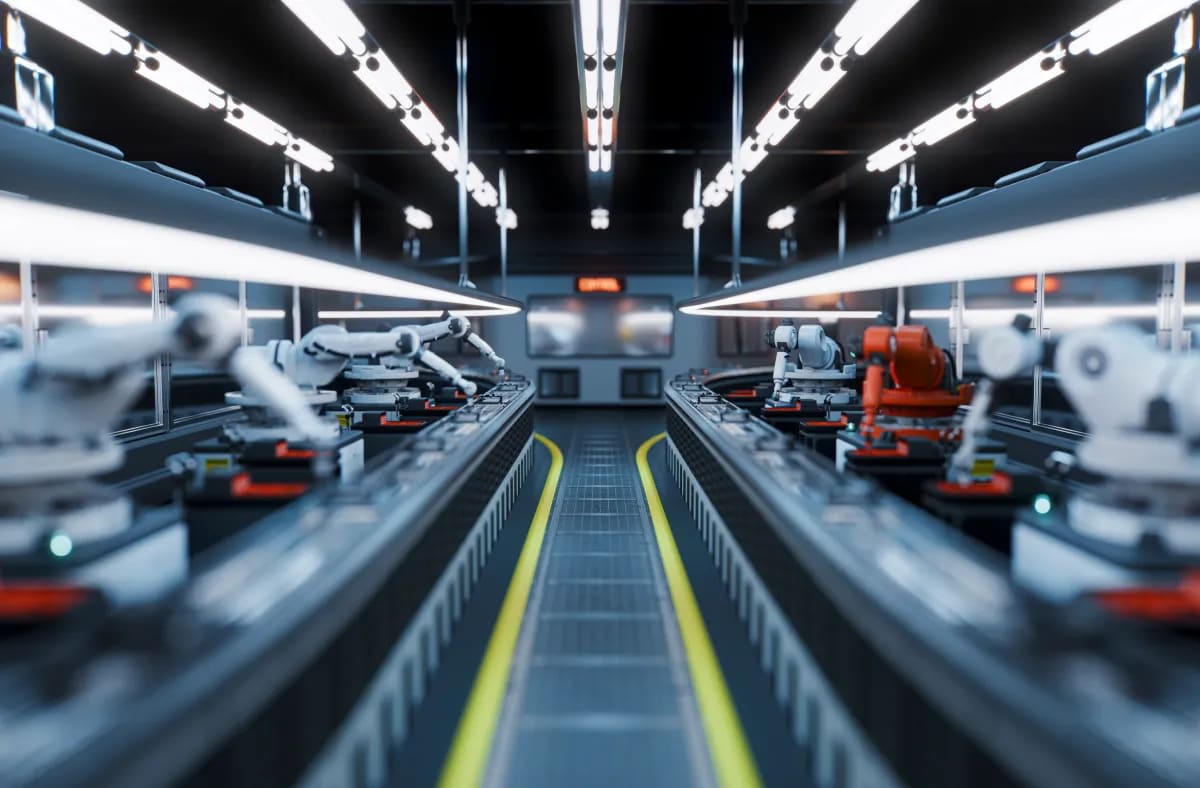
For decades, the heavy equipment industry has functioned as the "living laboratory" for what we now categorize as the Fourth Industrial Revolution. While Silicon Valley software engineers were busy debugging code in climate-controlled offices, Caterpillar was perfecting the art of robotic precision in the most inhospitable environments on Earth: open-pit mines. Today, as businesses across every sector scramble to translate AI potential into tangible ROI, the lessons learned from those autonomous haul trucks are proving more valuable than any textbook framework on digital transformation.
The transition from automating a 400-ton mining vehicle to deploying enterprise-wide Artificial Intelligence is not as disparate as it might seem. Both require the same fundamental shift: moving from reactive human-led operations to predictive, system-led optimization. Caterpillar’s journey offers a blueprint for leaders who are currently struggling to move their AI pilots out of the lab and into the messy, unpredictable reality of real-world business.
From Controlled Environments to Enterprise Chaos
The primary hurdle in early automation was reliability. A self-driving truck cannot "pause" because it encounters a patch of mud or a minor sensor discrepancy; it must have the logic to handle anomalies autonomously. This is precisely the challenge businesses face today when deploying Generative AI and Machine Learning models. In the boardroom, an AI might look perfect on a dashboard, but in the field—whether that is a customer service CRM or a supply chain management interface—variables fluctuate constantly.
Caterpillar’s strategy centered on high-fidelity data integration. They didn’t just add "sensors" to machines; they created a cohesive ecosystem where the machine, the terrain, and the central command center communicated in real time. For the modern enterprise, this highlights the necessity of a robust Data Infrastructure. You cannot automate a workflow that isn’t already tethered to clean, accessible data.
For business leaders looking to replicate this success, the lessons are clear:
- Standardization before Scale: Before automating a process, you must standardize the input. Autonomous mining failed until the physical site topography was mapped and digitized with absolute precision.
- Edge Intelligence: Decisions must happen at the point of action. Just as a haul truck processes sensor data locally to avoid latency, your business AI should be architected to make decisions where the interaction occurs, rather than waiting for a round-trip to a centralized cloud server.
- Human-in-the-Loop Orchestration: True autonomy is a myth at scale. The most successful implementations involve human operators acting as "mission controllers" who step in only when the AI flags an edge case, rather than manually monitoring every routine action.
The ROI of Operational Resiliency
The shift toward AI-driven automation is increasingly a question of business continuity rather than just cost-cutting. In the mining sector, an autonomous truck that runs 24/7 without the fatigue of a human operator significantly increases the Total Cost of Ownership (TCO) benefits through improved tire life, fuel efficiency, and reduced downtime.
When we apply this logic to the corporate world, we see a parallel shift in Digital Transformation. Companies are moving away from siloed software investments and toward integrated AI Agents. These agents serve as the "autonomous drivers" of the corporate office, handling routine query resolution, lead qualification in the CRM, and proactive supply chain adjustments. The ROI is found in the reduction of "friction tax"—the time lost when information fails to move between systems.
As these technologies mature, adoption trends indicate a move away from "all-in-one" AI platforms toward specialized, modular deployments. Leaders are realizing that trying to build a single "God-AI" for the entire company is an exercise in futility. Instead, the focus has shifted toward building discrete AI capabilities that address high-value bottlenecks, mirroring how Caterpillar deployed autonomy specifically to improve load-haul-dump cycles rather than attempting to automate the entire corporate headquarters at once.
Navigating the Complexity Gap
The most significant barrier to AI adoption remains the "complexity gap"—the space between a successful proof-of-concept and a reliable, production-grade system. Many firms are currently caught in "pilot purgatory," where they have the tech but lack the operational rigor to handle the edge cases that inevitably arise.
To close this gap, companies must prioritize three pillars:
- Observability: You cannot improve what you cannot see. Implementing comprehensive logging and monitoring for your AI systems is as critical as the models themselves.
- Scalability Architecture: Ensure your AI deployment is containerized and modular so that improvements to one agent don't break the entire enterprise workflow.
- Governance as an Enabler: Do not treat compliance and security as roadblocks. In the mining industry, safety protocols were the foundation of automation. Similarly, strong AI governance provides the "guardrails" that allow your systems to scale without fear of catastrophic data drift or hallucinations.
Looking ahead, the winners will not be the companies with the most "flashy" AI models, but those with the most disciplined deployment strategies. The future belongs to organizations that treat their digital operations with the same focus on safety, predictive maintenance, and autonomous efficiency as the heavy industries that paved the way. As your systems become more complex, the ability to orchestrate these agents into a cohesive workforce will determine your competitive advantage in a market that rewards speed and precision.
If your organization is looking to bridge the gap between AI experimentation and robust, production-ready systems, AOODAX can help. We specialize in designing and deploying custom AI agents that integrate directly into your existing infrastructure, ensuring your transition to an automated enterprise is as efficient and reliable as it is transformative.