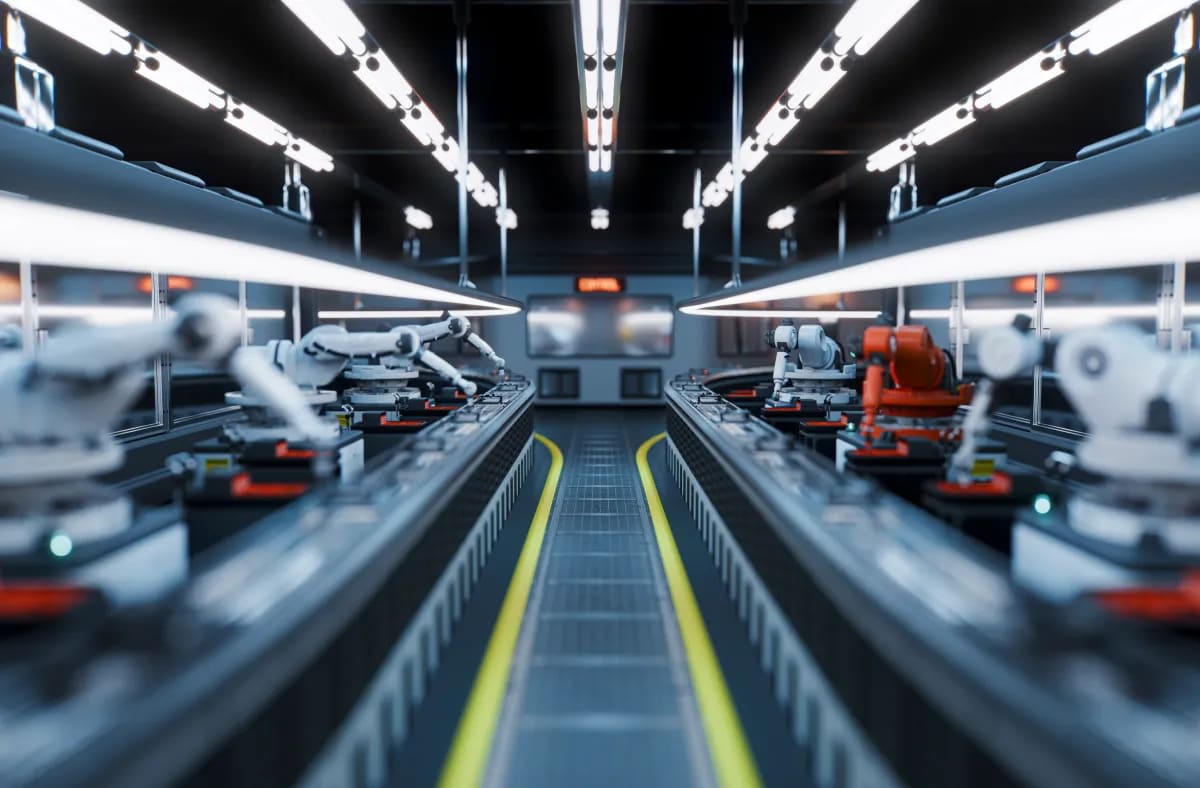
The factory floor has long been defined by the tension between consistency and flexibility. For decades, the gold standard for industrial manufacturing was the monolithic production line—massive, expensive cells designed to execute a singular, repetitive task for years on end. If the product design changed or market demand shifted, the cost of retooling could be astronomical, often resulting in months of downtime. However, we are currently witnessing a sea change in how industrial robotics are being deployed, moving away from "fixed-purpose" automation toward a new era of "agile robotics."
Leading this transition are companies like Industrial Next, which are fundamentally altering the economics of the shop floor. By leveraging advanced computer vision and machine learning, these systems enable robots to transition between complex, delicate tasks in minutes rather than weeks. This shift is not merely a technical upgrade; it is a profound business transformation that allows manufacturers to respond to market volatility with unprecedented speed.
The End of Rigid Automation
Traditional industrial robots are brilliant at high-speed repetition, but they are notoriously "blind" and rigid. They require custom jigs, precise part orientation, and thousands of lines of hard-coded logic to function. This rigidity has kept humans essential for tasks requiring dexterity, nuance, or rapid adaptation—such as delicate assembly, kitting, or quality inspection.
The emergence of intelligent, software-defined hardware is changing this calculus. By integrating Artificial Intelligence (AI) agents into the control layer of factory equipment, manufacturers can move beyond pre-programmed paths. Modern systems now utilize real-time sensory feedback—specifically high-fidelity vision systems—to "see" the workspace, identify components, and adjust their physical movements accordingly.
This approach offers several transformative advantages:
- Reduced Engineering Overhead: Eliminating the need for custom mechanical fixturing saves significant capital expenditure.
- Rapid Task Reconfiguration: Because the logic is software-driven, moving a robot from assembling Product A to Product B requires a system update, not a physical rebuild of the production line.
- Human-Robot Collaborative Efficiency: Robots can now handle the repetitive, high-strain portions of delicate assembly, allowing human workers to shift into higher-level supervisory roles, such as monitoring Digital Transformation workflows or managing exception handling.
ROI and the Strategic Imperative for Scalability
For business leaders, the ROI calculation for robotics is finally moving beyond simple labor substitution. While reducing head-count has been the traditional metric, the new value proposition lies in Throughput Agility. In an era where consumer preferences shift rapidly and supply chain disruptions are the norm, the ability to pivot production at a moment’s notice is a competitive moat.
When a manufacturer can reconfigure a cell in an hour, the "cost of change" drops to near zero. This enables smaller production runs, rapid prototyping, and the ability to test new product iterations without risking the stability of a massive, fixed-asset line. From an operational perspective, this brings the factory floor closer to the efficiency of a Customer Relationship Management (CRM) platform, where data flows seamlessly and customer-specific demands can trigger automated back-end processes.
Adoption trends are already reflecting this. We are seeing a distinct movement among Tier 1 and Tier 2 suppliers toward "composable factories." Companies are no longer asking for robots that run fast; they are asking for robots that can learn. The focus has shifted toward:
- Edge Intelligence: Deploying compute power directly at the robot cell to ensure low-latency decision-making.
- Interoperability: Ensuring that robotic fleets can communicate with broader ERP and MES (Manufacturing Execution Systems) platforms.
- Human-in-the-loop Systems: Ensuring that when an AI agent hits an edge case it cannot solve, the system alerts a human operator to provide the necessary correction, which the system then incorporates into its future decision tree.
The Future of the Intelligent Shop Floor
As we look toward the next five years, the dichotomy between "automated" and "manual" will continue to blur. We are heading toward an environment where the factory is a living, breathing digital entity. In this model, the Digital Twin—a virtual replica of the production environment—will be updated in real-time by the very robots performing the work, providing executives with unprecedented visibility into bottlenecking, energy usage, and output quality.
The key takeaway for leadership is that the bottleneck to scaling automation is no longer the hardware; it is the software architecture and the data strategy that underpins it. Companies that prioritize flexible, AI-integrated platforms will find themselves capable of scaling production to meet market demand, while those tied to legacy, rigid infrastructure will find themselves increasingly unable to compete on speed or cost.
To successfully navigate this transition, organizations must move past viewing automation as a standalone capital project and start treating it as an integrated layer of their digital infrastructure. Whether it is deploying autonomous AI agents to orchestrate production tasks or integrating data silos across the enterprise, the goal is to create a seamless feedback loop between demand, inventory, and physical output. At AOODAX, we help businesses bridge this gap by architecting robust custom software solutions that integrate these intelligent robotic systems directly into your existing enterprise operations, ensuring your factory floor is as agile as your business strategy.


