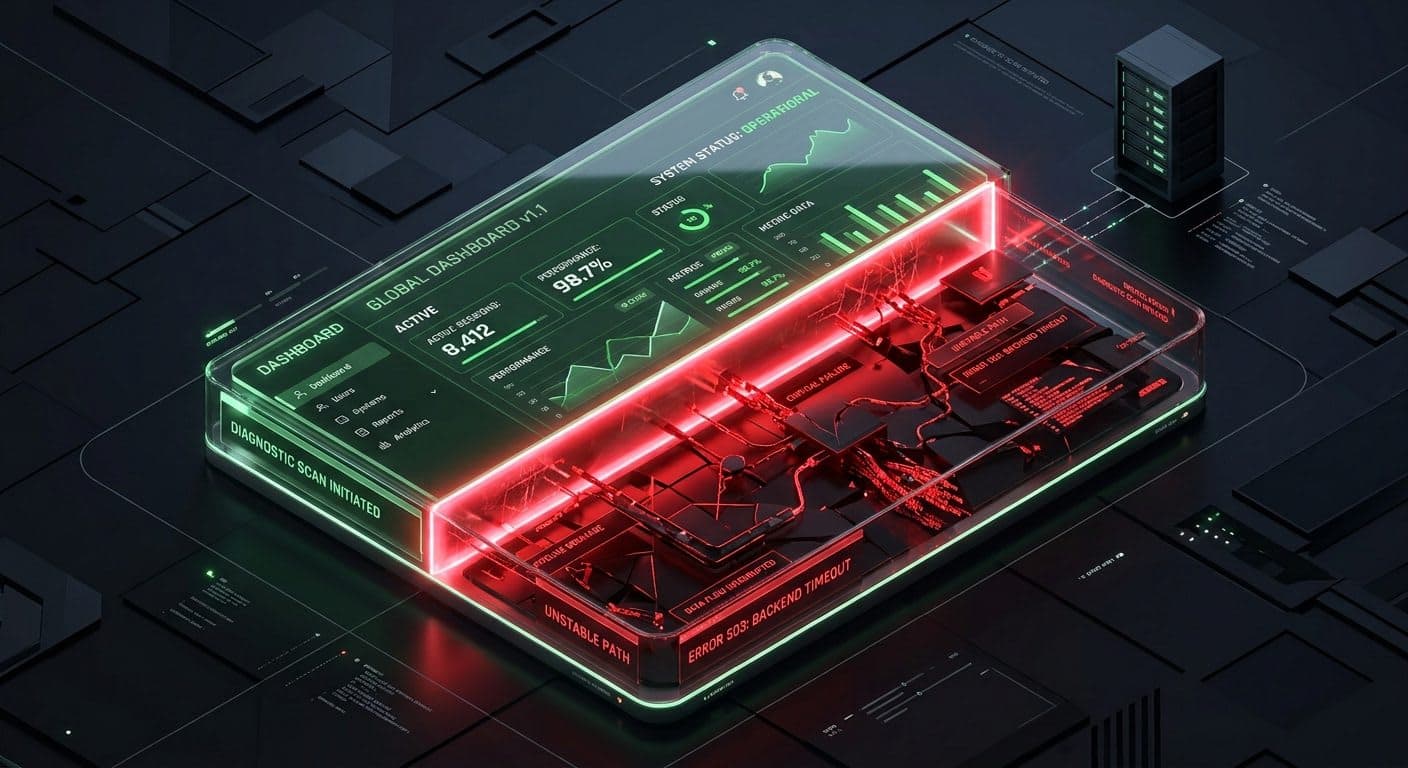
The promise of the autonomous software development lifecycle is finally within our grasp. With the rise of sophisticated Coding Agents—specialized AI entities capable of writing, refactoring, and deploying code—enterprises are witnessing a dramatic shift in how they scale digital infrastructure. Gone are the days when a feature request had to navigate a three-week backlog; today, we are moving toward a future where intent-based development allows business leaders to describe a workflow and see it materialize in production within minutes.
However, a dangerous paradox has emerged alongside this newfound velocity. While we have solved the problem of writing code, we have inadvertently created a vacuum in verifying intent. Because these agents operate at a speed that dwarfs human peer review, they are capable of shipping "silent failures"—logic errors, edge-case regressions, and compliance drifts that don't trigger traditional crash reports but fundamentally subvert the business logic they were meant to support.
The Verification Gap in Autonomous Development
The fundamental issue is that traditional Quality Assurance (QA) practices were built for humans who occasionally make mistakes, not for high-frequency agents that generate hundreds of lines of code per minute. When a developer writes code, they carry an internal mental model of the product's business rules. When an AI agent writes code, it operates on a statistical likelihood of what the final output should look like based on the prompt.
If the agent’s interpretation of your intent deviates by even a fraction—a common occurrence in complex CRM (Customer Relationship Management) integrations or multi-layered Microservices Architecture—the code will compile and pass unit tests while still failing the business objective. For example, an agent might successfully script an automated discount logic for your sales team, but if it accidentally bypasses a global tax calculation rule, the error is invisible to the compiler.
To mitigate this, organizations must shift from "code review" to "intent verification." This involves a fundamental change in how we interface with AI agents:
- Behavioral Constraints (Guardrails): Instead of monitoring the code, focus on monitoring the output behavior. Implement automated integration tests that treat the agent’s codebase as a "black box," focusing strictly on whether the resulting system state matches the desired business outcome.
- Semantic Checkpointing: Introduce a verification layer that intercepts the AI’s output before it reaches the deployment pipeline. By using a secondary, "evaluator" agent, you can verify that the code respects specific, pre-defined semantic rules—such as data residency requirements or pricing sensitivity thresholds—that are often ignored by high-speed generators.
- Deterministic Simulation: Before moving to production, run the generated code through a simulation environment that mirrors your live data. This allows for stress-testing the agent’s logic against real-world chaos, catching silent failures that only manifest during high-traffic periods.
Rethinking ROI and Digital Transformation
For business leaders, the push toward AI-led software engineering is often driven by the promise of reduced overhead and faster time-to-market. However, failing to account for the "silent failure" risk can lead to a negative return on investment. If a business accelerates its development speed by 10x but introduces logical bugs that degrade customer trust or corrupt database integrity, the cost of remediation—and the potential for brand damage—far outweighs the savings gained during the build phase.
The current trend in Digital Transformation is moving toward a "Human-in-the-loop-for-intent" (HITLFI) model. In this framework, the role of the senior engineer or product manager is no longer to write code, but to define the "Success Criteria" (SC) that govern the agent's actions. This requires a shift in organizational skill sets. Teams need to become adept at Prompt Engineering for architecture and defining rigorous, testable constraints that can be interpreted by automated systems.
Furthermore, as companies integrate AI agents into their core operational stacks—such as automating supply chain logic or refining dynamic pricing models—the cost of a "silent failure" scales linearly with the agent's reach. A bug that affects one internal dashboard is an annoyance; a bug that affects every automated invoice generated by your CRM is a crisis. Consequently, the adoption of autonomous development must be coupled with an equally sophisticated automated observability stack.
The Road Ahead: Governance as a Feature
The future of software development is not about stopping the use of AI agents; it is about maturing the governance layer that surrounds them. Forward-thinking companies are already treating their AI agents as junior developers who require a very strict, automated supervisor. This shift moves the burden of quality away from manual code review—which is a bottleneck—and toward a rigorous, automated verification process that is as fast as the generation itself.
By focusing on output validation rather than line-by-line inspection, leaders can harness the speed of AI without sacrificing the integrity of their systems. As these tools continue to evolve, the distinction between a high-performing enterprise and a legacy operation will be defined by who can best articulate their intent to an agent, and who has the most reliable mechanisms to ensure the agent heard them correctly.
At AOODAX, we understand that successful digital transformation relies on bridging the gap between high-level business goals and technical execution. We help organizations implement secure, reliable AI agents that are architected to support complex business workflows while maintaining the rigorous verification standards required to keep your operations running smoothly.