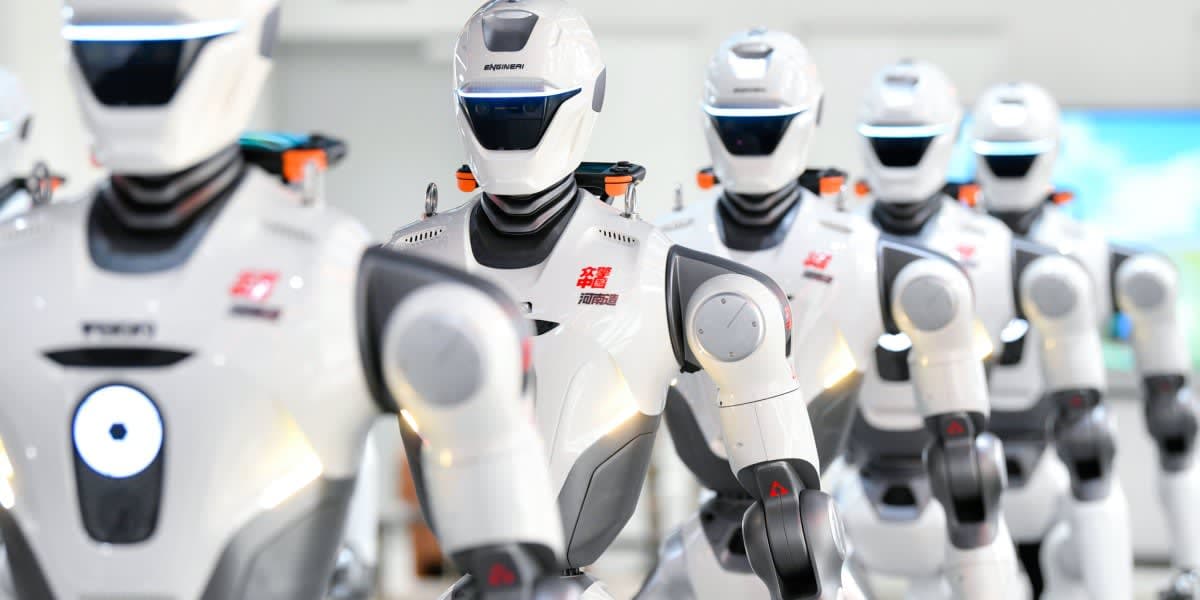
The promise of humanoid robotics has long been trapped in a cycle of "uncanny valley" optics—viral videos of stumbling machines, exaggerated promises, and the persistent reality that a biological toddler remains more adept at navigating a kitchen than a multi-million-dollar bipedal unit. Yet, beneath the cringe-worthy demos and the skepticism of critics, a quiet, high-stakes shift is occurring. The robotics industry is moving away from the "lab experiment" phase and into the "industrial integration" phase. However, as capital pours into this sector, the intersection of geopolitical policy and technological development is beginning to tighten.
For business leaders observing the landscape, the recent trend toward protectionist policies in the AI and robotics hardware space is not just a regulatory hurdle; it is a fundamental reconfiguration of the global supply chain. When we discuss "AI protectionism," we are no longer just talking about trade tariffs on chips. We are talking about the localization of the physical labor force of the future.
The Convergence of Embodied AI and Geopolitics
At the center of this movement are Embodied AI systems—the integration of advanced Large Language Models (LLMs) and computer vision into physical hardware. Companies like Figure AI, Tesla, and Boston Dynamics are no longer just building machines that follow pre-programmed paths; they are building machines that can learn, adapt, and operate within unpredictable human environments. This evolution is the logical conclusion of the digital transformation journey that began with cloud computing and evolved through automated CRM workflows.
The protectionist impulse surfacing in Washington and other global power centers is fueled by the realization that whoever controls the next generation of industrial robotics controls the next century of manufacturing sovereignty. By restricting the flow of high-end specialized hardware and the training data associated with sensitive operational environments, governments are attempting to ensure that the robotic "workforce" remains domestic. For businesses looking to scale, this means that the "off-the-shelf" global solutions we have grown accustomed to in the SaaS world may soon be replaced by a more fragmented, regionally locked robotics market.
The implications for ROI are immediate. If your organization is planning long-term capital expenditure on automation, you must now factor in "geopolitical risk" as a line item. The cost of a robotic deployment is no longer just the hardware unit and the integration software; it is the risk of supply chain decoupling and the potential loss of ongoing support should your preferred vendor fall on the wrong side of a trade restriction.
Navigating the New Industrial Automation Landscape
The shift toward protectionism forces a pivot in how enterprises approach their automation strategy. Companies that previously relied on a globalized, "plug-and-play" model for industrial innovation must now prioritize modularity and interoperability. The goal should be to avoid "vendor lock-in" to hardware that may become stranded assets due to shifting trade policies.
When evaluating the integration of robotics into your operations, consider the following strategic pillars:
- Software-First Resilience: Ensure your orchestration layer is decoupled from the hardware. By focusing on robust AI agents that manage the logic and decision-making for these robots, you can swap out hardware providers if a specific model becomes subject to trade or export restrictions.
- Data Sovereignty: Many humanoid platforms rely on feedback loops where operational data is sent to the manufacturer to "train" the robot. Protectionist policies often target these data pipelines. Maintain internal control over your proprietary process data to ensure you aren't leaking your competitive advantage to an external vendor whose legal standing is in flux.
- Tiered Automation: Don’t attempt to solve every problem with a humanoid robot. Utilize Robotic Process Automation (RPA) for digital tasks, high-speed gantry robots for repeatable physical labor, and save humanoid investment for the highly complex, non-standardized environments where they offer a genuine efficiency gain.
- Infrastructure Synergy: View robotics as the final layer of your digital transformation. An effective robotics strategy must feed back into your Data Warehouse or CRM, creating a closed-loop system where physical actions inform customer service insights and inventory management.
The adoption trend is clear: we are moving away from the era of "dumb automation" and toward a paradigm of "agentic autonomy." The companies that will thrive in this environment are those that view their robotic fleet not as isolated machines, but as field-deployed AI agents capable of executing the intent of the business in real-time.
The Outlook for Enterprise Leadership
As we look toward the next three to five years, the narrative around robotics will shift from "can it walk?" to "how well does it integrate with our existing stack?" The protectionist measures we see today will likely lead to a bifurcation of the market: one side characterized by high-security, domestic-only robotics, and another by a more commoditized, globalized hardware ecosystem.
Business leaders must act now to build flexible architectures. The hardware is becoming more reliable, the AI powering it is becoming more intuitive, and the cost of entry is finally starting to align with reasonable ROI timelines. However, your deployment strategy must be robust enough to withstand the friction of a changing world order. If you treat robotics as an IT project rather than a core strategic asset, you risk building your future on a foundation that could be disrupted overnight.
The future of business is not just digital; it is physically responsive. At AOODAX, we help leaders bridge the gap between their digital strategies and physical operational reality by designing custom AI agents that allow your workflows to scale across both software and physical infrastructure, ensuring your business remains competitive regardless of the hardware you choose.