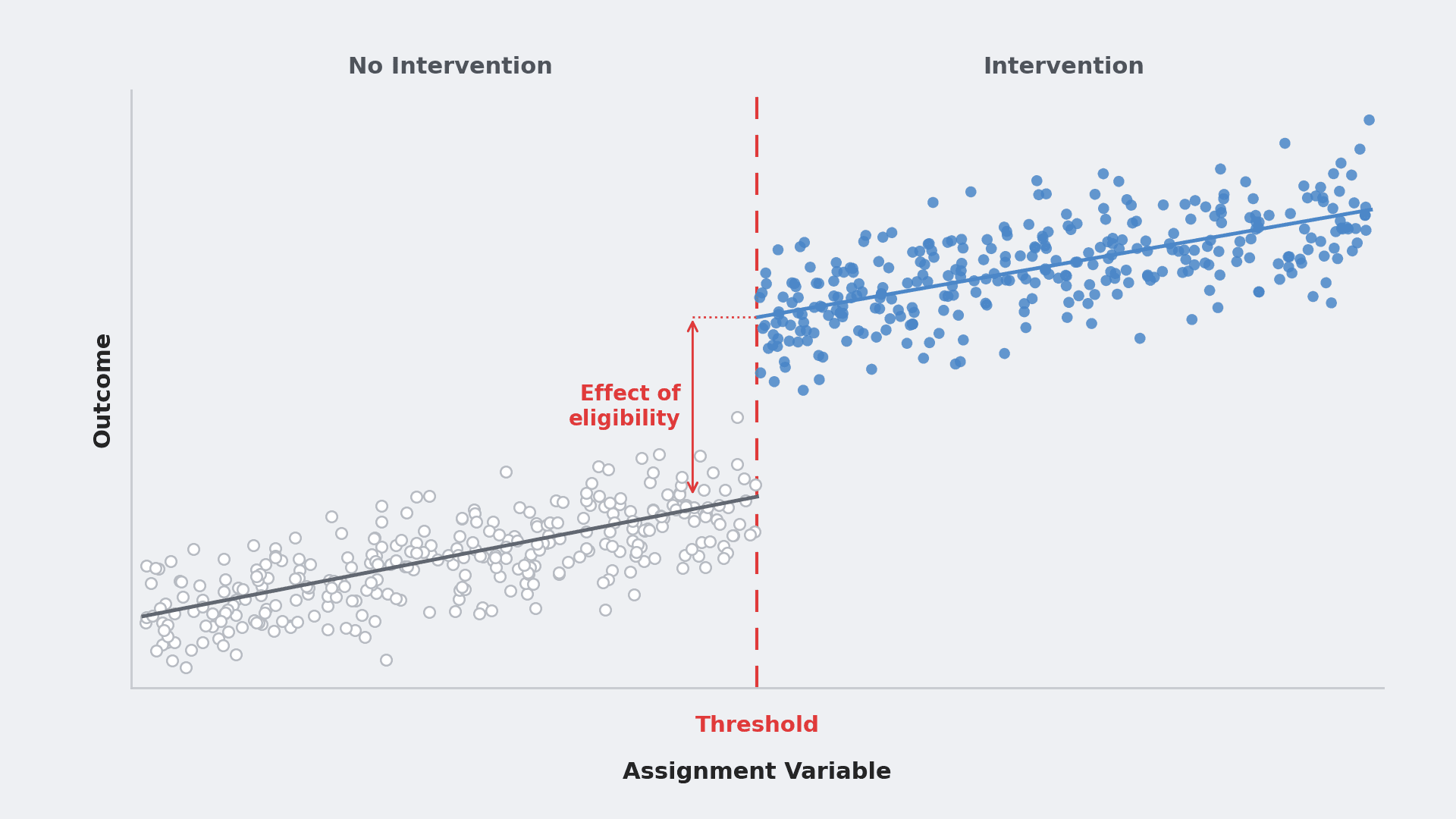
The promise of artificial intelligence in the enterprise has always been tethered to a seductive metric: the "lift." When a software vendor or an internal product team rolls out an AI-powered feature—say, an automated email summarizer or an intelligent CRM field filler—they inevitably point to a dashboard showing that users of this feature are 20% more productive than those who aren’t.
For business leaders, this looks like a slam-dunk ROI. It suggests that the technology itself is the engine of efficiency. However, as we scale our digital transformation initiatives, we must confront a uncomfortable reality: the performance boost you are witnessing is likely not the result of the AI, but a phenomenon known as the selection effect.
The Selection Effect Trap in Enterprise Software
In a laboratory setting, researchers use randomized controlled trials (RCTs) to isolate the impact of a variable. They take a group of employees, randomly assign half to use a new AI tool and half to continue with manual processes, and compare the outputs. But in the real world of enterprise software, adoption is almost never random. It is driven by choice.
When we deploy AI agents or intelligent automation tools, we are relying on an "opt-in" model. Your power users, the top-performing sales representatives, or the most technically adept project managers are usually the first to turn these features on. They are the "early adopters" who were already finding ways to excel before the AI arrived. Consequently, the lift you observe is essentially a reflection of your best employees’ inherent behavior, not the efficacy of the tool.
If we blindly attribute that 20% productivity gain to the software, we risk making flawed strategic investments. We might double down on a mediocre tool because we’ve misidentified the source of its performance. For leaders, this creates a dangerous feedback loop where capital is allocated to "winning" features that are actually just being championed by "winning" employees.
Deconstructing Real Impact Through Observational Data
To move past this vanity metric, we have to treat enterprise data with the skepticism of a data scientist. If your organization is undergoing a digital transformation, you need to account for selection bias to understand true business value. Here is how you can begin to separate true uplift from user self-selection:
- Segment by Baseline Performance: Compare the performance of high-performers before and after adoption against the performance of high-performers who haven't yet adopted the tool. This reveals if the AI actually accelerates them or if they were already on an upward trajectory.
- Time-Series Analysis: Don’t just look at a cross-sectional snapshot. Look at the performance of the same group of users across three distinct phases: pre-adoption, the transition period, and the long-term stable state.
- A/B Testing for AI Workflows: Whenever possible, gate the rollout of new automation features to a randomized subset of departments. By forcing a controlled rollout, you strip away the self-selection bias and see how the "average" user performs with the tool, rather than just the "eager" user.
- Control for Confounding Variables: Often, the same employees who adopt AI early are also receiving additional training or management attention. Ensure that your productivity metrics are not being skewed by parallel initiatives happening simultaneously.
The business implications here are massive. If an AI feature is truly delivering value, it should narrow the gap between your top performers and your mid-tier staff by automating the "drudgery" that holds less efficient employees back. If, however, the adoption is only widening the gap between your stars and the rest of the pack, you aren’t scaling productivity—you are merely giving your best people a slightly faster engine, which provides a lower overall ROI for the organization.
Moving Toward Actionable Intelligence
As we enter an era where autonomous workflows and generative AI are becoming foundational to every CRM and ERP system, the pressure to prove value will only increase. CIOs and COOs are being asked to justify spend on AI that is often obscured by this selection effect.
True digital maturity requires a shift in mindset. We must stop measuring "adoption rates" as a proxy for success and start measuring "marginal utility." The question isn’t "How much more productive are the people using this tool?" The question is, "How much more productive does this tool make a representative employee?"
To get there, we need to bridge the gap between software implementation and rigorous performance analysis. We must design our internal systems not just to "deploy" tools, but to instrument them for observation. By building observability into your automation pipelines, you can capture the data points necessary to strip away the selection effect and see the underlying truth of your ROI.
The next phase of enterprise AI will not be defined by the sheer number of features deployed, but by the precision with which companies validate their impact. Organizations that learn to filter out the noise of self-selection will be the ones that effectively scale their digital advantages, while those that rely on vanity metrics will find themselves over-indexed on tools that provide only marginal, non-scalable gains.
For organizations looking to navigate this complexity, the goal should be to build systems that produce verifiable, consistent results across the entire workforce. At AOODAX, we specialize in designing and deploying custom software and intelligent automation that is built with clear performance KPIs at the core, ensuring that your transition to an AI-augmented workplace is grounded in measurable reality rather than user selection bias.