The fundamental architecture of the internet is shifting. For decades, the primary gateway to information was the traditional search engine results page (SERP). Marketing teams poured billions of dollars into Search Engine Optimization (SEO) to manipulate the blue links. Today, that paradigm is fracturing. Increasingly, high-intent buyers are bypassing the crawl-index-rank ecosystem entirely, turning instead to Generative AI platforms like ChatGPT, Gemini, and Perplexity to synthesize answers on their behalf.
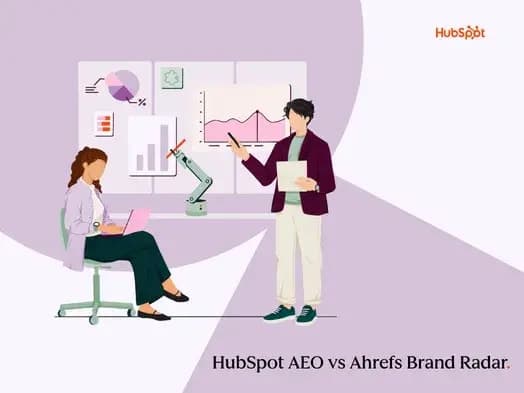
This transition marks the rise of Answer Engine Optimization (AEO). It is no longer enough to rank for a keyword; brands must now ensure they are the authoritative reference point within an AI-generated summary. As this behavior shifts, two major players—HubSpot AEO and Ahrefs Brand Radar—have emerged to help businesses navigate this "black box" of AI-driven discovery. While both tools promise visibility into how companies are perceived by LLMs, they cater to fundamentally different operational needs.
The Bifurcation of Intelligence: Diagnostic vs. Actionable Insights
To understand which tool fits your organization, you must first recognize that visibility into AI rankings is only half the battle. The core divergence between these two platforms lies in their strategic intent.
Ahrefs Brand Radar functions primarily as a sophisticated monitoring and intelligence layer. It is built for the "always-on" brand manager who needs to track sentiment and mention frequency across a broad spectrum of AI models. It acts as a specialized sensor, alerting stakeholders when their brand is—or isn't—cited in response to industry-specific queries. Its utility is in its precision and granularity; it tells you exactly what the AI is "thinking" about your brand, effectively mapping the reputation landscape in real-time.
Conversely, HubSpot AEO is deeply rooted in the Customer Relationship Management (CRM) ecosystem. It doesn’t just report on the AI conversation; it aims to tether that conversation to the revenue engine. Because it integrates directly into the HubSpot stack, it allows teams to map AI mentions directly to lead scoring, pipeline velocity, and conversion attribution. If an AI agent recommends your product, HubSpot aims to ensure that "touchpoint" is captured, nurtured, and converted into a tracked business outcome.
While Ahrefs excels at the what and the where, HubSpot focuses on the so what—the direct impact on the bottom line.
Strategic Implications for Digital Transformation
For business leaders, the rise of AEO represents a critical pivot in Digital Transformation roadmaps. We are moving away from passive traffic acquisition toward active influence management. This is not just a marketing shift; it is an organizational one that demands a new set of KPIs:
- Model Agnosticism: Brands can no longer optimize for Google alone. Organizations must now account for how different models—some optimized for concise facts, others for conversational nuance—interpret their brand identity.
- Agentic Authority: As AI agents become more autonomous, they will begin to act on behalf of the consumer. If an agent is tasked with finding a SaaS provider, it will prioritize the vendor that has the strongest "hallucination-proof" presence in its training data and real-time retrieval logs.
- The Cost of Invisibility: Unlike traditional SEO, where a low-ranking site can still see some traffic, an AI answer is a "winner-takes-most" environment. If you are not in the primary paragraph of an AI response, you are effectively invisible to that specific interaction.
The ROI implications here are profound. Marketing budgets are currently tied to legacy attribution models that struggle to account for "dark social" and AI-mediated research. By adopting tools that track AI citations, companies can finally begin to assign value to brand equity in a post-search world. This isn't merely about "ranking higher"—it’s about ensuring your value proposition is encoded into the intelligence that your future customers are trusting to make their purchasing decisions.
Navigating the Shift
The choice between an intelligence-led approach (Ahrefs) and a CRM-integrated approach (HubSpot) depends on your current stage of maturity. If your primary pain point is brand reputation management and understanding your positioning relative to competitors, the diagnostic power of Brand Radar is an essential upgrade to your PR and communications stack. If your objective is to tighten the loop between AI-influenced discovery and sales conversion, the workflow automation provided by HubSpot AEO is the logical extension of your growth strategy.
As we look toward 2026 and beyond, the most successful firms will be those that treat AI models as stakeholders in their own right. This means curating your digital footprint so that it is not just human-readable, but also highly structured for machine retrieval. It requires a fundamental shift in content strategy: moving from high-volume, keyword-stuffed blog posts to high-authority, data-dense assets that AI models find indispensable.
The transition to an AI-first discovery model is not a future event—it is the current reality of the digital marketplace. For leadership, the takeaway is clear: stop optimizing for the browser, and start optimizing for the machine.
Building a bridge between AI-driven discovery and your internal workflows is the next frontier of operational efficiency. At AOODAX, we specialize in implementing custom AI agents that can ingest your proprietary brand data and ensure your organization remains the definitive answer in your market, seamlessly connecting your AI intelligence to your existing CRM and marketing infrastructure.