The narrative of the semiconductor industry has long been tethered to the rhythmic, almost heartbeat-like cadence of Moore’s Law. For decades, the mantra that transistor counts would double roughly every two years served as the foundational architecture for the digital transformation of the global economy. Yet, as we hit the physical limitations of silicon, the industry has faced a "process wall." Recent breakthroughs from IBM suggest that we are not merely approaching a ceiling, but rather entering a new era of high-density computing that promises to stretch the lifespan of traditional scaling by at least another decade.
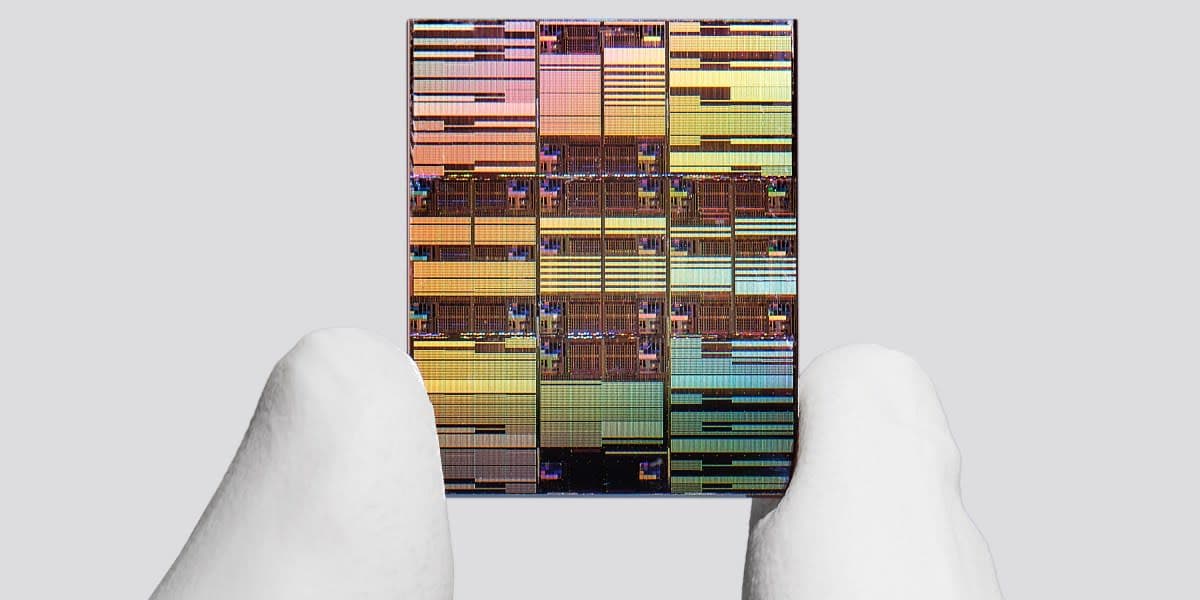
By successfully etching 100 billion transistors onto a substrate the size of a human fingernail, IBM has effectively doubled the density of its previous high-water mark, established just a few years ago. This isn't just a win for materials science; it is a critical pivot point for the future of enterprise-grade artificial intelligence and large-scale data processing.
The Architecture of Next-Gen Computing
At the heart of this advancement lies a fundamental shift in how we approach structural geometry at the nanometer scale. Achieving such extreme transistor density is rarely just about shrinking features; it is about managing the thermal dissipation and electrical leakage that occur when electrons are packed this tightly. By innovating the gate-all-around architecture and refining lithography processes, researchers are creating chips that are not only faster but significantly more energy-efficient.
For the modern enterprise, this leap in physical hardware translates into three distinct pillars of infrastructure improvement:
- Computational Throughput: Higher transistor density allows for more complex logical operations per clock cycle, enabling local edge devices to perform tasks previously reserved for high-latency cloud servers.
- Energy Efficiency Ratios: As the "performance-per-watt" metric improves, companies can run more intensive processes without exponential growth in cooling costs or carbon footprints.
- Latency Reduction: By moving intelligence closer to the data source, the time required to complete complex AI inferences—a critical bottleneck in real-time decision-making—is drastically shortened.
This transition from "brute force" scaling to "density-optimized" scaling provides a roadmap for hardware manufacturers to support the ever-increasing requirements of generative models and real-time analytical engines.
ROI and the Business of Density
For business leaders tasked with long-term digital strategy, the implication of this hardware milestone is profound. We are moving toward a period where the barrier to entry for running sophisticated AI models will drop, not because the models are getting "easier," but because the hardware is becoming exponentially more capable of handling the underlying complexity.
The ROI of this shift is multifaceted. First, consider the total cost of ownership (TCO) for data centers. If a company can achieve twice the processing power within the same power envelope, the operational expenditure (OPEX) associated with high-performance computing (HPC) environments begins to shift in favor of the business. Organizations currently struggling with the "AI tax"—the massive cost of GPU compute time—will find that future hardware cycles provide a natural deflationary pressure on their AI infrastructure costs.
Furthermore, this density enables the deployment of more granular, specialized AI agents directly into the workflow of a standard CRM or enterprise resource planning (ERP) system. Currently, many businesses limit their use of AI to batch-processing or simple automation because of latency and cost constraints. With denser chips, we can expect "always-on" intelligence that doesn’t require a round-trip to the cloud, allowing for seamless integration into customer-facing software where sub-millisecond response times are the difference between a conversion and a bounce.
Navigating the Shift in Digital Transformation
The hardware evolution we are witnessing creates a unique window for enterprises to re-evaluate their technology stacks. As these high-density chips move from the laboratory prototype phase to mass production, companies that have focused on modular, scalable software architecture will be the best positioned to capitalize.
Adoption trends indicate that the winners of the next decade will not necessarily be those with the most data, but those with the most efficient hardware-to-software pipelines. When your hardware can perform twice the operations per watt, your digital transformation strategy shifts from "How do we manage the costs of AI?" to "How do we deploy more intelligent agents to drive competitive advantage?"
- Audit for Scalability: Ensure your existing software frameworks are prepared to utilize advanced parallel processing capabilities.
- Prioritize Edge Readiness: Start investigating how decentralized compute—enabled by these denser chips—can improve your specific operational workflows.
- Focus on Lifecycle Management: Given the 10-year extension on Moore’s Law suggested by this technology, long-term investments in high-density-capable infrastructure are likely to offer superior durability against obsolescence.
As we look toward the horizon, the marriage of high-density silicon and sophisticated software ecosystems will serve as the engine for the next generation of business innovation. The challenge for leaders is no longer about waiting for the technology to "catch up"; it is about ensuring that their internal processes are ready to leverage the power that is rapidly becoming available.
At AOODAX, we bridge the gap between emerging hardware capabilities and real-world business value by helping organizations integrate cutting-edge AI agents into their existing tech stacks. Whether you are looking to optimize your digital infrastructure or automate complex workflows, our custom software development ensures your enterprise is prepared to capitalize on the next wave of computing performance.
![Top AEO Checker Tools for Answer Engine Visibility [2026 Guide]](/_next/image?url=https%3A%2F%2Fres.cloudinary.com%2Fdgq1f2en1%2Fimage%2Fupload%2Fv1790236814%2Faoodax%2Fblog%2Flvyhutfyahjgp8wbnqrb.jpg&w=3840&q=75)