The traditional data architecture journey—often visualized as the "Medallion" architecture—has long been the gold standard for enterprise data management. By segregating data into Bronze (raw), Silver (cleansed), and Gold (business-ready) layers, organizations have successfully brought order to the chaos of modern data estates. However, this structure comes with a tax: latency, storage redundancy, and the cumbersome orchestration required to move data across these silos.
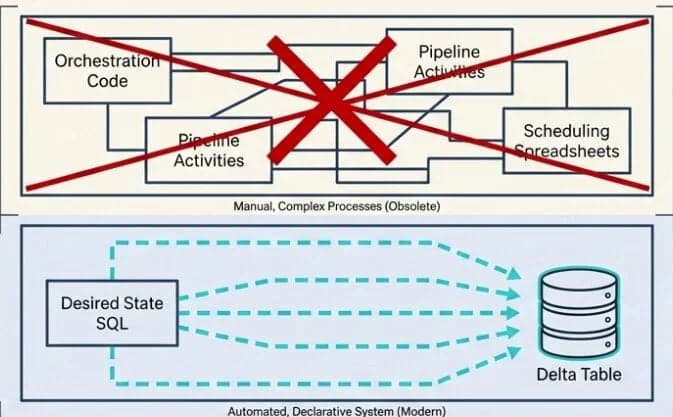
Enter Materialized Lake Views in Microsoft Fabric. This development represents a pivotal shift in how we conceive of data storage and access. Instead of forcing data through rigid, multi-stage ETL (Extract, Transform, Load) processes, we are seeing the emergence of a declarative, unified layer that allows business leaders and data engineers to treat their data lake as a high-performance database.
The Convergence of Performance and Flexibility
For years, the industry operated under a binary choice: either optimize for massive, flexible storage (the Data Lake) or optimize for low-latency, high-performance querying (the Data Warehouse). Materialized Lake Views effectively collapse this distinction. By allowing developers to define a view that physically persists as an optimized table while remaining tethered to the underlying data lake, Microsoft is effectively offering the "best of both worlds."
From a technical perspective, this is a profound leap. When you issue a SELECT statement in modern analytics, the bottleneck is rarely the SQL engine itself; it is the physical layout of the files on the disk. Materialized Lake Views tackle this by enabling:
- Declarative Synchronization: Automatically keeping materialized data in lockstep with the source lake files, reducing the need for manual orchestration.
- Query Acceleration: Providing the performance of a traditional relational store without the need to import data into a separate, proprietary repository.
- Simplified Governance: By maintaining a single source of truth at the view layer, companies can enforce security policies once, rather than mapping permissions across disparate Bronze-to-Gold pipelines.
For the enterprise, this is not just an architectural refinement; it is a fundamental shift in capital expenditure. By reducing the reliance on constant physical movement and synchronization of data, organizations can significantly lower their compute costs while increasing the speed of business intelligence.
Driving ROI Through Architectural Efficiency
In the context of Digital Transformation, time-to-insight is the primary currency. Organizations currently spend a staggering proportion of their engineering budget on the "plumbing" of data pipelines—ensuring that data lands correctly, transforms reliably, and is updated frequently enough for executive dashboards.
Materialized Lake Views enable a lean, high-velocity approach. When your Medallion architecture can be defined within a declarative view, the "Gold" layer ceases to be a destination that data must travel to; it becomes a dynamic reflection of your raw assets. This impacts the bottom line in three distinct ways:
- Reduced Infrastructure Complexity: Fewer moving parts mean lower maintenance overhead for DataOps teams.
- Accelerated AI Readiness: AI models and AI agents thrive on high-quality, real-time context. By shortening the path from raw data to an analytical view, companies can feed their models fresher data without the lag that historically plagued large-scale AI implementations.
- Enhanced Adaptability: If business requirements change, you update a definition rather than re-engineering a massive ETL pipeline. This agility is essential in a market where data-driven decisions must happen in near-real-time.
As we look at the adoption trends among our clients, the move toward these unified models is clear. Companies that rely on static reports are being outpaced by those integrating automated data views into their CRM platforms and customer service workflows. The ability to query the lake as if it were a high-speed database allows for the integration of custom analytical insights directly into the tools that business users interact with every day.
The Future of Declarative Data Management
The transition toward declarative data management—where you specify what you want to see rather than how to move it—is inevitable. As Microsoft Fabric continues to mature, we expect to see more of these "collapsed" architectures. This is not just about making data engineers' lives easier; it is about democratizing data access. When the barrier to entry for performing complex analytics is lowered, the entire organization becomes more data-literate.
For business leaders, the takeaway is clear: stop investing in complex, fragile data movement pipelines. Begin evaluating your data estate through the lens of unification. If you are still managing three distinct tiers of data that feel siloed, you are likely overpaying for compute and underutilizing your information assets. The goal is a fluid, high-performance architecture where insights are derived directly from the source, protected by unified governance, and ready for the next wave of intelligent automation.
As the industry shifts toward more autonomous and integrated ecosystems, the challenge remains in architecting these layers correctly so they can scale alongside your AI ambitions. At AOODAX, we specialize in helping organizations bridge this gap by designing custom software solutions that unify your data sources with the intelligent automation and AI agents necessary to drive operational excellence.