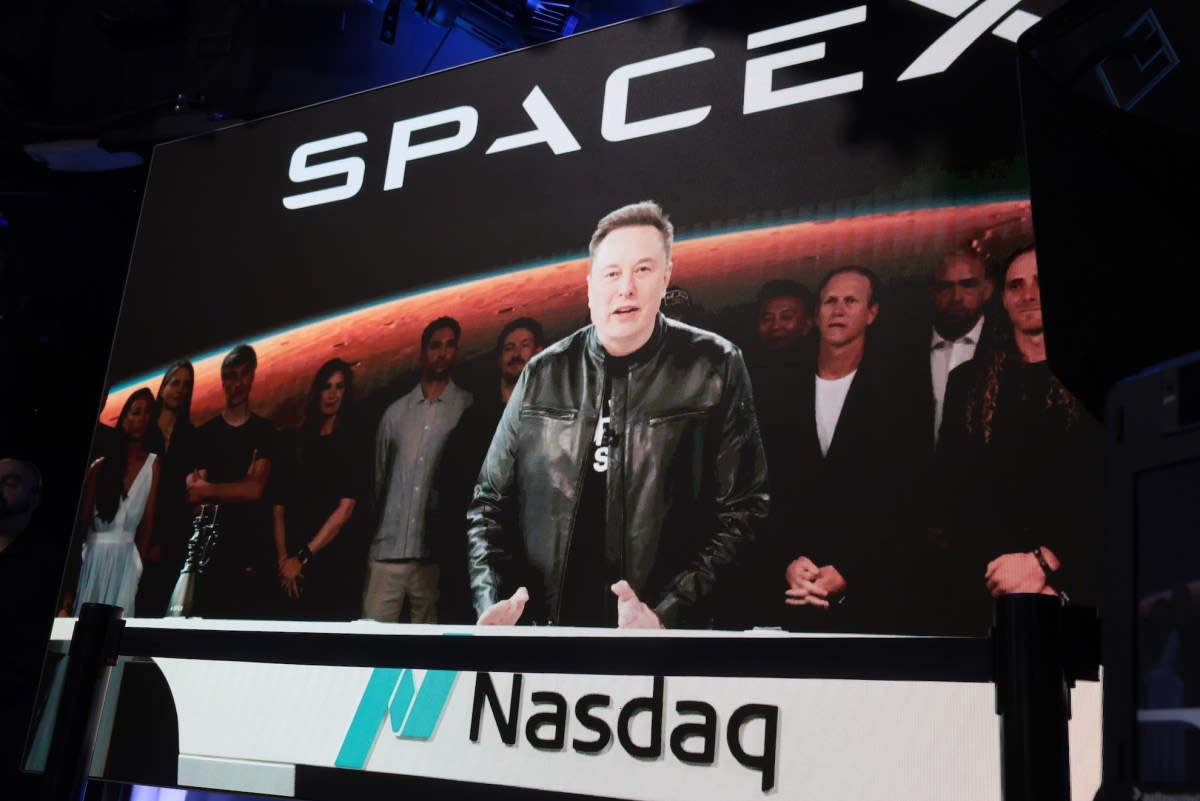
The recent announcement that SpaceX has moved to acquire Cursor in a massive $60 billion stock transaction is, by any metric, a watershed moment for the enterprise technology landscape. Following a highly successful IPO, this move signals a definitive pivot for the aerospace giant as it attempts to bolster its internal AI division. For business leaders, this isn’t just a headline about corporate consolidation; it is a clear indicator that the race to capture a projected $26 trillion addressable market in artificial intelligence has moved into a high-stakes, capital-intensive phase.
The Convergence of Deep Tech and AI Infrastructure
The integration of Cursor—a leader in AI-powered code generation and collaborative development—into the SpaceX ecosystem highlights a growing trend: the shift from generic AI models to highly specialized, workflow-integrated tooling. SpaceX’s ambition suggests they are moving beyond simple automation. By acquiring a sophisticated development environment, they are effectively verticalizing their software stack to manage the immense complexity of orbital logistics, satellite constellations, and mission-critical engineering.
For the modern enterprise, this highlights three critical shifts in the current adoption cycle:
- Workflow Sovereignty: Companies are no longer satisfied with "off-the-shelf" LLMs; they are seeking to own the environments where their AI-driven intellectual property is built.
- Agentic Integration: The focus is moving away from basic chatbots toward AI agents that can autonomously write, test, and deploy code, drastically reducing the "time-to-insight" for complex engineering tasks.
- Market Valuation Realignment: Investors are clearly signaling that they value AI-integrated workflows as highly as core infrastructure, viewing digital transformation as the fundamental engine of growth for the next decade.
Strategic Implications for Global Business
The staggering price tag attached to this deal underscores the massive ROI potential that firms anticipate from AI integration. When an organization like SpaceX allocates nearly $60 billion in equity to secure advanced development capabilities, it isn’t merely optimizing software delivery; it is creating a force multiplier for every other asset in its portfolio.
For CEOs and CTOs, the lesson here is that AI is no longer a peripheral IT experiment. It is becoming the primary operational substrate of high-growth companies. As organizations attempt to scale, the bottleneck is rarely the model itself, but the efficiency of the software development lifecycle and the ability to automate routine engineering hurdles. Companies that fail to bake AI-native tools into their core workflows risk falling behind peers who are utilizing these technologies to accelerate innovation at orders of magnitude faster than traditional methodologies allow.
Looking forward, we can expect a wave of "AI-first" M&A activity as traditional corporations look to secure the specialized talent and tooling required to remain competitive. Business leaders should focus on consolidating their internal data silos and prioritizing tools that promote seamless human-AI collaboration.
As businesses navigate this rapid evolution, the challenge often lies in bridging the gap between sophisticated AI potential and actual, measurable ROI. At AOODAX, we specialize in deploying custom AI agents that integrate directly into existing business processes, helping organizations transform their digital infrastructure into a true competitive advantage.


