The architecture of modern computing is approaching a long-anticipated "hard ceiling." For the past decade, we have squeezed every ounce of efficiency out of silicon-based classical chips, yet we are rapidly hitting the limits of classical bit processing when it comes to the complexity of the problems we are now asking our machines to solve. As we move deeper into the era of advanced Artificial Intelligence (AI) and autonomous systems, the bottleneck isn’t just memory or storage—it’s the fundamental speed at which we can simulate molecular interactions, optimize global supply chains, and train foundational models.
This is where the shift toward Quantum Computing is moving from theoretical physics papers into the realm of actionable engineering. While many firms have flirted with cryogenic superconducting qubits, a new vanguard of companies is betting on photonics—leveraging the speed of light to achieve what was once considered science fiction. The goal is no longer just "proof of concept" research; it is about building the first truly useful, error-corrected quantum machines that can reside within a standard data center footprint.
The Photonic Shift: Scaling Beyond the Lab
The industry has long struggled with the "noise" problem in quantum systems. Traditional superconducting qubits require extreme sub-zero temperatures and are notoriously sensitive to environmental interference. However, a pivot toward Photonic Quantum Computing—where data is processed using particles of light (photons)—offers a distinct advantage. Photons interact very little with their environment, which theoretically makes them easier to scale without the need for massive, building-sized refrigeration units that house delicate metallic wires.
For business leaders, the transition from lab-bound prototypes to modular, rack-mounted quantum hardware is a critical milestone. This shift suggests that quantum utility is moving closer to an "as-a-service" model. Instead of viewing quantum as a distant, multi-decade bet, the industry is approaching a tipping point where these machines will begin to integrate into existing digital infrastructure. Key features of this emerging generation of photonic hardware include:
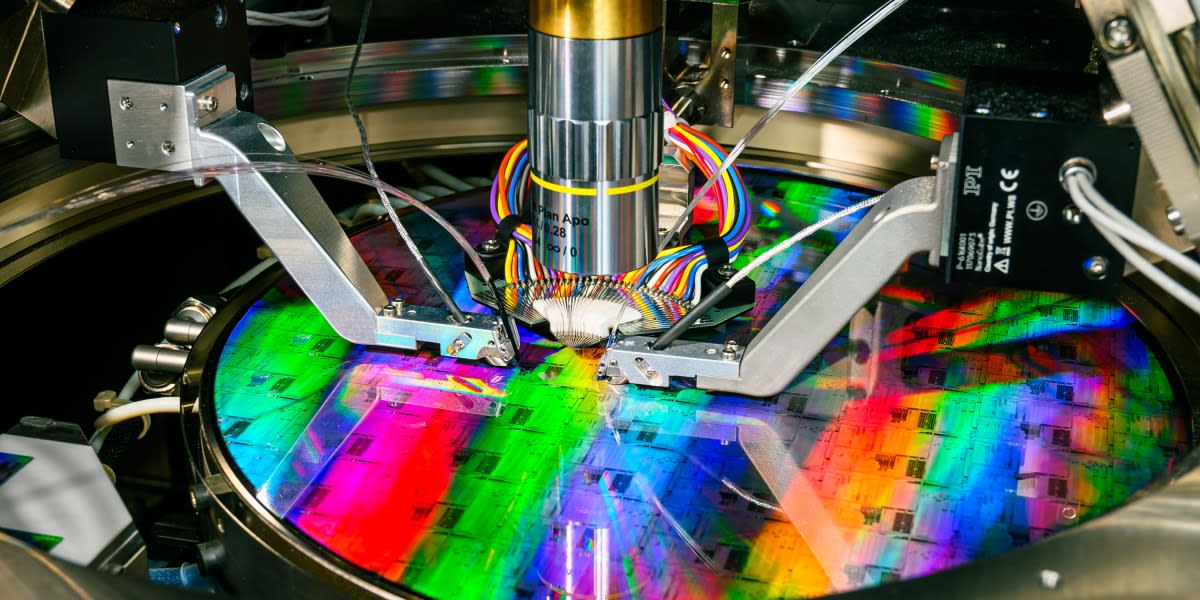
- Room-temperature compatibility: While optics still require precision, the move toward silicon photonics allows companies to manufacture quantum components using standard semiconductor fabrication processes.
- Modular scalability: By designing machines that mirror the rack-and-stack architecture of modern cloud servers, hardware providers are making it possible to expand quantum capacity incrementally rather than building a custom "one-off" computer for every iteration.
- Interconnectivity: Photons are inherently designed for communication. A photonic quantum computer can theoretically interface more fluidly with existing fiber-optic networks, setting the stage for a "quantum internet" that could secure data transfers with unparalleled encryption standards.
The ROI of Quantum-Classical Hybridization
While the prospect of a universal quantum computer is enticing, the immediate business value lies in Hybrid Computing. Organizations should not be waiting for the "quantum supremacy" headline to begin preparing their data strategies. Instead, the smartest firms are currently focusing on the bridge between classical AI agents and quantum processing.
Consider the application of quantum-ready algorithms in the context of Digital Transformation. Current machine learning models—particularly large-scale transformers—are constrained by the limitations of classical optimization. When these models reach a certain level of complexity, they become exponentially expensive to train and tune. Quantum computing, even in its early stages, promises to handle high-dimensional optimization problems that would otherwise stall a traditional server cluster.
For companies with complex CRM (Customer Relationship Management) systems or massive, siloed data repositories, this means that predictive analytics could soon transition from "educated guessing" to precise simulation. If you are a business leader, the ROI implications of this transition are clear:
- Optimizing Resource Allocation: Quantum algorithms excel at the "Traveling Salesperson Problem" on a global scale. This can reduce logistics and carbon footprint costs for enterprise supply chains by orders of magnitude.
- Molecular Discovery: For the pharmaceutical and material science industries, the ability to simulate chemical reactions at the subatomic level could slash R&D cycles from years to weeks.
- Risk Modeling: Financial institutions can utilize quantum-enhanced processing to run vastly more complex Monte Carlo simulations, allowing for real-time risk assessment in volatile markets.
Navigating the Adoption Curve
The risk for today’s enterprise is not that they will "miss out" on quantum, but that they will be unprepared to integrate these capabilities when they arrive. Adoption is not just about hardware; it is about data readiness. If your company’s internal architecture is currently a chaotic sprawl of legacy software, adding a quantum layer will not provide a competitive edge.
The roadmap for the next three to five years is clear: firms must prioritize the digitization and cleanup of their data. Quantum systems are "garbage in, garbage out" machines on an astronomical scale. Furthermore, businesses should begin exploring quantum-inspired algorithms—software tools that run on current silicon but utilize the logic of quantum mathematics to solve problems more efficiently. By refactoring your current data pipelines today, you are essentially "training" your infrastructure to interface with the quantum architectures of tomorrow.
As we look toward the horizon, the marriage of photonic quantum power and autonomous AI represents the ultimate phase of enterprise automation. The machines of the next decade will not just be faster; they will be fundamentally more intelligent, capable of navigating complexity that currently remains invisible to our best software.
Successfully navigating this shift requires a robust foundation where your data is organized, accessible, and ready for advanced computational layers. At AOODAX, we specialize in bridging the gap between current business realities and the future of intelligent systems, helping you deploy AI agents that streamline operations and ensure your company is ready to leverage the next generation of computing advancements.