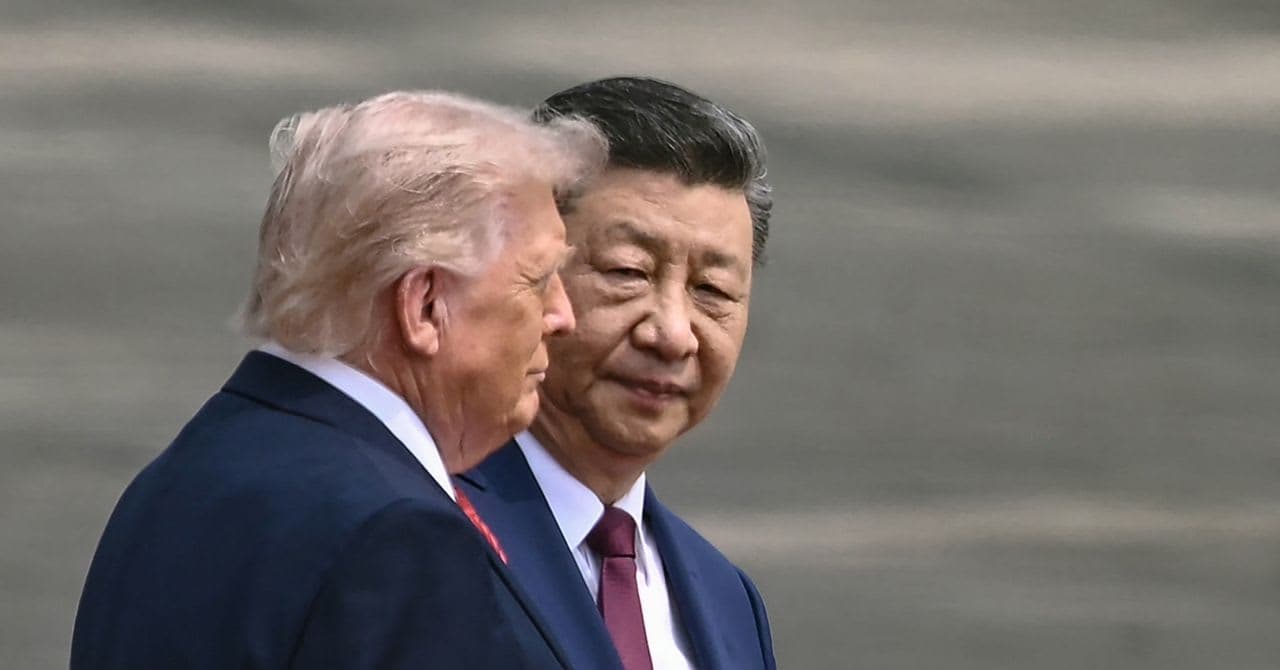
The intersection of geopolitical statecraft and the global supply chain has rarely been as consequential for the C-suite as it is today. As Washington and Beijing prepare for high-stakes diplomatic dialogues, the narrative has shifted from broad economic concerns to the granular, volatile world of Generative AI infrastructure. For business leaders, the outcome of these summits will not merely be a matter of policy—it will dictate the trajectory of digital transformation, capital expenditure, and the availability of the critical components that power the intelligence era.
The contemporary AI boom is built on a foundation of silicon and rare earth minerals, a supply chain that remains deeply, if uncomfortably, interconnected. As we look toward impending bilateral meetings, companies must recognize that the "AI arms race" is no longer just about software superiority; it is about the physical reality of hardware, data center sovereignty, and the export controls that govern how advanced Graphics Processing Units (GPUs) and high-end semiconductors move across borders.
The Hardware Bottleneck and the ROI of Uncertainty
For the modern enterprise, the primary risk lies in the hardening of technological boundaries. When nations utilize export restrictions as bargaining chips, the ripple effect on corporate budgets is immediate. Companies currently scaling their AI infrastructure—investing millions in Large Language Models (LLMs) and data-heavy processing—face a landscape where hardware lead times and pricing are increasingly susceptible to political volatility.
This uncertainty complicates the Return on Investment (ROI) calculus for digital transformation initiatives. If a business plans its future operations around a specific cadence of AI-driven automation or the deployment of advanced AI Agents, any disruption in the supply of high-performance chips can derail those milestones. The market is shifting from a "just-in-time" supply model to a "just-in-case" strategy, forcing firms to reconsider their vendor diversification and geographic reliance.
Key considerations for leadership during this period of heightened tension include:
- Supply Chain Resilience: Assessing the dependency of your current tech stack on chips produced via restricted manufacturing processes.
- Cost Elasticity: Factoring potential tariff-driven hardware cost increases into the total cost of ownership (TCO) for data centers and private cloud environments.
- Interoperability: Prioritizing software architectures that are hardware-agnostic to mitigate the risks associated with restricted specialized hardware.
- Operational Continuity: Developing multi-regional strategies for cloud-based AI services to ensure that if specific regions face throttled compute access, your business intelligence operations remain online.
Navigating the Shift Toward Sovereign AI Ecosystems
The coming diplomatic summits will likely solidify a trend toward "sovereign AI"—a movement where nations and economic blocs look to cultivate internal capabilities to reduce reliance on foreign-produced intelligence infrastructure. For a Chief Technology Officer or a Chief Information Officer, this implies that the globalized internet of the past may be evolving into a fragmented, regionalized ecosystem of AI services.
The integration of Customer Relationship Management (CRM) platforms with localized AI agents is one area where this impact will be felt most acutely. Businesses that rely on unified, global AI systems for customer insights may soon find themselves navigating fragmented compliance requirements and differing data governance standards in different geopolitical theaters.
Adoption trends are currently favoring a "hybrid-intelligence" approach. Rather than relying on a single, monolithic, and potentially vulnerable global provider, forward-thinking enterprises are investing in:
- Modular AI Architectures: Deploying autonomous AI agents that can function across diverse hardware ecosystems, ensuring that an enterprise CRM or automation suite remains performant regardless of shifting geopolitical friction.
- Data Sovereignty Compliance: Investing in local data processing nodes to ensure that even if export controls limit hardware, the business retains ownership and analytical access to its proprietary datasets.
- Strategic Hedging: Establishing partnerships with a broader array of cloud service providers to ensure redundancy if specific regions become restricted or prohibitively expensive.
A Forward-Looking Strategy for Resilient Growth
The period ahead will be characterized by a transition from the "growth at all costs" mentality of early AI adoption to a "resilience and reliability" focus. Business leaders who successfully navigate this cycle will be those who view their technological infrastructure not as a static utility, but as a dynamic asset that requires proactive, geopolitically-aware management.
Actionable takeaways for the coming year should center on agility. First, perform a deep audit of your current AI tech stack to identify "choke points"—hardware components or SaaS dependencies that, if restricted, would cripple critical internal processes. Second, accelerate your transition to cloud-agnostic software development. If your infrastructure is tightly coupled to specific, limited-availability hardware, you are inviting unnecessary operational risk. Third, lean into internal automation for low-level, high-frequency tasks; this reduces the need for the most advanced, high-barrier hardware and allows you to prioritize your compute resources for high-impact, value-generating AI initiatives.
Ultimately, the goal is to decouple your business strategy from the immediate chaos of policy shifts. By focusing on flexible, scalable architectures, companies can insulate themselves from the tremors of international negotiation, ensuring that their pursuit of efficiency and intelligence remains uninterrupted, regardless of the global climate.
As enterprises navigate the complexities of building resilient AI systems within this shifting landscape, having the right architectural foundation is essential. AOODAX helps businesses thrive in this environment by designing and deploying custom AI agents that are built to integrate seamlessly with your existing infrastructure, ensuring your automation strategies remain robust even as hardware markets evolve.