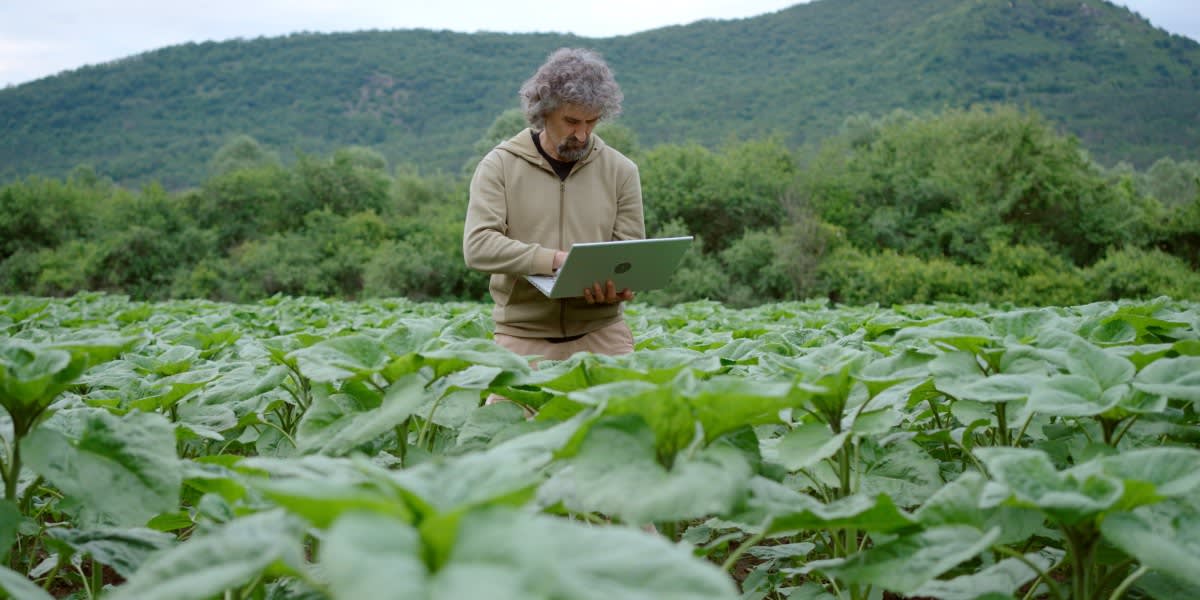
The narrative surrounding the digitization of agriculture has reached a fever pitch. From autonomous tractors roaming the Midwest to hyperspectral imaging drones mapping vineyard health, the industry is perpetually on the cusp of an "AI revolution." However, as we speak with stakeholders across the agricultural value chain, a recurring friction point emerges: while the algorithmic potential is virtually limitless, the foundational data architecture remains largely stuck in the pre-digital era.
For enterprise leaders, this discrepancy between the promise of Artificial Intelligence and the reality of fragmented, siloed data is the primary hurdle to achieving meaningful Digital Transformation. Investing in a predictive model today without first addressing the "data plumbing" of an organization is akin to buying a high-performance engine for a car without a chassis. To move from the current state of sporadic experimentation to institutionalized efficiency, we must first address the silent crisis of data readiness.
The Data Infrastructure Deficit in Modern Ag
Modern agriculture is an industry operating on razor-thin margins. Between the extreme volatility of global fertilizer pricing and the increasing unpredictability of climate patterns, there is virtually no room for operational error. Predictive models represent a massive opportunity to mitigate these risks—optimizing water usage, identifying pest outbreaks before they manifest, and automating crop yields. Yet, these models are only as robust as the data sets used to train them.
Many agricultural enterprises are currently hindered by what we call "data isolation." Critical operational information—ranging from soil sensor telemetry to historical yield data and Customer Relationship Management (CRM) inputs—often exists in incompatible formats across disparate systems.
When data lacks standardization, the downstream utility of AI is severely compromised. For business leaders, this means that even if a vendor provides a state-of-the-art predictive tool, the return on investment (ROI) will likely be disappointing if the underlying data architecture is not interoperable. The following factors are essential for achieving data maturity in the sector:
- Data Interoperability: Ensuring that field-level hardware, ERP software, and supply chain logistics platforms share a common data schema.
- Data Integrity & Governance: Establishing protocols to ensure that sensor data is cleaned, validated, and normalized before it enters an AI training loop.
- Historical Contextualization: Integrating legacy data with real-time feeds to allow models to recognize patterns across varying seasons and geographic conditions.
- Edge Processing Capabilities: Moving compute power closer to the data source (in the field) to minimize latency and ensure that decision-making can occur even in bandwidth-constrained environments.
The Shift Toward Autonomous Decision Systems
As we stabilize our data foundations, the industry is shifting from simple predictive analytics toward the implementation of AI Agents. Unlike traditional software, which requires manual triggers, AI agents are autonomous entities capable of interpreting data, executing tasks, and refining their performance over time.
In an agricultural context, this could mean an agent that automatically adjusts irrigation schedules based on real-time soil moisture sensors, weather API inputs, and localized energy cost fluctuations, all without human intervention. This level of automation is not merely an efficiency gain; it is a fundamental shift in business modeling. Companies that can move from reactive reporting to automated, agent-driven execution will enjoy a significant competitive advantage.
However, the leap to autonomous systems requires a high level of organizational trust. Business leaders must view the transition not just as an IT upgrade, but as a cultural shift. Adoption trends suggest that the most successful firms are those that treat data as a proprietary corporate asset—a value lever just as important as the physical machinery or the land itself. By treating the data pipeline with the same level of investment rigor as a capital expense, firms can realize compounding returns on their technological investments.
Strategic Roadmap for Data-Led Growth
The path forward for agricultural leaders involves a disciplined approach to modernization. First, leadership must move beyond the "Pilot Purgatory" that plagues many industries, where companies run dozens of small, disconnected AI tests that fail to scale. Instead, define one or two high-impact business outcomes—such as reducing nitrogen runoff or improving harvest timing—and focus all data readiness efforts on those specific objectives.
Second, integrate your digital infrastructure with your customer and supplier ecosystem. Since agricultural success is intrinsically linked to logistics and supply chain stability, data silos should be broken down between the farm, the processor, and the distribution network. A unified data strategy allows for a seamless flow of information, which is the prerequisite for deploying advanced Automation solutions.
Finally, prioritize the scalability of your software architecture. As your data volume grows, your cloud infrastructure must be capable of processing that information without incurring prohibitive costs or falling victim to system latency. Scalability is the difference between a prototype that works on a single farm and an enterprise system that drives profitability across an entire corporate portfolio.
Looking ahead, the winners in this space will be the organizations that successfully blend domain expertise with rigorous data engineering. The technology is already here, and the potential to revolutionize agricultural productivity is clear. The question is no longer whether AI can help solve the most pressing challenges of our time, but whether your organization is structured to feed those models the high-quality, actionable data they require to perform.
By treating AI as a component of a holistic digital ecosystem rather than a magic-bullet feature, you can build a resilient, future-ready agricultural business. At AOODAX, we assist businesses in bridging this gap by architecting intelligent AI agents that automate complex decision-making processes, ensuring your internal data works as hard as your operations team does.