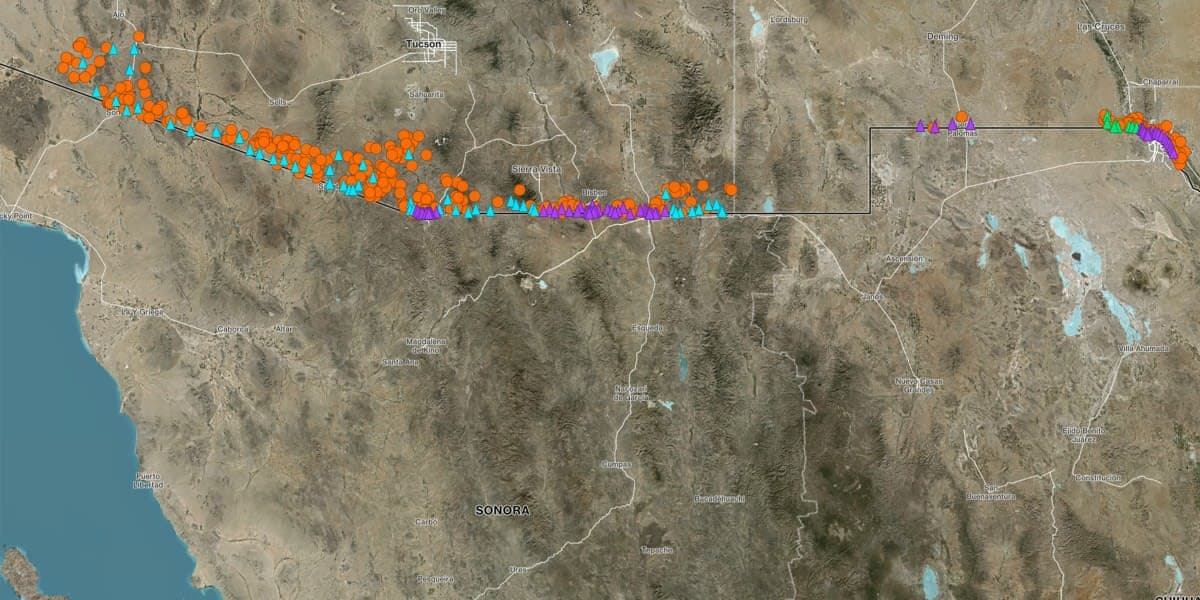
The intersection of high-stakes government infrastructure and Artificial Intelligence has long promised a future of perfect visibility and predictive efficiency. However, the recent scrutiny surrounding the "virtual wall"—a sprawling, multi-billion-dollar network of sensors, drones, and Computer Vision systems deployed along the US-Mexico border—serves as a sobering case study for any organization looking to scale automated surveillance or monitoring solutions.
While these systems are designed to process massive datasets to identify anomalies, the tragic human outcomes associated with border crossings highlight a fundamental disconnect: a technological system is only as effective as the operational logic governing it. For business leaders, this represents a critical lesson in the limitations of "black-box" decision-making and the necessity of human-in-the-loop workflows.
The Mirage of Total Observability
The push for a virtual border is rooted in the promise of Digital Transformation. By replacing static physical barriers with a mesh network of LiDAR, thermal imaging, and autonomous aerial vehicles, stakeholders hoped to gain a real-time "God’s-eye view" of critical environments. In a corporate context, this mirrors the adoption of Internet of Things (IoT) arrays in supply chain management or high-security data centers. The goal is the same: to mitigate risk through exhaustive, data-driven oversight.
However, the "virtual wall" reveals a common failure point in large-scale deployments: data volume is not synonymous with actionable insight. When systems are optimized purely for perimeter detection rather than context-aware response, they often trigger a flood of false positives or, conversely, create data silos that mask the very events they are intended to intercept.
For businesses integrating AI into their operations, the takeaway is clear:
- Contextual Integrity: Algorithmic precision is meaningless if the system lacks the context to prioritize high-risk events over noise.
- Latency vs. Action: Real-time data is only as valuable as the speed at which a human or automated agent can process and act upon it.
- The Integration Gap: Surveillance technology often fails when it is not integrated into a cohesive CRM or Business Intelligence platform that facilitates rapid incident response.
The billion-dollar question for enterprise leaders is not how much surveillance data they can collect, but how they can bridge the gap between detection and effective intervention. Companies that over-invest in monitoring hardware without corresponding investment in the AI Agents that interpret that data are essentially building a wall that looks impressive on a balance sheet but serves little operational purpose.
ROI and the Ethics of Automated Systems
When evaluating the Return on Investment (ROI) for autonomous monitoring systems, business leaders must account for more than just hardware costs and software licensing. There is a "social license to operate" and an operational risk cost that is often overlooked. In the case of the border, the immense spend has not translated into the humanitarian objectives it ostensibly serves. In the private sector, similar misalignments between technical capabilities and business outcomes lead to wasted capital and reputational damage.
Automation trends in 2024 are shifting away from brute-force data collection toward Edge Computing—processing information locally to ensure faster, more relevant decision-making. By moving the "intelligence" closer to the sensors, companies can reduce bandwidth costs and improve the responsiveness of their automation pipelines.
Consider the following implications for your digital transformation strategy:
- Predictive Maintenance: Rather than monitoring for failure, deploy AI that predicts and prevents outages by correlating disparate data streams.
- Resource Allocation: Use automation to shift human talent from low-value data monitoring to high-value crisis management.
- Transparency and Auditability: Regulatory frameworks are catching up to AI. If your internal monitoring systems make automated decisions, you must be able to explain the logic to auditors and stakeholders.
The failure to turn massive datasets into nuanced, empathetic, or actionable results is not just a failure of technology; it is a failure of system architecture. When an AI system identifies a pattern but lacks the agency to initiate a life-saving or business-saving correction, the enterprise remains vulnerable.
Bridging the Gap: Where Strategy Meets Execution
The future of high-stakes monitoring lies in the shift from passive observation to active, autonomous assistance. Leaders who recognize that data is a resource—not a solution—will be the ones who successfully navigate the coming wave of industrial-grade AI integration.
As we look toward 2025, the winners in this space will be organizations that focus on "orchestration." They won’t just buy the sensors; they will build the connective tissue that allows an Automation platform to trigger a multi-channel response, alerting stakeholders, updating documentation, and mobilizing human teams in a single, fluid motion. Technology is most potent when it functions not as a wall, but as a bridge—a tool that connects intent to outcome.
Ultimately, the goal of any sophisticated technology stack is to remove the friction between identification and impact. At AOODAX, we specialize in building the custom software and intelligent agents that turn raw, overwhelming data streams into streamlined, actionable intelligence that drives your business forward.