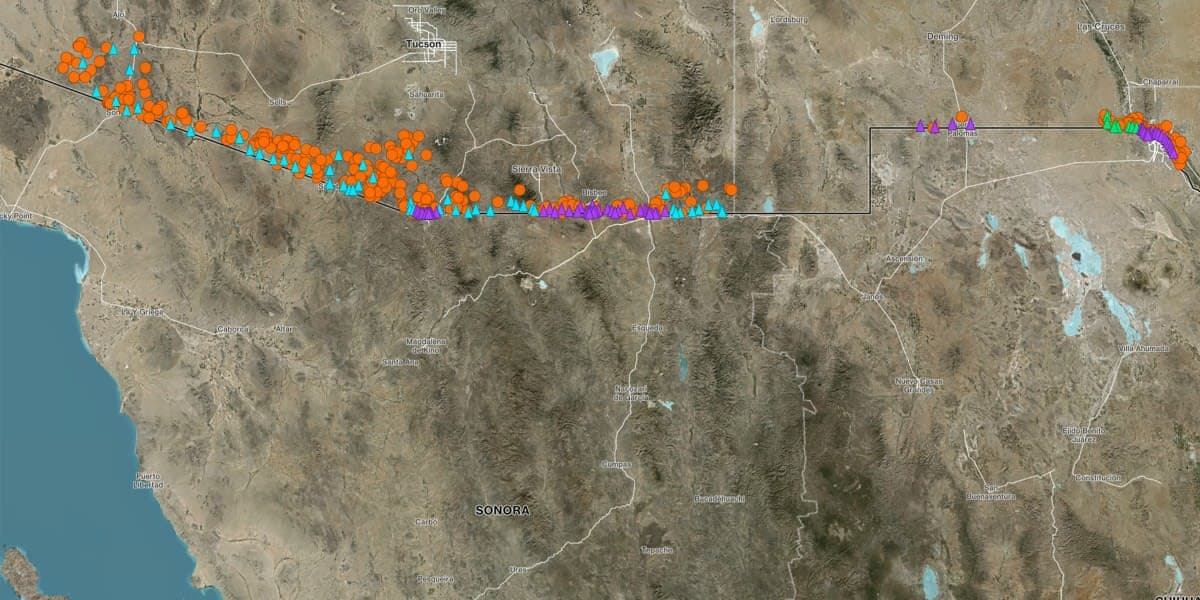
The intersection of high-stakes border security and sophisticated surveillance technology offers a sobering case study in the unintended consequences of rapid digital transformation. As governments and private enterprises alike deploy increasingly autonomous monitoring systems, a fundamental question emerges: when we replace human oversight with algorithmic observation, do we optimize for efficiency, or do we simply displace the complexity of the problem into the "blind spots" of our data sets?
The deployment of Integrated Fixed Towers (IFT) and Remote Video Surveillance Systems (RVSS) represents a massive investment in edge computing and sensor fusion. These systems are designed to detect movement across vast, often inhospitable terrains, using thermal imaging, seismic sensors, and automated recognition software to classify anomalies. While the objective is to create a "virtual wall" that acts as a force multiplier for human personnel, the data suggests that these technological frameworks often create a paradox of security: the more automated and pervasive the surveillance, the higher the risk of pushing individuals toward increasingly dangerous and unmonitored paths.
The Architectural Flaw of "Invisible" Automation
For business leaders overseeing digital transformation, the border surveillance model serves as a cautionary tale regarding the "black box" nature of automated decision-making. When organizations implement Predictive Analytics or Automated Threat Detection to streamline operations, they often suffer from a failure to account for how the environment reacts to the system itself.
In the case of large-scale infrastructure monitoring, the technology is often viewed as a neutral observer. However, the reality is that the deployment of advanced surveillance creates a feedback loop. When a region is saturated with AI-enabled cameras, the behavior of the subjects being tracked does not disappear; it shifts. In corporate terms, this is akin to deploying an AI-driven CRM or a Customer Intent Analysis engine that inadvertently discourages specific demographics from engaging with a brand, not because the business intended to exclude them, but because the system’s logic was optimized for a narrow, idealized definition of "positive outcomes."
The technical limitations of these border systems—specifically the high rate of false positives and the inability of current AI models to distinguish between routine human movement and distress—highlight the danger of "automation bias." When software interfaces present data as definitive, the humans tasked with acting on that data may prioritize the system's output over contextual reality.
- Systemic Blind Spots: Algorithms often fail to account for environmental variables that render high-tech sensors ineffective, leading to a false sense of security.
- The Feedback Loop: Increased surveillance intensity forces non-conforming actors into more hazardous territory, effectively rendering the original "security" data incomplete or skewed.
- Operational Silos: Data gathered by surveillance tech is often disconnected from the response mechanisms, creating a lag between detection and intervention that negates the efficiency gains of the AI.
ROI and the Ethics of Algorithmic Implementation
From a business perspective, the ROI of sophisticated monitoring technology is rarely found in the software alone; it is found in the integration of human-in-the-loop (HITL) workflows. Many companies adopt expensive, "turn-key" surveillance or automation suites expecting an immediate reduction in risk. However, without a commensurate investment in the human infrastructure to interpret the nuance of that data, these systems often increase administrative friction rather than solving the underlying business problem.
Consider the adoption of Generative AI Agents in enterprise workflows. If these agents are deployed to handle customer inquiries or logistics management without proper human oversight, they can inadvertently create gaps in service that are just as detrimental as a complete lack of automation. The cost of "false negatives"—missed opportunities or systemic failures caused by an algorithm—often exceeds the initial cost of the technology stack.
To build sustainable digital infrastructure, organizations must move beyond the "surveillance as a solution" mindset and toward "systemic transparency." This involves:
- Auditable AI: Implementing frameworks that allow teams to trace exactly why a specific surveillance or prediction alert was triggered.
- Context-Aware Automation: Moving from passive monitoring to active, situational analysis that accounts for environmental factors.
- Feedback Integration: Closing the loop between AI insights and real-world results to constantly refine the model’s performance.
As businesses continue to scale, the primary challenge will not be the acquisition of more sensors or more data, but the ability to synthesize that data without losing sight of the human element. Technologies like Computer Vision and Edge Computing have the potential to revolutionize how we manage safety and security, but only if they are implemented with an eye toward the socioeconomic impact of their design.
The path forward for enterprise leaders is to prioritize systems that empower human decision-makers rather than attempting to replace them. True digital maturity is realized when technology provides a clear, actionable picture of the environment, rather than a filtered or distorted one that invites oversight and error. By focusing on the ethical deployment of autonomous systems, organizations can ensure that their technological investments drive actual value rather than just creating new, invisible complexities.
At AOODAX, we understand that successful digital transformation relies on the careful integration of machine intelligence with human strategy. We specialize in building custom AI agents that help businesses navigate complex data environments while ensuring that automation always supports, rather than compromises, your operational goals.