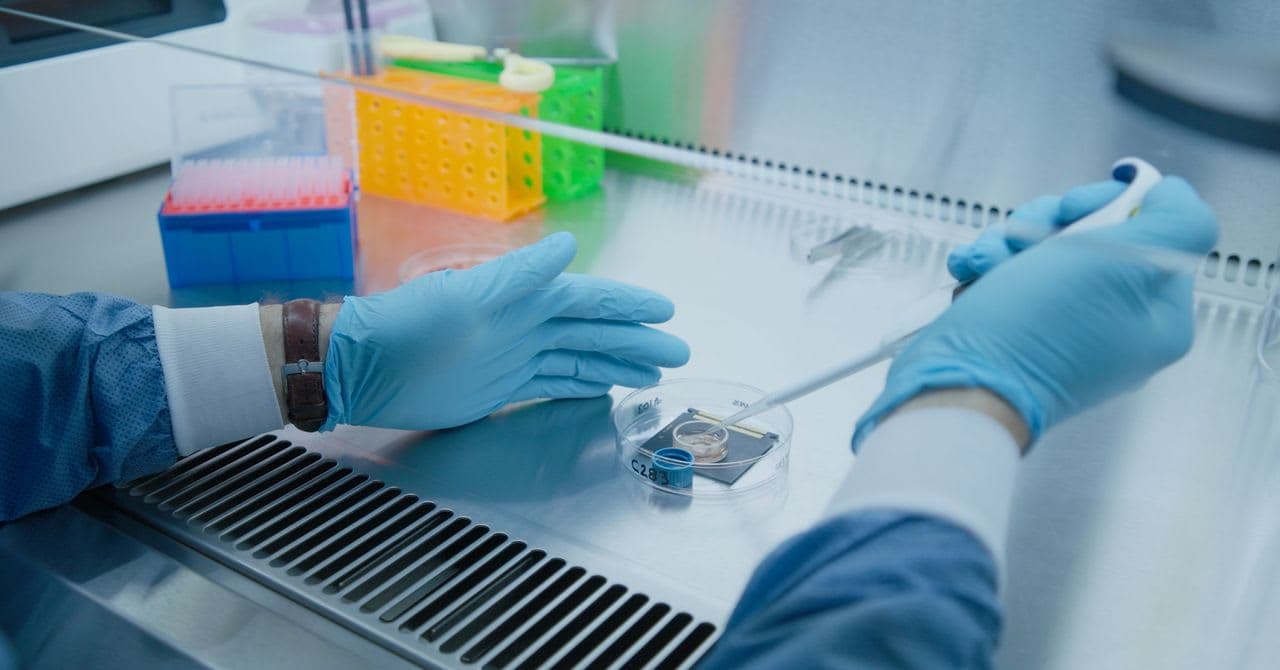
The pursuit of artificial intelligence has historically been defined by the pursuit of silicon-based efficiency. For decades, we have pushed the limits of GPUs, refined transformer architectures, and obsessed over energy consumption in massive data centers. However, a quiet paradigm shift is taking place that moves beyond mere hardware acceleration. We are entering the era of Biocomputing, a field where the organic wetware of living neurons is being integrated with traditional digital infrastructure.
Recent developments, such as the entry of FinalSpark—the company pioneering the use of human brain organoids for computing—onto platforms like Amazon Web Services (AWS), signal that this once-fringe scientific endeavor is nearing commercial viability. For the business leader, this isn’t just a story about biology; it is a story about the next frontier of processing power and the potential to solve computational problems that currently baffle our best digital hardware.
The Convergence of Wetware and Software
The fundamental limitation of modern AI is energy density. Training a Large Language Model (LLM) requires a small city's worth of power. In contrast, the human brain performs complex, multi-modal processing while operating on roughly the same energy as a dim lightbulb. By utilizing Brain-Organoid Computing, researchers are essentially plugging biological tissue into standard digital interfaces.
This is not a replacement for traditional cloud computing; rather, it is a specialized augmentative layer. These biological systems excel at tasks involving massive parallel processing and pattern recognition in ways that silicon architectures—bound by the limitations of the Von Neumann bottleneck—struggle to replicate. As these tools become accessible via cloud environments like AWS, we are seeing the democratization of biological hardware.
The practical implications for enterprises include:
- Radical Energy Efficiency: By offloading specific compute-intensive AI training tasks to biological neural networks, companies could potentially reduce the carbon footprint and operational costs associated with massive model training.
- Enhanced Pattern Recognition: Neural organoids naturally handle non-linear data sets, offering potential breakthroughs in fields like predictive analytics, complex logistics, and advanced material science.
- Reduced Latency in Specialized AI: For agents that require real-time, intuitive decision-making rather than rote calculation, biological integration offers a new, highly responsive computational substrate.
Bridging the Gap: What This Means for Digital Transformation
For the CTO or the Chief Digital Officer, the immediate question is not how to replace their current tech stack, but how to prepare for a multi-modal computational future. We are moving toward a hybrid environment where AI Agents may eventually run on systems that combine silicon logic with the adaptive, self-repairing properties of organic intelligence.
This evolution is a natural successor to the Digital Transformation initiatives of the past decade. If your organization has already invested in cloud migration and data-driven CRM systems, you have already built the "nervous system" required to feed these advanced models. The next step is data architecture maturity. Biological computing is highly sensitive to input quality; an organization that cannot clean and structure its data today will be unable to leverage the synthetic or biological breakthroughs of tomorrow.
Businesses should view this as an opportunity to rethink their R&D pipeline. The integration of biology into tech isn't just for life sciences companies; it is a fundamental shift in how we process complexity. As we move toward more autonomous AI agents, the ability to process information with higher efficiency and lower friction will become a primary competitive advantage.
Strategic Adoption in a Hybrid Future
The timeline for commercial biocomputing adoption is not immediate, but the signals are clear. Early adopters are beginning to explore how these biological interfaces can be managed through existing APIs. When we look at the adoption curve of high-end computing, we see a pattern: the most esoteric research typically lands in the cloud before finding its way into specialized enterprise workflows.
For leaders aiming to stay ahead, the current focus should remain on "AI-readiness." This involves:
- Infrastructure Agility: Ensuring your software architecture is modular enough to integrate new, non-traditional compute sources as they emerge from the cloud providers.
- Strategic Data Stewardship: Biological models require high-fidelity, highly contextualized data. The work you do now to map customer journeys in your CRM will serve as the training foundation for future, more sophisticated AI systems.
- Automation Prioritization: Start by identifying the most energy-intensive, least "logical" tasks in your current automation pipelines. These are the prime candidates for future biocomputing augmentation.
The marriage of biology and code represents the most ambitious attempt yet to move beyond the limitations of silicon. While we are still in the early stages, the transition to platforms that support hybrid computing suggests that we are moving toward a future where our most complex AI problems are not just calculated, but in a very real sense, learned.
As industries begin to navigate the complexities of integrating these next-generation AI models, companies will need partners who can bridge the gap between cutting-edge technology and business utility. Whether it is refining your existing infrastructure to handle more complex AI Agents or optimizing your data flow for future automation, AOODAX helps businesses navigate the technical landscape to turn high-level innovation into a practical operational reality.