In the early days of the "Big Data" gold rush, the primary objective for most organizations was simple: collection. If you could move your siloed information into a Cloud Data Warehouse like Snowflake or Google BigQuery, you were considered ahead of the curve. The prevailing mindset was that once the data landed, the heavy lifting was finished. Executives breathed a sigh of relief, believing that the mere existence of a centralized repository would automatically yield actionable insights.
We now know this was a strategic fallacy. Loading data is not the finish line; it is merely the starting point of a complex, often grueling journey toward "analysis-ready" maturity. For modern enterprises, the real challenge has shifted from storage to context, governance, and semantic consistency.
The Semantic Gap: Why Raw Data Isn’t Business Intelligence
The discrepancy between "available data" and "useful data" is what many engineers call the semantic gap. You might have ten terabytes of customer interaction logs, but if your marketing team, finance department, and product engineers define "churn" or "active user" in three different ways, that data is not an asset—it is a liability.
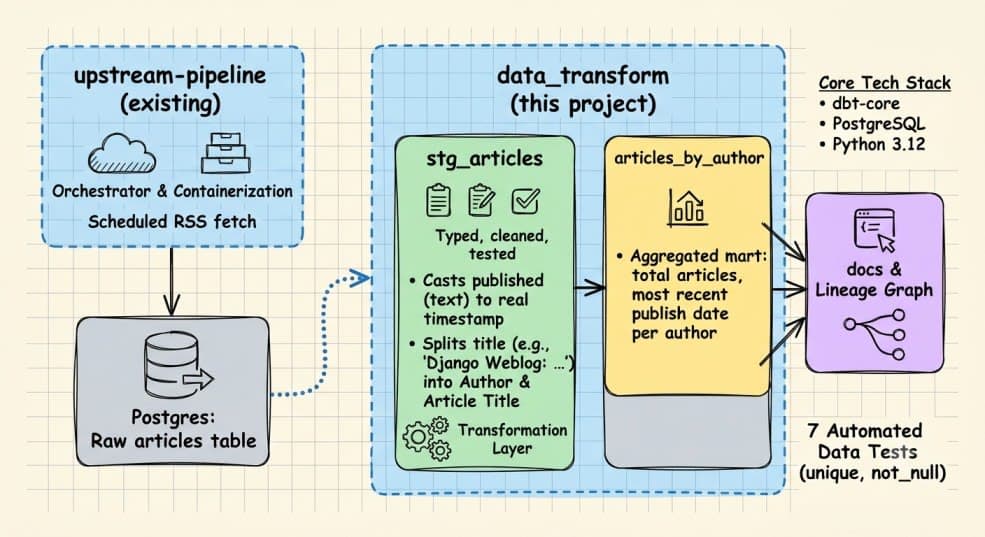
The transition from a raw data lake to a refined, decision-ready layer requires a fundamental shift in how organizations handle their data pipelines. This is where modern transformation workflows, popularized by tools like dbt (data build tool), have become essential. These frameworks allow data teams to treat their analytics code like software, using version control and testing to ensure that when a dashboard displays a KPI, that number is accurate, audited, and repeatable.
For business leaders, this represents a significant ROI shift. Instead of spending 80% of their time cleaning and debating the validity of reports, analysts can shift their focus toward high-value work:
- Standardization: Establishing a single source of truth across the entire organization.
- Trust Calibration: Implementing automated testing to catch anomalies before they reach the C-suite.
- Operational Velocity: Reducing the time-to-insight for stakeholders who need data to make split-second market decisions.
When data remains in a raw, unrefined state, it creates a "hidden tax" on every department. Decisions are delayed by manual data cleaning, or worse, they are made on incorrect assumptions, leading to expensive misallocations of capital.
The Bridge to Autonomous Intelligence
The maturation of data pipelines is not just about making spreadsheets faster; it is the prerequisite for the next wave of Digital Transformation. We are moving into an era dominated by AI Agents and autonomous business processes. These systems are inherently greedy for structure; they cannot function effectively on raw, messy, or contradictory data.
If you are planning to deploy an automated customer service chatbot or an AI-driven lead scoring system within your CRM, your underlying data architecture must be flawless. An AI agent is only as intelligent as the data it is fed. If your internal data model is fragmented or lacking in rigorous transformation, your AI will likely hallucinate or make sub-optimal business decisions.
Companies that prioritize "data product" thinking—treating data as a formal product with clear documentation, ownership, and service-level agreements—are finding that their AI initiatives succeed at a significantly higher rate. Conversely, those that attempt to layer advanced automation on top of a disorganized data foundation often find themselves trapped in a cycle of "pilot purgatory," where AI projects work in the sandbox but fail in production.
Moving Beyond the Storage Mindset
The trend toward "data-as-a-product" is gaining momentum across sectors, from retail to fintech. The goal is no longer just to store data, but to model it in a way that maps directly to business outcomes. This requires a cultural shift: data professionals must stop thinking of themselves as "plumbers" who move bytes and start thinking of themselves as "architects" who design the logic that powers the company.
As we look toward the future, the business leaders who will win are those who view their data infrastructure not as an IT expense, but as a strategic engine for growth. The investment isn't just in the cloud storage capacity—it is in the transformation layer, the documentation, and the semantic clarity that allows both human executives and AI models to make high-fidelity decisions.
For your organization, the takeaway is clear: stop celebrating the completion of data ingestion projects as if they are the destination. Audit your current analytics stack. Ask your team if your data is truly "analysis-ready" or if it is merely "accessible." True digital maturity is found in the rigor of your transformations and the reliability of your outputs.
Building a robust data foundation is the essential first step toward deploying high-impact AI agents that drive genuine business outcomes. At AOODAX, we specialize in helping organizations bridge the gap between messy raw data and sophisticated AI automation, ensuring your custom software and CRM workflows are powered by clean, reliable intelligence.

![Top AEO Checker Tools for Answer Engine Visibility [2026 Guide]](/_next/image?url=https%3A%2F%2Fres.cloudinary.com%2Fdgq1f2en1%2Fimage%2Fupload%2Fv1790236814%2Faoodax%2Fblog%2Flvyhutfyahjgp8wbnqrb.jpg&w=3840&q=75)