The corporate workspace has long been a graveyard for "tribal knowledge." In the traditional enterprise, critical decisions, project context, and unique workflows are buried in the ephemeral sprawl of thousands of daily messages. While messaging platforms like Slack have successfully replaced email for speed, they have arguably worsened the information silo problem. Now, a shift is underway as Anthropic moves to transform these passive communication logs into active, intelligent assets with its latest enterprise-grade integration: Claude Tag.
This development is far more than a simple chatbot integration. It represents a strategic evolution in how organizations leverage Artificial Intelligence (AI) to bridge the gap between static documentation and dynamic human collaboration. By embedding a high-reasoning model directly into the flow of work, Anthropic is essentially giving the enterprise a "memory" that scales, turning the chaotic stream of team communication into a structured repository of institutional intelligence.
From Passive Chat to Strategic Intelligence
For years, digital transformation initiatives have struggled with a fundamental friction: the "context switch." Employees lose hours each week moving between a CRM (Customer Relationship Management) system, project management dashboards, and communication apps, trying to piece together the current state of a deal or a technical requirement. The introduction of tools like Claude Tag signals an end to this fragmented reality.
When an AI agent is present within the messaging stream, it is not merely responding to prompts; it is observing the nuance of departmental discourse. By analyzing context—how a team resolved a client dispute, why a specific technical architecture was chosen, or how a deadline was negotiated—the AI begins to understand the "hidden map" of an organization.
This brings several immediate impacts to the enterprise:
- Accelerated Onboarding: New hires can query the AI to understand past project decisions, reducing the reliance on "tribal experts" who are often bogged down by repetitive questions.
- Proactive Knowledge Synthesis: Instead of digging through thousands of Slack threads, leaders can request summaries of project sentiment or identifies bottlenecks before they escalate into crises.
- Workflow Continuity: By maintaining context across shifts and time zones, the AI ensures that when a new team member joins a conversation, they are brought up to speed instantly, rather than needing to read through weeks of backlog.
The ROI implications here are significant. Beyond the simple time saved in administrative tasks, companies are gaining an automated layer of oversight. When institutional knowledge is captured in real-time, the "brain drain" that occurs when key talent leaves an organization is substantially mitigated. The AI effectively turns personal expertise into collective, searchable corporate capital.
The Agentic Shift: Beyond the Chatbot
The real power of this model lies in the transition from generative chatbots to Agentic Workflows. Most businesses are currently in a "Copilot" phase, where AI acts as a reactive assistant. However, integrating sophisticated reasoning models into primary communication channels pushes the enterprise toward a more autonomous operational model.
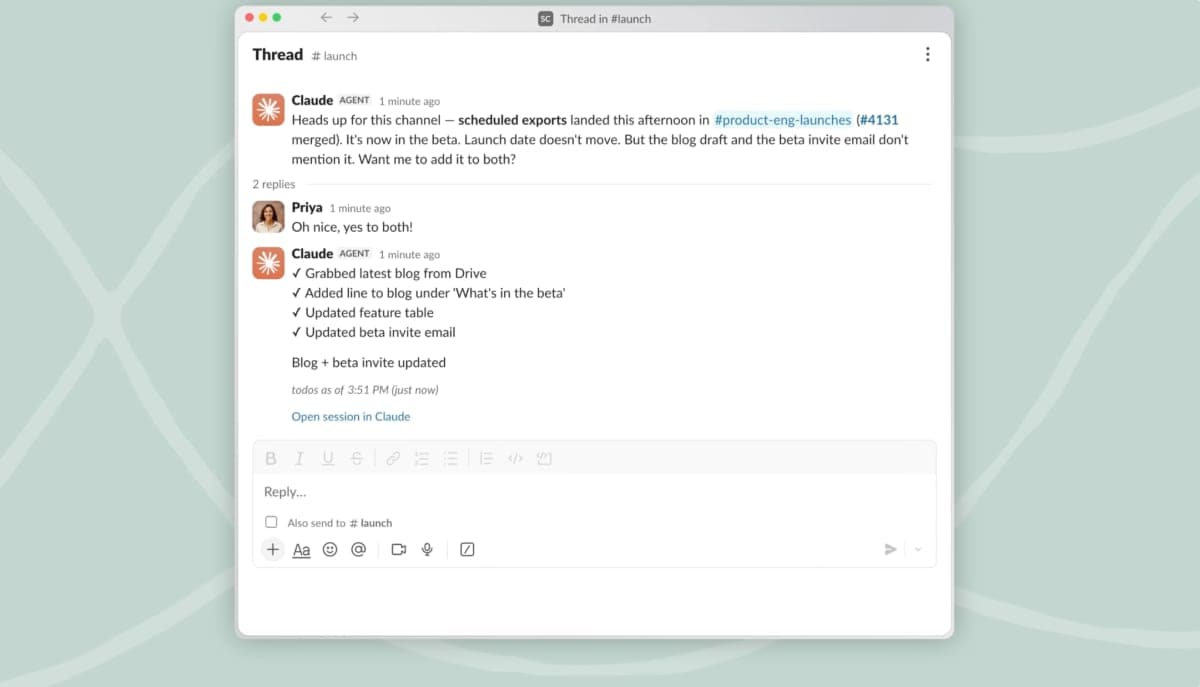
In this new paradigm, the AI acts as a participant in the digital ecosystem. It doesn’t just answer; it connects dots. For example, if a team discusses a client’s frustration regarding an integration bug, an advanced AI agent could potentially cross-reference this with the existing technical documentation, surface a relevant ticket from the CRM, and suggest a resolution path—all without the user leaving the Slack interface.
This deep integration changes the adoption curve for AI. Employees are far more likely to adopt tools that live where they already spend their time. As these agents become more adept at understanding the unspoken nuances of corporate hierarchy and project priorities, the barrier between human intent and automated execution will continue to thin. Digital transformation is no longer about implementing new software; it is about teaching your existing digital infrastructure how to think.
Strategic Imperatives for the Modern Executive
For business leaders, the rise of AI-integrated communication channels creates a mandate to reconsider data governance and organizational culture. If your AI is learning your company, you must ensure it is learning from the right inputs.
To maximize the value of these intelligent systems, organizations should focus on the following:
- Contextual Hygiene: Encourage teams to document decisions clearly in public channels rather than private, ephemeral chats. The better the raw data, the higher the quality of the AI’s synthesis.
- Security-First Architecture: As AI agents gain access to institutional knowledge, robust access control and data privacy protocols become the most critical infrastructure layer.
- Human-in-the-loop Governance: While AI can synthesize history and context, the accountability for strategy and high-level decision-making must remain clearly anchored in human leadership.
The objective is not to replace human dialogue, but to augment it with a digital memory that is as fast as it is precise. The companies that thrive in the coming decade will be those that view their internal communication not as a cost of doing business, but as a primary data source for continuous organizational improvement. By leveraging these agents to capture and refine institutional workflows, businesses can move from reactive firefighting to proactive, data-informed agility.
Navigating this transition requires more than just installing a plug-in; it requires a thoughtful integration strategy that aligns your AI capabilities with your specific business goals. At AOODAX, we specialize in helping organizations design and deploy sophisticated custom software solutions that ensure these emerging technologies actually move the needle on productivity and operational excellence.