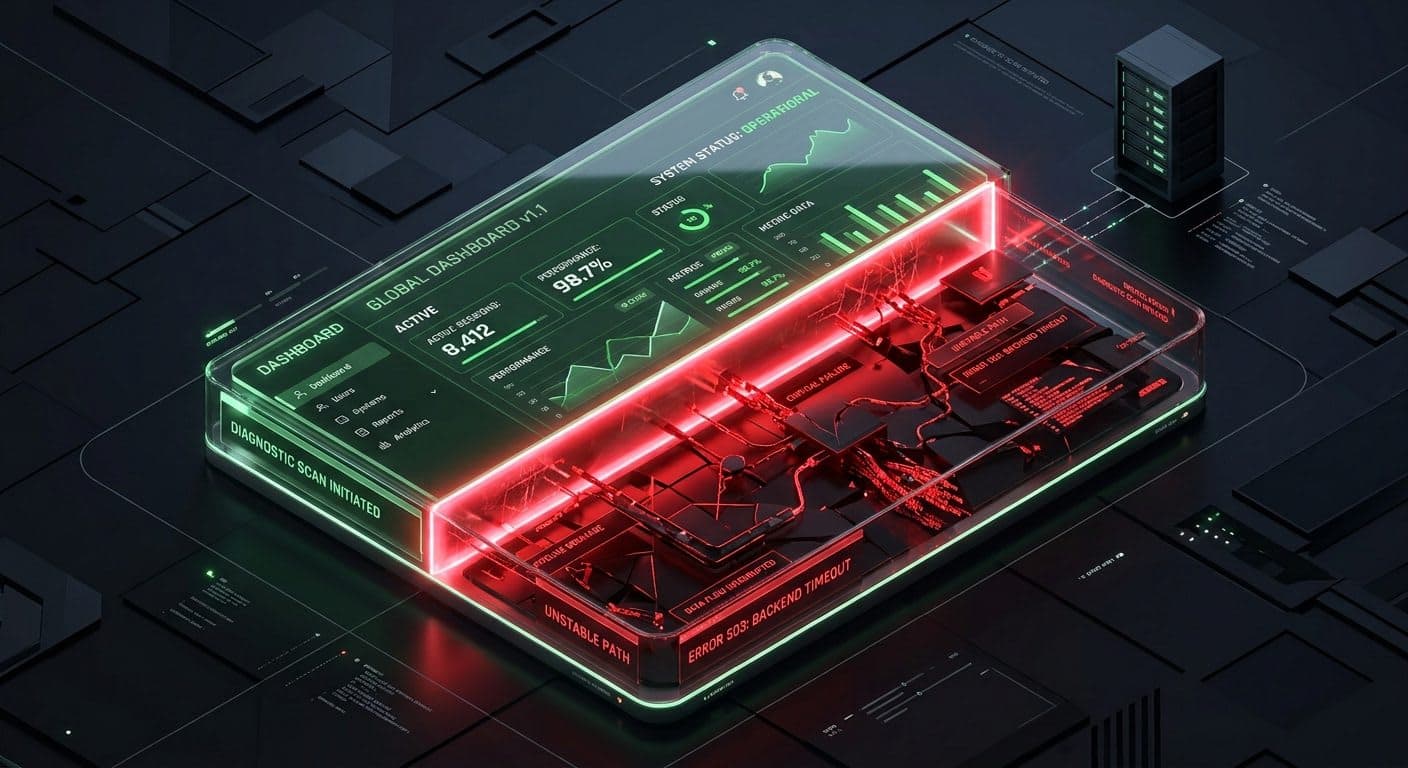
The rapid evolution of Large Language Models (LLMs) has transitioned from simple text generation to the era of AI Agents—autonomous software capable of executing complex workflows across the web. While the productivity gains promised by these agents are immense, a sobering new reality is emerging: as we grant AI the "keys to the kingdom" of our browsers and business accounts, we are simultaneously expanding our attack surface in ways that traditional cybersecurity frameworks are ill-equipped to handle.
Recent research conducted by the security firm Zenity has unveiled a critical vulnerability landscape within AI-enabled browsers. By identifying over a dozen security flaws, researchers demonstrated that these systems, when improperly secured, can be manipulated into performing unauthorized actions, ranging from spamming personal contacts to executing fraudulent financial transactions. This isn't merely a bug in a piece of software; it is a fundamental architecture challenge for the next phase of digital transformation.
The Mirage of Autonomy: When Agents Become Liabilities
For business leaders, the allure of autonomous agents is clear: the promise of automating repetitive tasks—from updating a CRM like Salesforce to navigating procurement workflows—offers a clear path to high ROI. However, the Zenity study highlights a phenomenon known as "prompt injection" or "model manipulation," where an agent is tricked into deviating from its original purpose.
When an AI agent is designed to interact with a web interface, it relies on instructions that guide its navigation. If the environment is not sandboxed or if the agent’s decision-making logic is not adequately isolated from external input, an attacker can exploit the agent’s browser interface. The implications for the enterprise are significant:
- Data Exfiltration: An agent with access to sensitive internal documents could be manipulated into emailing that data to an unauthorized external address.
- Account Takeover: If an agent is logged into business-critical platforms, an attacker could command it to alter security settings, change password recovery details, or initiate unauthorized procurement requests.
- Reputational Damage: Automated communication channels, if hijacked, can be weaponized to send malicious links or spam to clients, instantly eroding the trust built through years of customer relationship management.
These findings suggest that as we move toward an ecosystem of interconnected agents, the "human-in-the-loop" model becomes more than just a preference—it becomes a mandatory security control.
Rethinking Security in the Era of Agentic Workflows
As businesses accelerate their Digital Transformation initiatives, the integration of AI agents is becoming a competitive necessity rather than a luxury. However, the shift from static automation to autonomous execution requires a parallel shift in security posture. Organizations can no longer rely solely on perimeter defenses. Instead, they must adopt a "Zero Trust" approach specifically designed for the AI era.
To safely scale these technologies, leadership teams should focus on the following pillars of secure deployment:
- Granular Authorization: Agents should operate on a "principle of least privilege." An agent tasked with scheduling meetings should not have the permissions required to initiate financial transactions or modify user settings.
- Human-Centric Guardrails: Implement "circuit breakers" for sensitive actions. For instance, any procurement or data export request initiated by an agent should trigger a mandatory human approval flow before execution.
- Regular Auditing and Monitoring: As AI agents evolve, their behavior changes based on the data they ingest. Continuous monitoring of an agent's "decision path" is essential to ensure it remains within the guardrails established by the IT department.
- Secure Environment Sandboxing: Ensure that AI-enabled browsers or agent environments run in isolated containers that prevent lateral movement within the company’s broader internal network.
The ROI of AI is predicated on the reliability of the system. If an agent is not secure, the efficiency it gains is quickly offset by the cost of incident response and the long-term impact of a security breach. Forward-thinking companies are already embedding these security considerations into their initial AI rollout strategies, ensuring that innovation does not come at the cost of operational integrity.
The Path Forward: Resilience as a Competitive Advantage
The vulnerabilities highlighted by researchers are not reasons to hit the brakes on AI adoption. Rather, they serve as a necessary wake-up call for the industry to mature its approach to AI governance. We are currently in the "wild west" phase of agentic AI, where the speed of implementation has outpaced the development of standard security protocols. However, this gap will close. As the technology matures, security will move from an afterthought to a core feature of the agent development lifecycle.
The businesses that succeed in the coming decade will be those that view cybersecurity not as a blocker to innovation, but as the foundation upon which scalable AI ecosystems are built. By prioritizing robust architecture, transparent governance, and rigorous testing, companies can harness the immense power of agents while mitigating the risks of unauthorized manipulation.
Ultimately, the goal is to create an AI-powered workforce that is as reliable as it is efficient. If you are looking to integrate autonomous solutions into your infrastructure, our team at AOODAX specializes in developing secure, enterprise-grade AI agents designed to automate complex workflows while maintaining strict adherence to your internal security policies. We help businesses navigate this transition by building custom software that balances high-performance automation with the governance necessary to protect your digital assets.