The prevailing narrative in the artificial intelligence landscape has long been dictated by the "bigger is better" ethos. For the past two years, the industry has been obsessed with massive parameter counts and the sheer GPU throughput required to train models capable of reasoning. However, a significant pivot is underway. The future of enterprise AI isn’t just about cloud-based supercomputing; it is about intelligence that lives exactly where the action happens—on the edge.
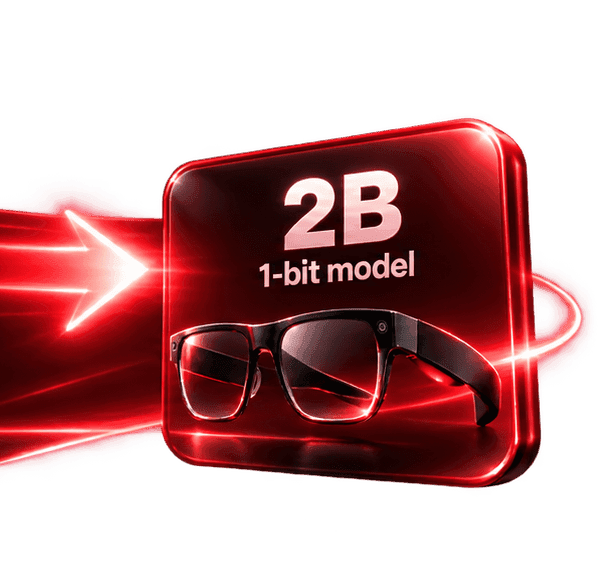
The recent arrival of specialized, lightweight Large Language Models (LLMs) on wearable hardware, specifically those powered by Qualcomm silicon, signals a fundamental shift in how businesses will deploy machine learning. By compressing sophisticated model weights to run locally on devices like smart glasses, companies like PrismML are effectively decentralizing the AI stack. This transition is not merely a technical novelty; it is a catalyst for the next phase of digital transformation, where real-time, low-latency insights become a standard business requirement rather than a luxury.
The Shift Toward On-Device Intelligence
For years, the adoption of AI-driven tools was bottlenecked by connectivity and latency. If a field technician in a remote facility or a logistics manager in a high-density warehouse needed AI assistance, the round-trip time required to send data to a cloud server often rendered the experience sluggish, or worse, unusable due to network constraints.
The deployment of open-weight, "tiny" LLMs directly onto hardware platforms changes the calculus of ROI. By leveraging the existing NPU (Neural Processing Unit) architecture inside modern chips, businesses can run sophisticated inference locally. This offers three transformative advantages:
- Data Sovereignty and Privacy: By processing sensitive information—such as customer conversations, proprietary schematics, or internal diagnostic data—directly on the local hardware, organizations can mitigate the risks associated with transmitting data across the public web.
- Persistent Availability: Localized AI is immune to intermittent connectivity. Whether it is an offline industrial site or an airplane cabin, the intelligence remains functional, ensuring continuous operational efficiency.
- Operational Cost Reduction: Running inference on the edge shifts the computational burden from expensive, recurring cloud GPU fees to the hardware the enterprise has already purchased. This creates a more predictable and sustainable cost model for scaling AI across a large workforce.
Strategic Implications for the Enterprise
For business leaders, the integration of these models into wearable form factors represents an expansion of the "human-in-the-loop" concept. We are moving away from AI as a desk-bound application and toward AI as an ambient assistant. Consider a CRM system that no longer relies on a user manually updating records at the end of a shift. With edge-deployed AI, a sales representative wearing smart glasses can have their CRM data synthesized in real-time, receiving prompts about client preferences or historical interactions during a live conversation.
The adoption trend is clear: companies that lean into edge-native AI are positioned to move beyond simple automation and toward highly personalized, real-time workflow orchestration. This is the bridge between traditional digital transformation—which digitized information—and the new era of "intelligent operation," where the infrastructure itself provides actionable guidance.
However, the transition requires a shift in how IT leadership views their technology stack. Moving away from monolithic AI services toward a hybrid model—where massive cloud models handle heavy-duty synthesis and edge models handle immediate, high-fidelity interaction—requires a new level of architectural maturity.
Preparing for the Edge-First Era
The roadmap for adopting edge-native AI involves careful planning regarding hardware compatibility and model fine-tuning. Businesses should not look for a "one-size-fits-all" model. Instead, the focus must be on identifying specific tasks where latency is the primary pain point.
When evaluating these technologies, consider the following strategic pillars:
- Hardware Lifecycle Alignment: Ensure that upcoming hardware procurement cycles account for the NPU capabilities required to support future on-device AI deployments.
- Model Optimization: Prioritize the use of open-weight models that allow for domain-specific fine-tuning, ensuring the tiny LLM is trained on your company’s unique vernacular and operational standards.
- Integration Density: Evaluate how well these wearable AI assistants can interface with existing software ecosystems, such as current ERP or CRM platforms, to avoid creating new information silos.
As we look toward the next twenty-four months, the divide will widen between organizations that use AI as a static tool and those that integrate it into the physical workflow of their employees. The leaders who win will be those who recognize that the intelligence of their workforce can be augmented not just by more data, but by better, faster, and more intimate access to the insights hidden within that data.
The transition to edge-based intelligence is a significant undertaking that requires a sophisticated integration of hardware and software. At AOODAX, we help leadership teams navigate this complexity by building custom AI agents that bridge the gap between heavy-duty cloud computing and the fast-paced, real-time needs of your frontline operations.