The hardware-first era of generative AI is undergoing a radical, and perhaps inevitable, pivot. For the past two years, Silicon Valley has been obsessed with the idea that AI required a new form factor—a "post-smartphone" device that could liberate us from the tyranny of the app grid. Yet, as the market matures, the friction of carrying dedicated hardware has collided with the harsh reality of user behavior: we are not ready to abandon the devices already in our pockets.
The recent shift by Rabbit, the startup that famously bet its reputation on a standalone AI gadget, underscores a broader industry realization. By pivoting to OS3, a software-defined, cross-platform AI agent, the company is signaling that the future of automation isn’t a new piece of silicon, but a pervasive intelligence layer that lives where the workflow already happens. For business leaders, this transition represents a critical inflection point in the adoption of enterprise AI.
From Hardware Silos to Ubiquitous Agency
The "walled garden" approach—forcing users into a secondary device to access intelligent automation—was always a high-stakes gamble. In the enterprise world, this friction is a productivity killer. Employees are already tethered to CRM systems, communication suites, and complex software stacks. Introducing a separate piece of hardware creates a "context gap," where data generated by the AI must be manually ported back to the core business ecosystem.
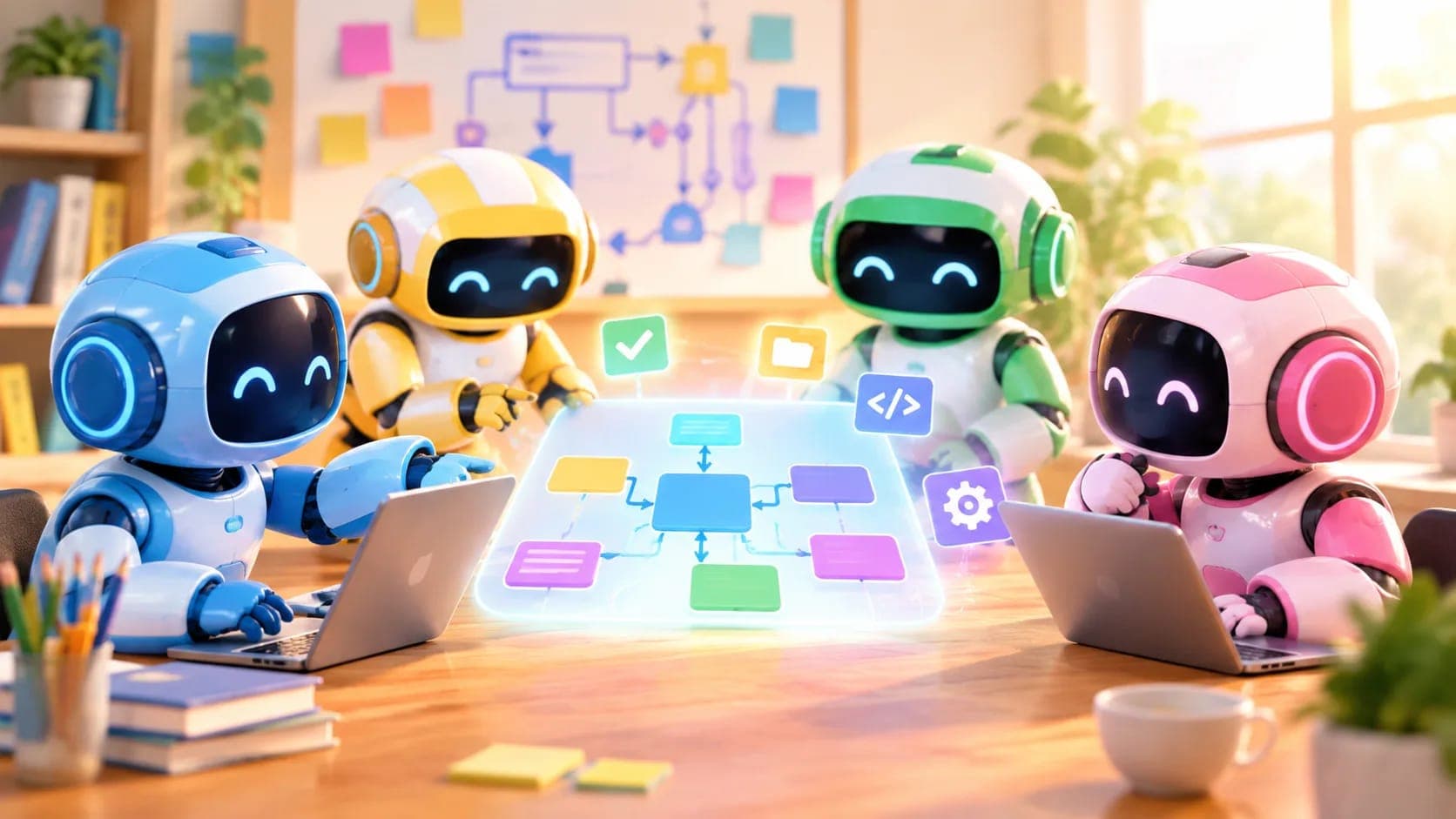
The move toward an application-layer agent like OS3 suggests that the "agentic" revolution will be won by software that integrates, not segregates. For companies, this means the focus is shifting from "how do we get our employees to use new gadgets?" to "how do we integrate AI agents into existing operating systems?" This is a massive boon for Digital Transformation. By operating as an overlay on the tools employees already use—whether that is a browser, a desktop application, or a mobile interface—AI agents can now act as a connective tissue between disparate software silos.
Key benefits of this software-first agentic approach include:
- Zero-Friction Adoption: Employees no longer need to learn a new interface or manage battery life for an extra device. The AI agent meets them in their native workflow.
- Reduced Context Switching: By interacting directly with existing business tools, the agent minimizes the time lost toggling between applications to extract data or complete tasks.
- Unified Data Orchestration: Software-based agents can pull from multiple sources—Customer Relationship Management (CRM) platforms, email, and project management tools—to execute complex, multi-step workflows.
The ROI of Agentic Orchestration
For the C-suite, the transition from "AI as a Chatbot" to "AI as an Agent" is where the actual Return on Investment (ROI) begins to materialize. A chatbot provides information; an agent completes a process. The shift we are seeing in the market—moving these agents into our primary screens—is designed to accelerate the automation of high-frequency, low-complexity tasks.
When an AI agent is truly cross-platform, it functions as a digital workforce multiplier. Imagine a scenario where an agent monitors a sales dashboard, detects a change in lead status, updates the CRM records, and drafts a personalized follow-up email—all while the human worker is moving to the next task. This is the promise of Automation, but it only works if the agent is deeply embedded in the tools that hold the company’s data.
The adoption trends are clear: businesses are increasingly prioritizing Agentic Workflows over static large language model (LLM) deployments. Companies that successfully implement these agents are seeing a dramatic reduction in "administrative debt"—the hours spent performing repetitive tasks that add little value but consume the majority of the workday. However, the success of these deployments depends heavily on how well the agents are connected to the business’s internal data architecture. Without a cohesive strategy for integration, these agents risk becoming "siloed intelligence," operating in a bubble while the rest of the business continues to suffer from fragmented operations.
The Future of the Intelligent Interface
As we look toward the next eighteen months, we should expect a race among tech players to commoditize the "agentic layer." The hardware debate is largely settled; the battlefield is now the OS and the browser. Businesses that lead with software-defined, agent-based strategies will find themselves significantly more agile than competitors who are still manually orchestrating their digital infrastructure.
For business leaders, the takeaway is straightforward: stop looking for the "next big hardware" to solve your productivity gaps. Instead, look at your existing digital architecture and ask where intelligence could be injected to automate the mundane. The objective is to create a seamless environment where the AI agent is not a destination, but a constant, helpful presence that works within your existing digital ecosystem.
As these AI agents evolve, the complexity of integrating them into your specific business logic becomes the primary barrier to entry. At AOODAX, we specialize in developing custom AI agents that bridge the gap between high-level automation strategy and the day-to-day realities of your existing tech stack, ensuring your digital transformation delivers measurable efficiency gains.